
Balayage on Black Hair: Techniques and What to Expect
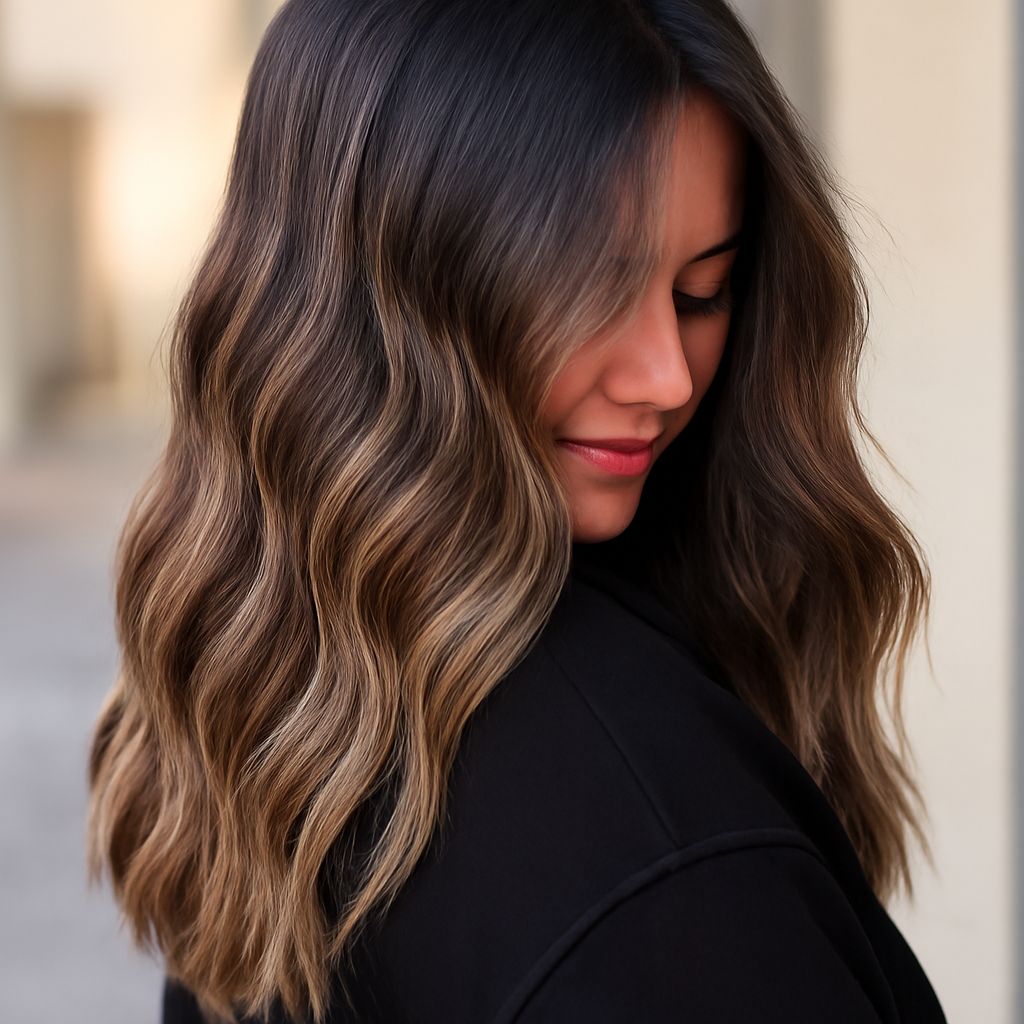
Balayage on black hair produces some of the most dramatic and natural-looking results in hair coloring, but the process requires more steps than lighter starting colors. The difference between highlights and balayage matters when you’re starting with very dark hair. Balayage for black hair uses a freehand painting technique to create dimension, while traditional highlights use foils for a more uniform effect. Balayage on black hair specifically involves careful pre-lightening to achieve any visible tone without banding or uneven results. The most popular result is black to brown balayage, which creates a natural sun-kissed gradient from dark roots to warm brown ends.
This guide covers the full process, realistic expectations for dark-haired clients, and how to maintain results over time.
What Is the Difference Between Highlights and Balayage
Traditional highlights use foil packets to isolate sections of hair and apply color or bleach uniformly within each section. Results are more predictable and uniform, with clear boundaries between highlighted and non-highlighted strands. Regrowth is obvious and requires regular upkeep.
Balayage applies color or bleach by hand in a sweeping motion directly onto the surface of the hair, without foils. This creates a softer, more blended result where lighter color appears on the top layers of each section rather than throughout. Roots stay naturally dark, the transition is gradual, and regrowth blends in rather than creating a hard line.
How Does Balayage Work Differently on Black Hair
On lighter hair (medium to light brown or blonde), balayage can achieve visible color change in a single bleach session, sometimes with just a toner to adjust tone after lightening. On naturally black or very dark brown hair, the melanin density is much higher, meaning more lifting is required to achieve a visible color change.
Balayage for black hair typically requires two or more lightening sessions to reach a mid-brown or warmer tone without causing excessive damage. Trying to go too light in one session on very dark hair risks over-processing, breakage, and uneven results.
Why Does Balayage on Black Hair Require Pre-Lightening
The natural pigment in black hair, eumelanin, is highly concentrated. Bleach works by oxidizing melanin. To reach any color other than dark brown from black, the hair must be pre-lightened to remove enough of that pigment first.
Each stage of lightening lifts the hair through a color progression: black to red-brown, to orange, to gold, to pale yellow. For black to brown balayage, lifting to a warm orange-gold range is sufficient. Going lighter requires more stages.
The freehand balayage application is applied more heavily at the mid-lengths and ends and feathered at the root area, creating the gradient effect even as the hair is lifted.
What Color Results Can You Expect from Black Hair Balayage
Realistic expectations depend on starting depth and desired result. In one session, most dark hair can lift to a warm chocolate or caramel brown. Two or more sessions can take hair to a honey, golden blonde, or even platinum if desired, though the latter is extremely demanding on the hair.
A safety note: always consult with your stylist before choosing a result. A stylist who examines your hair’s texture, density, and history of chemical treatment can tell you what’s achievable safely in each session. Attempting dramatic lightening at home on dark hair carries real risks of breakage.
What Does Black to Brown Balayage Look Like
Black to brown balayage is the most requested version for dark-haired clients. The result keeps the root area naturally dark (matching the existing color) while transitioning to warm brown tones at the mid-shaft and ends. The gradient is soft rather than dramatic.
Common brown tones targeted for dark hair balayage include warm chocolate, caramel, chestnut, and espresso with lighter ends. These tones complement dark complexions particularly well because they stay warm rather than going ashy, which can look harsh against warm skin tones.
How Do You Maintain Balayage on Dark Hair
Black to brown balayage grows out naturally without creating an obvious regrowth line, which is one of its major advantages. Most clients with this style visit the salon every 3 to 4 months for a refresh rather than every 4 to 6 weeks like traditional highlights require.
Purple or blue toning shampoos are less relevant for warm brown balayage on dark hair. Instead, a color-safe, sulfate-free shampoo preserves tone. Deep conditioning treatments help maintain the integrity of the lightened sections, which are more porous than unprocessed hair.
Key takeaways: Balayage on black hair requires multiple lightening sessions for significant color change but produces naturally blended, low-maintenance results. The difference between highlights and balayage is most visible in how the color transitions, with balayage creating a softer gradient. Black to brown balayage is the most approachable starting point for dark-haired clients new to color.



Leave a Reply