
Dry Skin Around Eyes: Causes, Treatments, and What to Avoid
The skin around the eyes is thinner and more delicate than skin anywhere else on the face. Dry skin around eyes is one of the most common dermatological complaints, and the skin around eyes being dry often comes with flaking, tightness, and irritation. Flaky skin around eyes and dry flaky skin around eyes can develop from products, environment, or underlying skin conditions. Dry skin above the eye, particularly on the eyelid, has its own specific set of causes. Getting to the right cause is the first step toward the right fix.
This guide covers what triggers periorbital dryness, how to treat it at different severity levels, and which habits or products to avoid.
Why Is the Skin Around the Eyes Particularly Prone to Dryness
The periorbital skin (around the eye area) is approximately 40% thinner than facial skin in general. It has fewer sebaceous glands, which means less natural oil production and less self-lubrication. The area is also subject to constant movement from blinking and facial expressions, which accelerates transepidermal water loss.
All of these factors mean that the eye area reaches visible dryness faster than other facial zones and is more vulnerable to both product irritation and environmental stress like cold air, low humidity, and central heating.
What Are the Most Common Causes of Dry Skin Around Eyes
Several distinct causes account for most cases of dryness around the eye area:
Environmental Factors
Low humidity, cold weather, and wind all draw moisture from exposed skin. Central heating in winter reduces indoor humidity significantly, and many people notice increased flakiness around the eyes during this period. Staring at screens for long periods reduces blink rate, which can dry out the eye area over time.
Contact Dermatitis
The eye area is a common site for contact dermatitis, both allergic and irritant. Products that cause reactions include eye makeup, makeup remover, fragranced moisturizers, nail polish (transferred by touching the eye area), and hair products. Reactions typically appear as redness, swelling, and flaking in the affected zone.
Atopic Dermatitis and Eczema
Eczema frequently affects the eyelids and periorbital area. In people with atopic dermatitis, the skin barrier function is compromised, making the area susceptible to dryness, irritation, and flares triggered by allergens or irritants.
Can Skincare Products Cause Dryness Around the Eyes
Yes, frequently. Retinol and retinoids, while effective anti-aging ingredients, are too strong for undiluted use around the eye area and regularly cause dryness, peeling, and irritation. Exfoliating acids (AHAs, BHAs) applied too close to the orbital bone cause similar reactions.
Even seemingly gentle products like certain micellar waters, cleansing balms, or makeup removers can be problematic if they contain sensitizing ingredients or if removal requires significant rubbing. Harsh rubbing alone, regardless of product, can damage the thin skin and trigger dryness.
How Do You Treat Dry and Flaky Skin Around the Eyes
Treatment starts with addressing the cause. If a product is responsible, eliminate it and simplify your routine around the eye area. Use fragrance-free, gentle products specifically formulated for sensitive or eye-area skin.
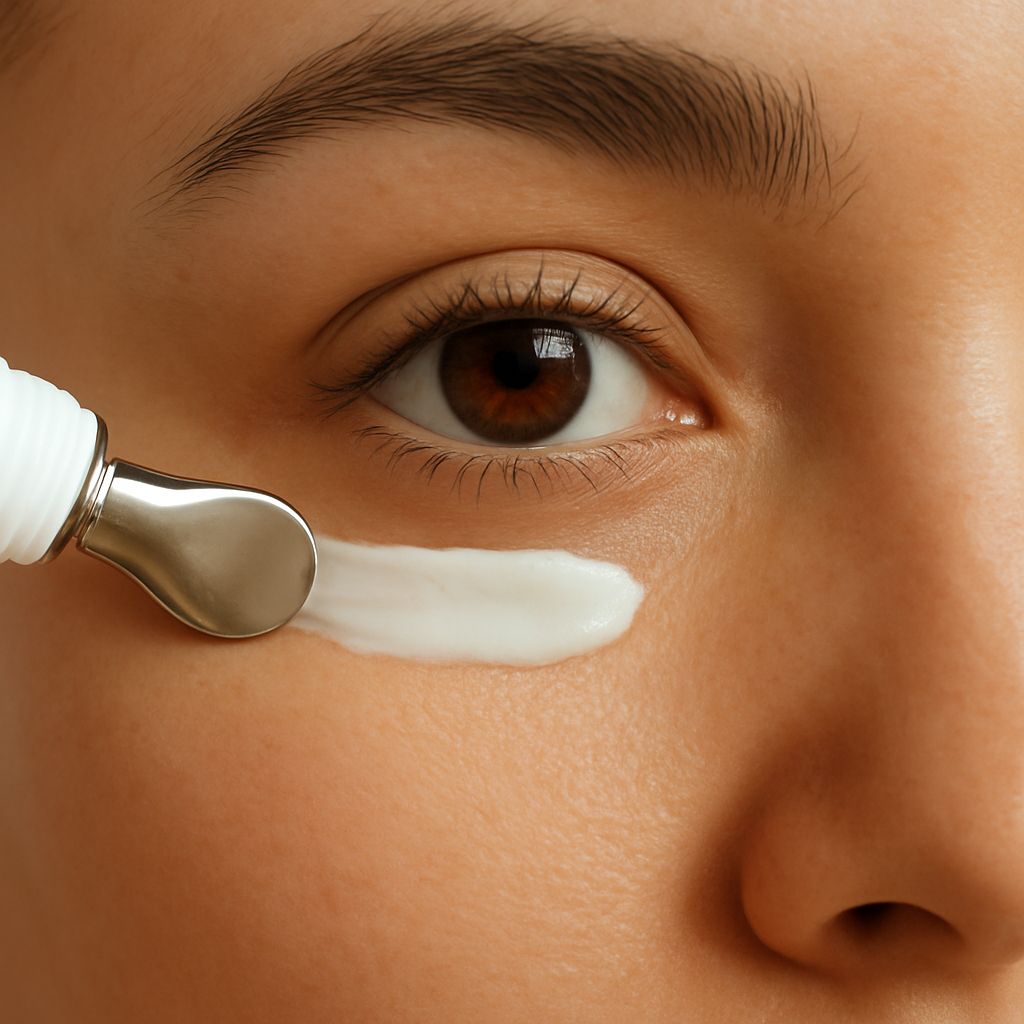
For moisturizing, choose fragrance-free eye creams or balms containing ceramides, hyaluronic acid, peptides, or squalane. Apply with a light ring finger pat rather than rubbing. Petroleum jelly, while old-fashioned, is one of the most effective occlusive options for dry and flaky skin around the eyes when applied in a thin layer at night.
A humidifier in the bedroom during winter directly reduces the environmental drying that occurs overnight while sleeping.
A safety note: avoid applying hydrocortisone cream around the eyes without medical guidance. The skin there is thin, and steroid creams can cause thinning and other complications with extended use.
What Causes Dry Skin Specifically on the Eyelid
Dry skin above the eye and on the eyelid itself has a few specific causes beyond general periorbital dryness. Blepharitis is an inflammation of the eyelid margins that causes flaking, crusting, and dryness directly at the lid edge. It’s associated with seborrheic dermatitis and can be chronic.
Periocular contact dermatitis from mascara, eyeliner, or eyeshadow is also common on the actual lid. The preservatives and fragrances in eye products are frequent culprits even when a formula is marketed as hypoallergenic.
Psoriasis can affect the eyelid area, though it’s less common here than on other body surfaces.
When Does Dry Skin Around the Eyes Need Medical Attention
See a dermatologist if: the dryness persists beyond two weeks of home treatment, the area becomes increasingly swollen, red, or weeping, you develop visible eyelid crusting that may indicate blepharitis, or if skin changes include thickening or a dramatic change in texture. A patch test by a dermatologist can identify specific contact allergens if the cause remains unclear.
Bottom line: Dry skin around eyes usually stems from product irritation, environmental dryness, or eczema, and responds well to fragrance-free moisturizers and barrier protection. Flaky skin around eyes that persists or comes with swelling or crusting warrants a dermatology visit to rule out contact dermatitis or blepharitis.





Leave a Reply