Oily Dandruff and Bald Head Dandruff: Causes and Solutions
Dandruff doesn’t only affect people with thick hair. Oily dandruff is a specific type tied to excess sebum production and yeast overgrowth, and it behaves differently from dry flaking. A common question is: do bald people get dandruff? The answer is yes. Bald dandruff, bald head dandruff, and greasy dandruff all involve the same scalp biology, just with different hair situations. Understanding what drives these conditions helps you treat them more effectively.
This guide explains the biology of oily and greasy dandruff, addresses why bald scalps are not immune, and walks through treatment options that work across hair situations.
What Causes Oily or Greasy Dandruff
Oily dandruff, technically known as seborrheic dermatitis, develops when the scalp produces excess sebum and a yeast called Malassezia furfur thrives in that oily environment. The yeast feeds on fatty acids in sebum and produces byproducts that irritate the skin, causing accelerated cell turnover and flaking.
Greasy dandruff flakes are usually larger, yellowish, and stick to the scalp or hair rather than falling freely like dry dandruff flakes. The scalp may also appear red, feel itchy, and look generally inflamed.
Seborrheic dermatitis affects areas beyond the scalp too, including eyebrows, the sides of the nose, ears, and chest in some people.
Can Bald People Really Get Dandruff
Yes. Do bald people get dandruff? Absolutely. Dandruff is a scalp condition, not a hair condition. The sebaceous glands that produce oil exist in the scalp regardless of hair coverage. Malassezia yeast is found on all human skin and will proliferate in oily scalp conditions whether or not hair is present.
Bald dandruff is often more visible because there’s no hair to trap flakes. People with a shaved or naturally bald head may notice white or yellowish flakes on the scalp surface directly, or see them fall onto dark clothing.
Bald head dandruff can also be complicated by more direct sun exposure and more frequent washing with harsh soaps, which can disrupt the scalp’s natural balance further.
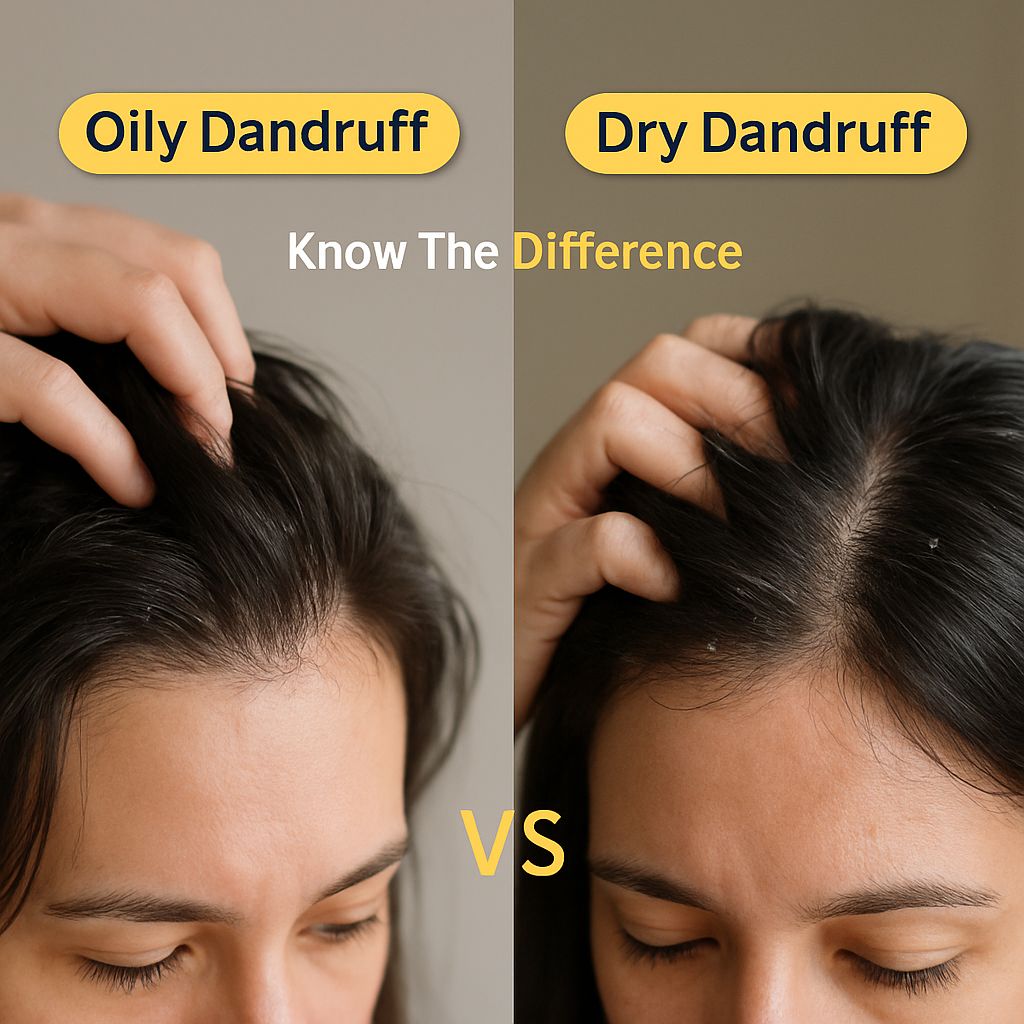
How Do You Tell Oily Dandruff from Dry Dandruff
The key differences:
- Oily dandruff: larger flakes, yellowish or white but waxy or greasy looking, stick to scalp and hair, scalp appears shiny or inflamed
- Dry dandruff: smaller, white, fall freely, scalp may feel tight or dry, often worse in winter
Dry dandruff is often simply a reaction to over-washing, harsh shampoos, or low humidity. Oily dandruff typically indicates seborrheic dermatitis and responds to antifungal or medicated treatments rather than just moisturizing.
What Treatments Work for Oily and Greasy Dandruff
Antifungal shampoos are the first-line treatment for greasy dandruff and seborrheic dermatitis. Look for these active ingredients:
- Ketoconazole (1% OTC or 2% prescription) – most effective against Malassezia
- Zinc pyrithione – reduces yeast and has anti-inflammatory properties
- Selenium sulfide – slows cell turnover and reduces fungal growth
- Coal tar – older but effective option for stubborn cases
Use the medicated shampoo 2 to 3 times per week initially. Leave it on the scalp for 3 to 5 minutes before rinsing to allow the active ingredient time to work. Once symptoms improve, reduce frequency to once weekly for maintenance.
How Do You Treat Dandruff on a Shaved or Bald Head
The same medicated shampoos work for bald head dandruff. Apply to the scalp directly, massage gently, allow to sit for several minutes, then rinse. On a bald head, it’s often tempting to use body wash or soap, but these products disrupt the scalp’s pH and can make seborrheic dermatitis worse.
After washing, a light, non-comedogenic moisturizer or scalp oil can help maintain barrier function without over-oiling. Avoid heavy oils that could feed Malassezia further.
Sun protection matters more for bald scalps. Use SPF on the scalp when outdoors, as UV exposure can worsen inflammation associated with seborrheic dermatitis.
Do Diet or Stress Affect Dandruff
Both can influence seborrheic dermatitis severity. High-sugar and high-fat diets may worsen Malassezia overgrowth by increasing sebum production and providing the fatty acids the yeast feeds on. Some people report improvements when reducing alcohol and refined carbohydrates.
Stress is a well-documented trigger. Cortisol can increase sebum production and suppress immune responses that normally keep Malassezia in check. Managing stress through consistent sleep, exercise, and relaxation practices is a legitimate component of managing oily dandruff long-term.
Key takeaways: Oily dandruff and greasy dandruff are caused by yeast overgrowth in a sebum-rich scalp environment and respond to antifungal shampoos. Bald people absolutely get dandruff because the condition is about scalp biology, not hair. Consistent use of targeted medicated products and attention to lifestyle factors keeps symptoms manageable.

Leave a Reply