
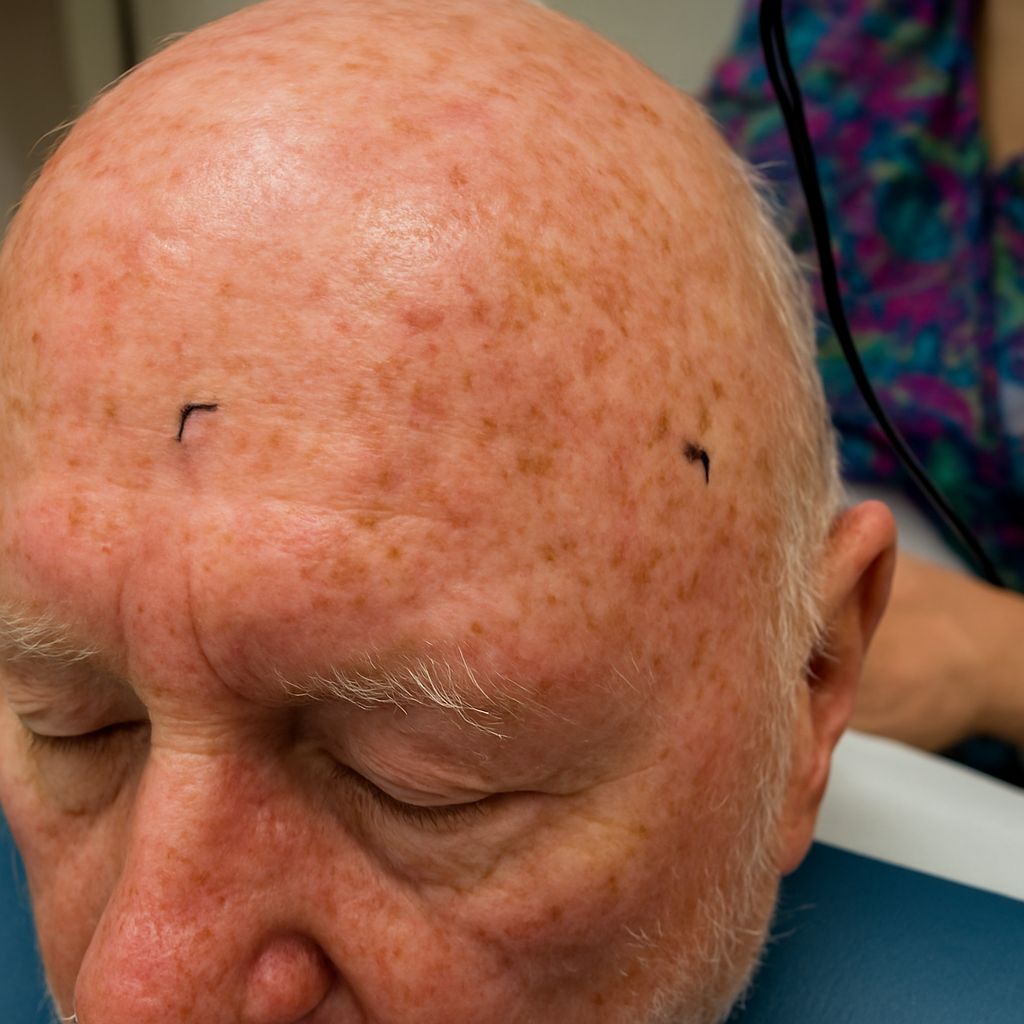
Skin Cancer Scalp: Symptoms, Rare Types, and What to Watch For
Skin cancer scalp is one of the most commonly overlooked locations for malignant skin lesions, in part because hair coverage delays both self-detection and routine visual inspection. Rare skin cancer types including Merkel cell carcinoma can appear on the scalp without obvious warning signs until they have grown considerably. Skin cancer on top of head is a particular concern for men with thinning or absent hair and for anyone who spends significant time outdoors without scalp protection. Aggressive skin cancer types that originate in the scalp have higher rates of local invasion and metastasis than those on the face or limbs, making early identification critical. Skin cancer head presentations vary by type, but any persistent, changing, or new growth on the scalp deserves a professional evaluation.
This guide covers the types of skin cancer that appear on the scalp, their distinguishing features, risk factors, and when to act.
Why Does Skin Cancer Develop on the Scalp?
The scalp receives the same cumulative UV radiation as the face but is far less frequently protected with sunscreen. Many people consider their hair sufficient protection, which it is not for thinning hair or bald areas. UV radiation directly damages DNA in melanocytes and keratinocytes on the scalp surface, accumulating over decades. Studies have found that the posterior scalp (crown and vertex) has among the highest rates of actinic keratosis and squamous cell carcinoma per surface area of any body region, likely due to the angle of sun exposure during outdoor activities.
What Types of Skin Cancer Affect the Scalp and Head?
Basal cell carcinoma (BCC) is the most common form of skin cancer head presentations. It appears as a pearly or waxy bump, a flat scar-like lesion, or a pink growth that bleeds and does not heal. BCC on the scalp is locally invasive but rarely metastasizes. Squamous cell carcinoma (SCC) is the second most common, appearing as a rough, scaly red patch, a wart-like growth, or an ulcer that does not heal. SCC on the scalp carries a higher risk of spreading to lymph nodes than BCC. Melanoma, though less common, is the most aggressive and potentially lethal form. Scalp melanomas have a disproportionately worse prognosis than melanomas at other sites, in part due to delayed detection.
What Rare Skin Cancers Can Appear on the Scalp?
Merkel cell carcinoma is a rare skin cancer that most often appears on the head and neck, including the scalp. It grows rapidly as a flesh-colored or bluish-red nodule. Despite its rarity, it is considered one of the more aggressive skin cancers because of its tendency to spread to lymph nodes and distant organs quickly. Dermatofibrosarcoma protuberans (DFSP) is another rare form that can develop on the scalp as a slowly growing, firm plaque. Sebaceous carcinoma, arising from the oil glands of the scalp, is also rare but clinically significant.
What Makes Scalp Skin Cancer Aggressive?
Aggressive skin cancer on the scalp has several contributing factors. The scalp has a rich lymphatic network that can facilitate faster spread of cancer cells than skin at other sites. Dense connective tissue in the scalp allows some tumor types to grow along nerve fibers (perineural invasion), which both increases the spread risk and makes complete surgical removal more challenging. Delayed diagnosis, common because the scalp is difficult to self-examine and not always checked during routine skin cancer screenings, means scalp cancers are often detected at a more advanced stage than cancers in easily visible locations.
What Symptoms Indicate Skin Cancer on the Head?
A sore on the scalp that bleeds, crusts, and does not heal within four weeks is a primary warning sign. A new or growing bump that feels firm or rubbery under the scalp surface needs evaluation. Patches of scalp that feel rough, scaly, or tender without an obvious cause such as sunburn or dermatitis warrant attention. Hair loss in a defined circular area of the scalp without a clear reason (not alopecia or styling) can indicate an underlying growth. Any lesion that has changed in size, shape, or color over a period of weeks to months should be shown to a dermatologist without delay.
How Do You Prevent Skin Cancer on the Scalp?
Apply a water-resistant mineral sunscreen (SPF 30 or higher) to exposed scalp skin, including the parting line and thinning areas, before outdoor activities. Wearing a hat with a wide brim or UV-protective fabric provides physical protection across the entire scalp. Schedule full-body skin checks with a dermatologist annually; make sure the dermatologist checks the scalp, as this is sometimes skipped in a brief appointment. In between professional checks, part your hair in different directions and use a hand mirror or ask a partner to inspect the scalp for new growths once a month.
Key takeaways: Skin cancer scalp locations are frequently missed until lesions are advanced, making SPF application and annual dermatologist checks with scalp inspection the most effective prevention strategy. Aggressive skin cancer types including Merkel cell carcinoma can appear on the scalp and require prompt biopsy and staging if suspected. Any persistent, bleeding, or changing lesion on the scalp merits same-week dermatologist evaluation.





Leave a Reply