
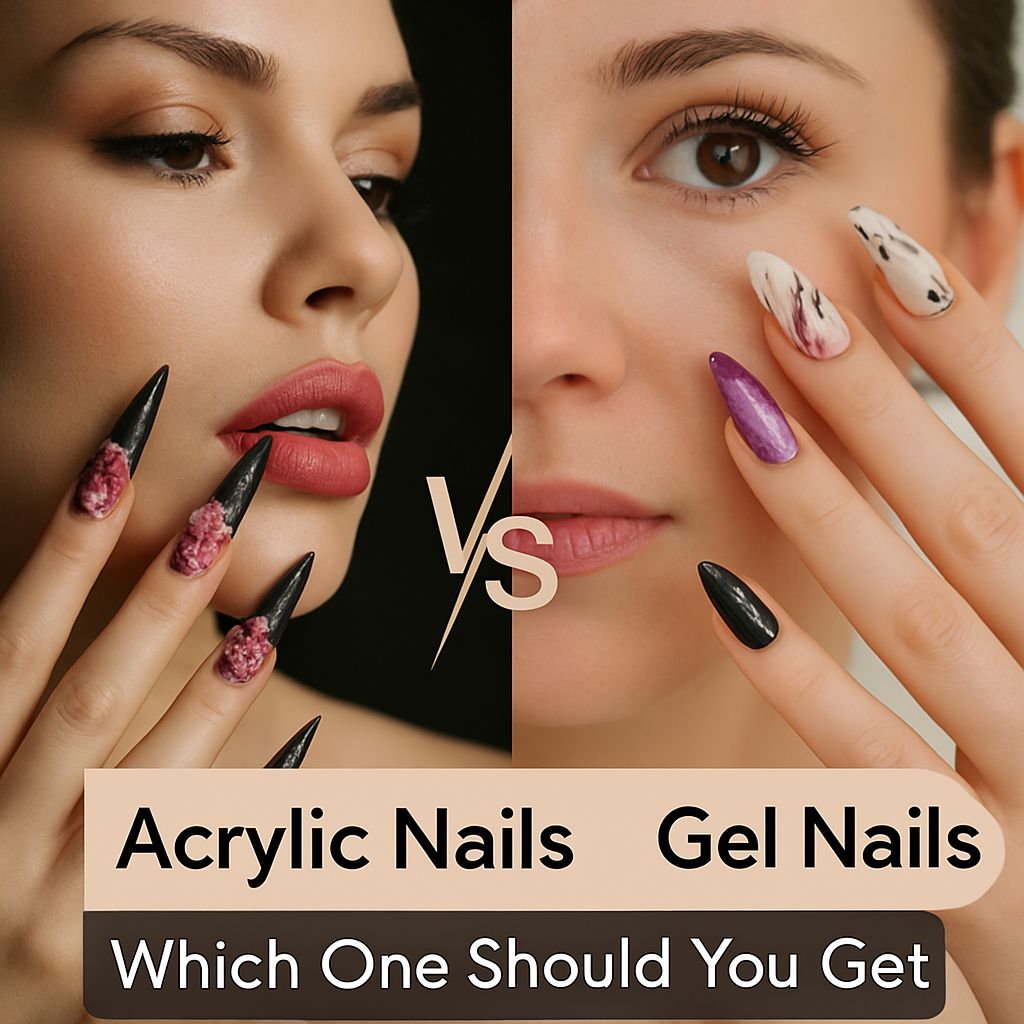
Acrylic vs Gel Nails: Full Comparison to Help You Choose
Acrylic vs gel nails is one of the most frequently searched questions in nail care, and for good reason: both options extend and strengthen natural nails, but they differ significantly in application, durability, removal, and nail health impact. Gel vs acrylic nails also divide preferences along practical lines, with some clients valuing the flexibility of gel and others the rigid structure of acrylic for length. Acrylic nails vs gel comes down to your lifestyle, the natural strength of your nails, and how often you are willing to book maintenance appointments. Choosing between gel or acrylic nails means understanding the tradeoffs of each system before committing to one. Acrylic nails vs gel nails is ultimately a personal decision, but this guide gives you the information to make it confidently.
Below is a detailed side-by-side comparison covering durability, feel, removal, cost, and nail health so you can match the right system to your needs.
How Do Acrylic and Gel Nails Work Differently?
Acrylic Application
Acrylic nails form when a liquid monomer is mixed with a powder polymer on the nail surface. The mixture hardens through air oxidation without a UV lamp. The nail technician sculpts the product while it is still workable, building length and shape over a nail form or tip before it fully sets. The result is a very hard, durable surface that can be filed into a range of shapes.
Gel Application
Gel nails use a pre-mixed resin formula that cures under UV or LED light. Soft gel can be soaked off with acetone. Hard gel requires filing down for removal. Gel nails vs acrylic nails differ here: gel stays closer to the nail surface and does not allow as much length extension as acrylic without a tip, though builder gels have extended this capability in recent years.
Which Is More Durable: Acrylic or Gel Nails?
Acrylic nails are generally harder and more resistant to breakage at length, making them preferred by clients who work with their hands or need extended length that holds up under physical stress. Gel nails are more flexible and tend to bend rather than snap under pressure, which some clients find more comfortable. Gel manicures typically last two to three weeks before needing fill; acrylic fills are booked every two to three weeks as well, though the base structure can last much longer with regular maintenance. For durability at length, acrylic nails vs gel nails tips toward acrylic; for everyday wear on shorter nails, gel is comparable.
How Do Gel vs Acrylic Nails Look and Feel?
Gel nails have a naturally glossy finish that does not yellow over time and maintains a slightly flexible feel that mimics natural nail movement. Acrylic nails can be buffed to high gloss but may develop a slight yellow tint with age or sun exposure. Gel nail extensions feel lighter and thinner on the finger. Acrylic nails vs gel nails in terms of appearance: gel looks more natural at shorter lengths, while acrylic provides a more reliable canvas for dramatic nail art and extreme lengths due to its rigid structure.
How Are Acrylic and Gel Nails Removed?
Acrylic nails are removed by soaking in acetone for 20 to 30 minutes, then gently pushing off the softened product. Trying to peel or pull acrylics off damages the natural nail significantly. Soft gel nails are removed similarly with acetone soaking. Hard gel must be filed down to a thin layer and then either soaked or completely filed off. Removal done by a trained nail technician is preferable to home removal for both systems, as improper technique causes thinning, breakage, and sometimes bleeding of the nail plate.
Which Is Healthier for Your Natural Nails?
Neither acrylic nor gel is entirely without nail health impact. Both require the natural nail to be roughened (etched) to create adhesion, which thins the nail plate with each application and removal cycle. Gel nails expose the skin to UV light during curing; wearing SPF 30 or UV-protective gloves during curing reduces this risk. Acrylic nails, particularly if worn continuously for years, can cause nail thinning and increased sensitivity. Taking breaks between nail enhancement sets and using a nail strengthener during off periods is the most effective way to maintain nail health alongside either system.
How Do the Costs of Acrylic and Gel Nails Compare?
Acrylic nail sets typically range from $35 to $80 for a full set and $20 to $45 for fills, depending on salon and location. Gel nail manicures range from $45 to $100 for a full set and $30 to $60 for fills or infills. Hard gel is often priced similarly to acrylic. Builder gel in a bottle, applied at home, offers a more affordable DIY option for clients comfortable with the technique. Both systems require comparable ongoing investment for regular maintenance.
Safety recap: Do not attempt to peel, lift, or pull off acrylic or gel nails at home. Improper removal is the most common cause of nail damage in both enhancement systems. Always have a professional remove or refill your extensions.





Leave a Reply