
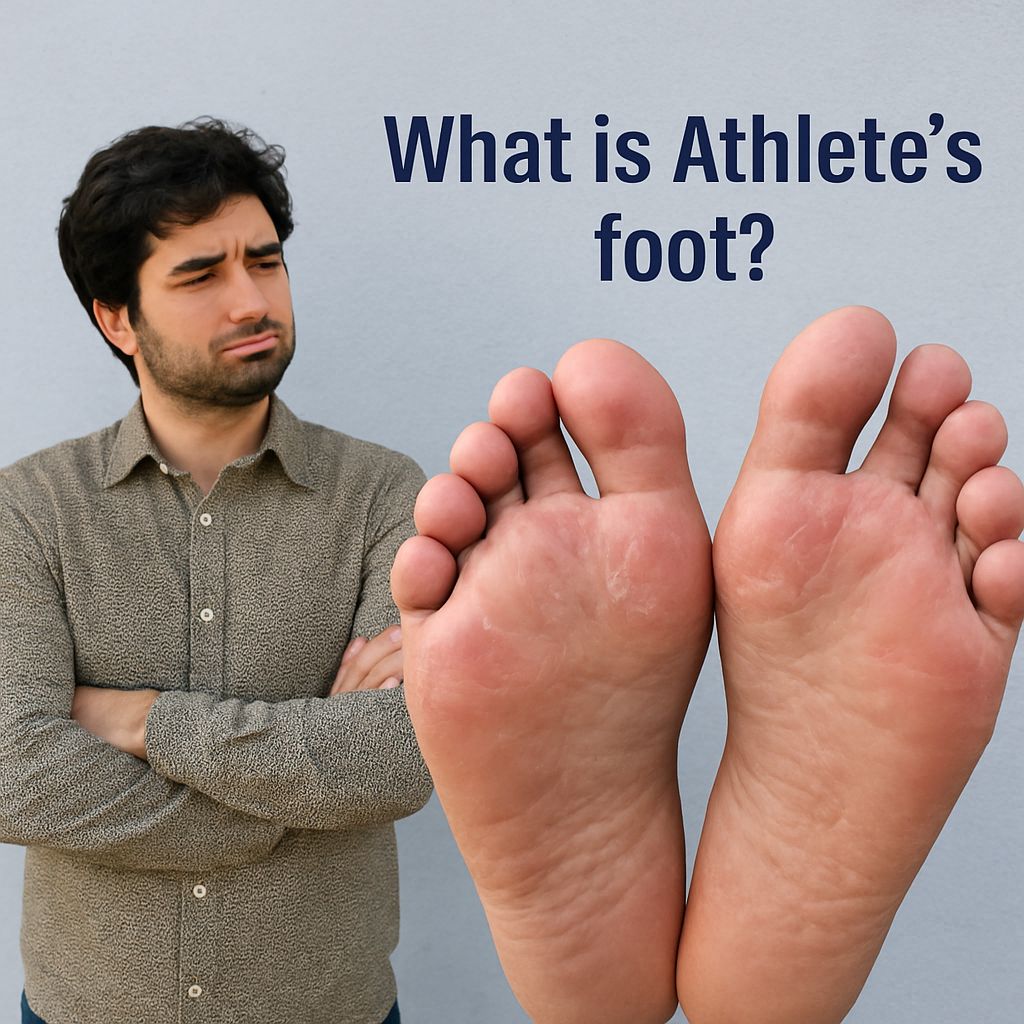
Athlete’s Foot or Dry Skin: How to Tell the Difference and Treat Both
Wondering whether you have athlete’s foot or dry skin on your feet can be genuinely confusing because both conditions produce flaking, cracking, and discomfort. Dry skin on top of toes is often the first sign people notice, and it can develop from either cause. Cracked skin on toes, especially at the edges, may follow dry skin or signal a fungal infection that has gone untreated. To distinguish dry skin or athlete’s foot accurately, location and accompanying symptoms are the most useful clues. Dry skin on top of feet tends to develop on flat surfaces exposed to friction, while athlete’s foot classically starts between the toes and along the soles.
This guide walks through the distinguishing features of each condition, how to treat them at home, and when professional intervention is needed.
How Do You Tell Athlete’s Foot from Dry Skin?
Location Differences
Dry skin affects the tops of the feet, heels, and outer edges. Athlete’s foot most frequently begins between the toes, particularly between the fourth and fifth digits, before spreading to the sole. If your flaking and scaling are limited to the tops of your feet and heels without intense itching between toes, ordinary dry skin or athlete’s foot differentiation favors the former.
Symptom Differences
Athlete’s foot typically produces intense itching and burning, sometimes a distinctive odor, and the skin may look macerated or raw between toes. Dry skin tends to feel tight and rough rather than burning, and the affected areas do not produce an odor. If blisters appear, athlete’s foot is the more likely cause. Both conditions can produce dry skin on top of toes as a secondary effect when untreated.
What Causes Dry Skin on the Top of Toes?
Footwear that creates friction is the most common cause of dry skin on top of toes. Tight shoes press against the toe knuckles and heels repeatedly, damaging the skin barrier with each step. Low humidity, excessive washing with harsh soaps, and conditions such as eczema or psoriasis also contribute. Dehydration and inadequate dietary fat intake can reduce the skin’s ability to maintain its protective lipid layer. In older adults, the skin naturally produces less oil, making dryness on the tops of the feet and toes a common complaint.
How Do You Treat Cracked Skin on Toes?
Cracked skin on toes requires daily moisturization with an emollient-rich cream or ointment containing ingredients such as urea (10-25%), lactic acid, or petrolatum. Apply immediately after bathing while the skin is still slightly damp to lock in moisture. For deep cracks that bleed or cause pain, liquid bandage products can seal the fissure and reduce discomfort while healing occurs. Avoid walking barefoot on hard surfaces, which widens cracks. If fissures are very deep or surrounded by red, warm skin, a physician should evaluate for secondary infection.
Safety Note
People with diabetes should not attempt self-treatment of cracked feet or toes. Even minor foot wounds can escalate quickly without specialist supervision.
How Is Athlete’s Foot Treated?
Over-the-counter antifungal creams, sprays, and powders containing clotrimazole, terbinafine, or miconazole are the standard first-line treatment. Apply twice daily to the affected area and continue for the full course (typically 2-4 weeks) even after symptoms resolve, to prevent recurrence. Keep feet dry and change socks daily. Wash socks in hot water. In cases where the infection does not clear after four weeks of OTC treatment, or involves the nails, a prescription oral antifungal may be required.
What Helps Dry Skin on Top of Feet?
Dry skin on top of feet responds well to a consistent moisturizing routine. Choose a foot cream with urea or ammonium lactate rather than a light lotion, as these have keratolytic properties that break down dry surface cells. Exfoliate with a pumice stone or foot file once a week after soaking feet in warm water for five minutes. Wearing moisture-wicking socks made from natural fibers reduces friction and maintains humidity at the skin surface. During winter months or in dry climates, apply cream twice daily.
How Do You Prevent Recurrence?
For athlete’s foot prevention, wear sandals in communal showers, dry feet completely after bathing (including between toes), rotate shoes to allow them to dry fully between wearings, and use antifungal powder in footwear. For dry skin prevention, use a gentle soap-free cleanser, apply moisturizer every day, and choose footwear that fits well without excessive friction.
Safety recap: Treating cracked feet without knowing the cause can worsen the condition. If over-the-counter treatments for either dry skin or athlete’s foot do not show improvement within two weeks, or if the skin develops open sores or signs of infection, consult a podiatrist or dermatologist for an accurate diagnosis and appropriate treatment.

Leave a Reply