
How to Remove Gel Acrylic Nails: Fast and Safe Methods at Home
Knowing how to remove gel acrylic nails without causing breakage or lifting the nail plate requires understanding both the materials involved and the correct removal sequence. Gel-over-acrylic systems are among the most durable nail enhancements available, but that durability means they do not come off quickly with standard acetone alone. How to take off gel acrylic nails involves filing through the gel topcoat first, soaking the acrylic underneath, and lifting the softened material with a cuticle pusher rather than force.
How to remove acrylic nails fast is a common search term, but speed and safety are generally in conflict when it comes to nail removal. How to take off acrylic gel nails at a speed that protects the natural nail takes about 30 to 45 minutes for the most efficient methods. How to remove gel nail polish from acrylic nails, when gel polish sits on top of a still-wearable acrylic extension, is a simpler process that takes less time and requires less filing. This guide covers both scenarios with step-by-step instructions and common mistakes to avoid.
What You Need Before Starting
Tools and Materials
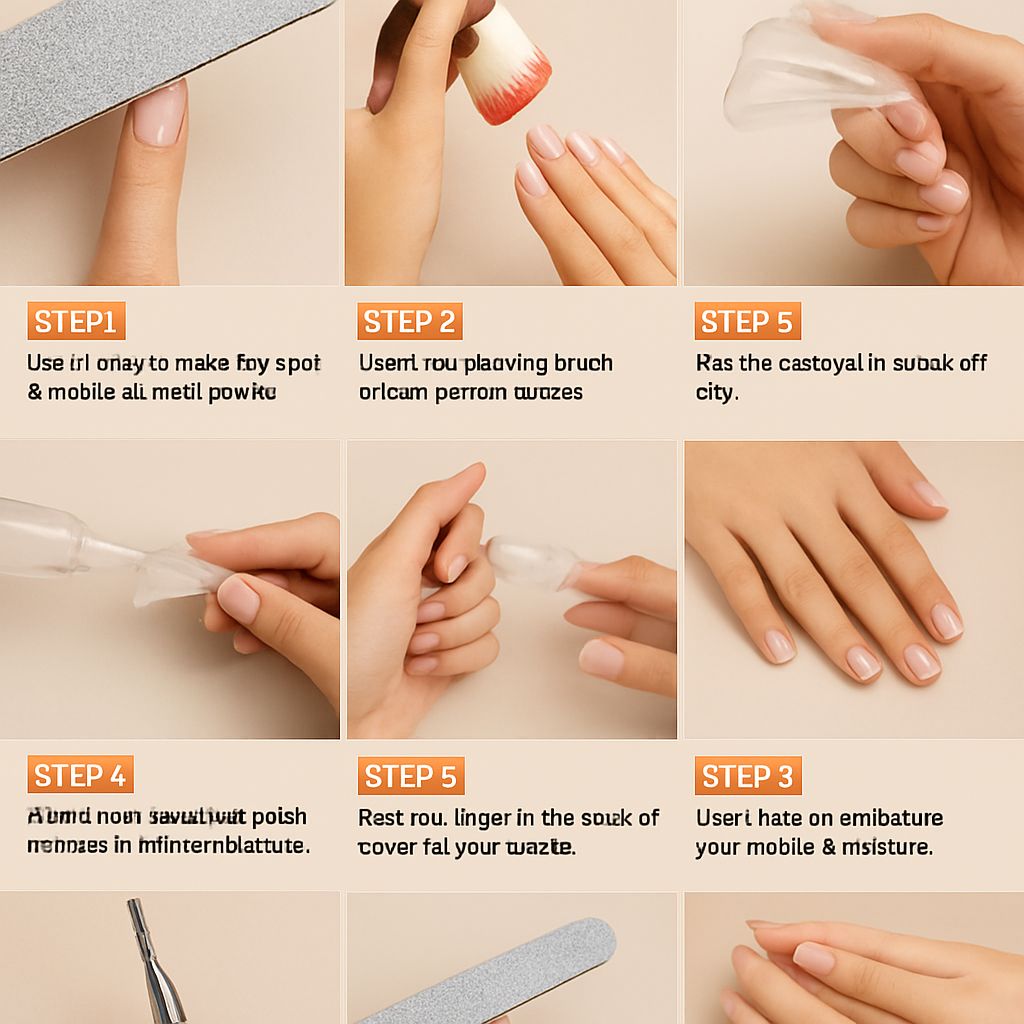
Before removing gel acrylic nails at home, gather a 100/180 grit nail file, a coarse buffer, pure acetone (not acetone-free remover), aluminum foil cut into small squares, cotton balls or pads, a cuticle pusher or orange stick, cuticle oil, and a nail strengthener. Avoid metal scrapers unless you are experienced, as they make it easy to slip and abrade the natural nail plate. Having everything ready before starting makes the process significantly faster and reduces the temptation to rush.
Protecting the Skin
Acetone is drying to the surrounding skin and cuticles. Apply petroleum jelly or a thick hand cream to the skin around each nail before placing the acetone-soaked cotton, leaving only the nail surface exposed. This step takes two minutes but prevents the dry, cracked cuticle skin that often follows removal sessions.
Step-by-Step: How to Remove Gel Acrylic Nails with the Foil Method
Filing the Gel Surface
Use the coarse side of a 100/180 grit file to break through the shiny topcoat and gel layer. File in one direction across the entire nail surface until the shine is completely removed. Do not file down to the acrylic yet; the goal is to breach the gel seal so acetone can penetrate. This step is necessary regardless of the method used, because intact gel polish is largely impermeable to acetone.
Soaking and Wrapping
Soak a cotton ball in acetone and press it flat against the filed nail surface. Wrap the cotton and fingertip tightly in a small square of aluminum foil, folding the edges to keep the cotton pressed firmly against the nail. Repeat for all fingers. Let the wraps sit for 20 to 30 minutes. Removing the wraps too early means the acrylic has not softened adequately and scraping will damage the nail plate.
Removing the Softened Acrylic
Remove one wrap at a time. The acrylic should appear white, chalky, and slightly lifted at the edges. Use a cuticle pusher at a low angle to gently slide the softened material toward the free edge in short strokes. If it does not slide easily, rewrap that finger for an additional ten minutes. Any acrylic that resists coming off needs more soaking time, not more pressure.
How to Remove Gel Nail Polish from Acrylic Nails Without Removing the Extension
When the acrylic extension is still intact and wearable and only the gel polish layer needs removal, the process is faster. File lightly to break the gel surface seal, then apply acetone-soaked cotton under a foil wrap for ten to fifteen minutes. The gel polish softens and wipes away, leaving the acrylic intact. Avoid long soak times in this scenario since extended acetone exposure will begin breaking down the acrylic layer even when that is not the goal.
Buffing and Finishing the Natural Nail
After removal, the natural nail surface will often feel rough and look dull. Use the fine side of the buffer to smooth the surface gently, then apply a nail strengthener or base coat to add a protective layer. Cuticle oil applied daily for the following two weeks helps restore flexibility and moisture to the nail plate and surrounding skin. Avoid re-applying any nail enhancements for at least one to two weeks to let the nail recover fully before being covered again.
Common Mistakes That Damage Natural Nails
The most damaging removal habits are peeling or prying extensions off before the acrylic has softened, using metal tools with excessive force, and skipping the filing step so acetone cannot penetrate the gel layer. Cutting or breaking off the extension before soaking is also common and causes significant nail plate damage. Another mistake is repeatedly soaking without checking whether the material has actually softened, which wastes time and dries out the surrounding skin unnecessarily.
Safety recap: Always work in a well-ventilated space when using pure acetone, as the fumes are flammable and irritating in enclosed areas. Keep acetone away from open flames and away from the eyes. If skin becomes significantly dry, irritated, or cracked after removal, allow the nails to recover without polish or enhancements and apply a fragrance-free barrier cream until the skin heals. People with known sensitivity to acrylate compounds should consult a nail professional for removal rather than working at home.




Leave a Reply