
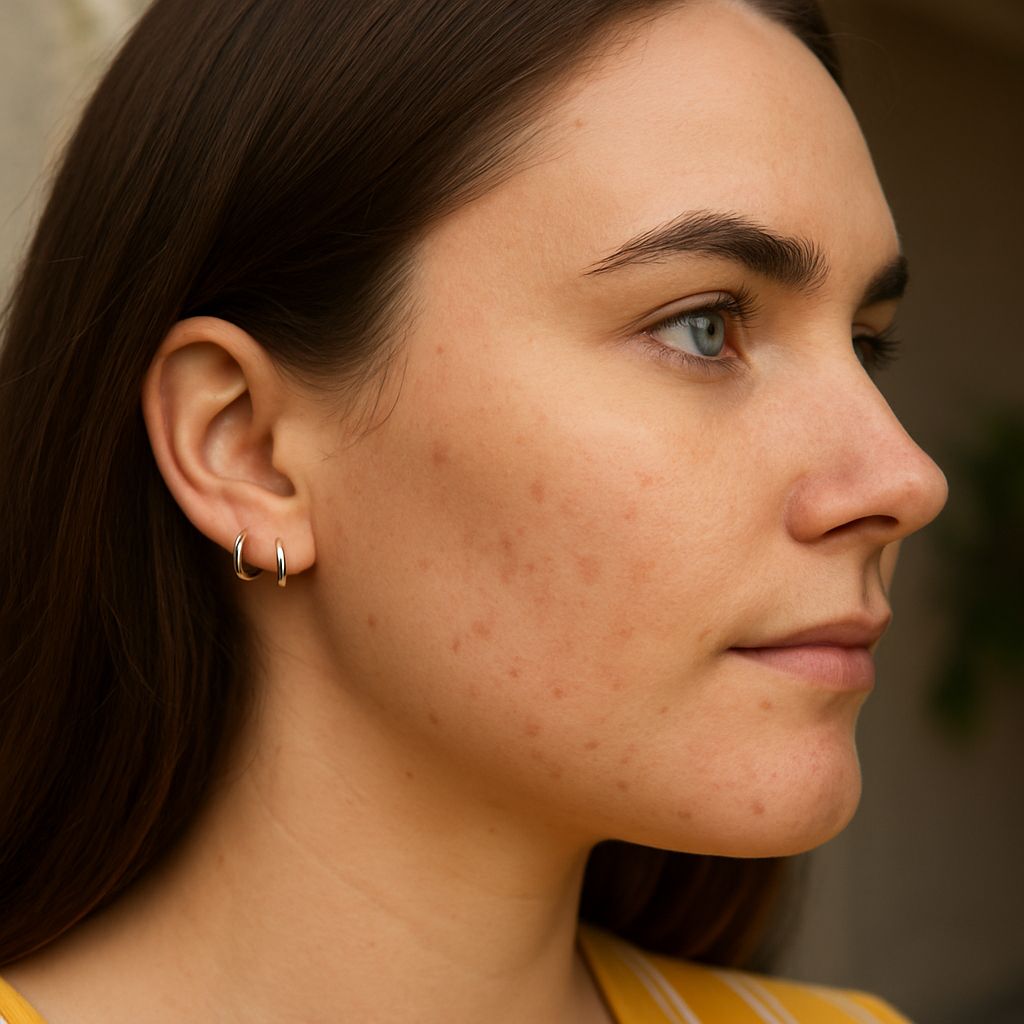
Acne on Chin and Jawline: Causes, Female Hormonal Triggers, and Effective Treatments
Acne on chin and jawline is distinct from forehead or cheek breakouts in both its causes and its resistance to standard topical treatments. While most facial acne responds to consistent cleansing and over-the-counter benzoyl peroxide or salicylic acid, acne along jawline that keeps cycling back despite a solid skincare routine often has a hormonal component that topicals alone cannot address. Understanding what drives persistent chin and jawline breakouts changes the treatment approach from surface management to root-cause intervention.
Jawline acne causes vary by age and sex, but the hormonal explanation accounts for the majority of cases in adults, particularly women. Acne jawline patterns in female patients often follow the menstrual cycle, worsening in the week before menstruation when progesterone rises and stimulates sebum production. Jawline acne female patients frequently describe breakouts that appear as deep, painful cysts rather than surface whiteheads, which reflects the deeper involvement of hormonally enlarged sebaceous glands.
Why Jawline and Chin Are Acne-Prone Zones
Sebaceous Gland Density
The lower face has a high concentration of sebaceous glands that are responsive to androgenic hormones. Testosterone and its more potent derivative DHT bind to receptors in these glands and increase sebum production. Excess sebum combines with dead skin cells to create comedones that become inflammatory papules and cysts. This mechanism explains why the jawline and chin are the most common areas for hormonal breakouts even when the rest of the face is clear.
External Irritants at the Jawline
Beyond hormones, the jawline is in regular contact with phone screens, shirt collars, pillowcases, chin straps from sports equipment, and hands during periods of stress. Each of these introduces bacteria, friction, and occlusion to an area that is already prone to congestion. Cleaning phone screens daily, changing pillowcases twice a week, and avoiding touching the chin and jaw reduces the mechanical and bacteriological load on this acne-prone zone.
Hormonal Acne Along Jawline in Female Patients
Menstrual Cycle and Sebum Peaks
In the luteal phase of the menstrual cycle, the two weeks between ovulation and menstruation, progesterone dominates. High progesterone stimulates sebaceous glands, increases skin temperature, and may encourage bacterial proliferation. Women who notice acne jawline flares that appear predictably in this phase are experiencing classic hormonal cycling. Tracking breakout timing over two to three cycles using a skin journal confirms the pattern and gives a dermatologist the data needed to recommend appropriate hormonal intervention.
Polycystic Ovary Syndrome and Elevated Androgens
PCOS is one of the most common causes of persistent, severe acne along jawline in women of reproductive age. Elevated androgens in PCOS directly stimulate sebum production and hair follicle hyperkeratinization. Women with PCOS-related jawline acne often also experience irregular periods, hair thinning at the scalp, and excess facial or body hair. A gynecologist or endocrinologist can confirm the diagnosis with bloodwork and ultrasound and recommend treatment including combined oral contraceptives, spironolactone, or metformin depending on the broader hormonal picture.
Effective Treatments for Chin and Jawline Acne
Topical Retinoids
Prescription tretinoin or adapalene accelerates skin cell turnover, prevents pore blockages, and reduces the inflammatory response in existing lesions. Applied nightly to the lower face, retinoids address both the comedonal and inflammatory components of jawline acne. Results typically take eight to twelve weeks to become noticeable, and initial purging, where existing congestion surfaces rapidly, is expected in weeks two through four.
Spironolactone for Hormonal Jawline Acne in Women
Spironolactone is an oral androgen blocker that reduces sebum production by competing with DHT at the sebaceous gland receptor. For female patients with confirmed hormonal acne jawline patterns, it is one of the most effective interventions available. It requires a prescription and regular monitoring of blood pressure and potassium levels, and it is not safe during pregnancy, so contraceptive counseling accompanies any prescription.
Oral Antibiotics for Inflammatory Cysts
For severe inflammatory cysts clustered along the jaw, a short course of oral doxycycline or minocycline reduces bacterial burden and inflammation while longer-term treatments like retinoids take effect. Antibiotics are typically limited to three to six months to prevent resistance, and they work best as a bridge treatment rather than a permanent solution for hormonal jawline acne.
Skincare Adjustments That Support Jawline Acne Treatment
Using non-comedogenic products throughout the skincare routine is especially important for acne-prone jawline skin. Heavy creams, SPF formulas with occlusive silicones, and makeup with high wax content increase congestion in this already sebum-rich zone. Switching to a lightweight gel moisturizer and a fluid sunscreen, and removing makeup thoroughly before bed, reduces the load on follicles that are already managing elevated sebum levels.
Next steps: If chin and jawline breakouts follow a monthly hormonal pattern or have not improved after three months of consistent over-the-counter treatment, schedule an appointment with a dermatologist. A personalized prescription regimen combining a topical retinoid with a hormonal treatment addresses both the surface and the systemic drivers of acne along jawline more effectively than any skincare product available without a prescription.



Leave a Reply