
How to Get Off Acrylic Nails Safely: Methods That Protect Your Natural Nails
Knowing how to get off acrylic nails without destroying the nail beds underneath is a skill worth developing. Pulling, prying, or biting acrylics off is one of the most common causes of nail damage, tearing the surface layer of the natural nail along with the artificial extension. Whether your salon is closed, you prefer the DIY approach, or you simply want to understand the process, this guide covers every method from acetone soaking to the popular technique of how to take off acrylic nails with hot water.
The goal is always to dissolve or soften the acrylic material rather than force it off mechanically. How to safely remove acrylic nails comes down to patience: rushing the process almost always means damage. For gel-acrylic hybrids, knowing how to remove acrylic gel nails requires understanding both materials, since gel topcoats often need filing before acetone can penetrate. The methods below work for both standard and gel-over-acrylic applications.
What You Need Before You Start
Gather 100% pure acetone (not regular nail polish remover, which typically contains only 30% acetone and works far too slowly for acrylics), nail clippers, a nail file, a glass or ceramic bowl, tin foil or nail soak-off clips, a wooden or plastic cuticle pusher, and a nourishing cuticle oil. Cotton pads cut to nail size speed up the foil method. Avoid metal implements for scraping as they scratch the nail plate surface even when used gently.
The Acetone Soak Method: The Most Reliable Way to Remove Gel Acrylic Nails
Preparation Steps
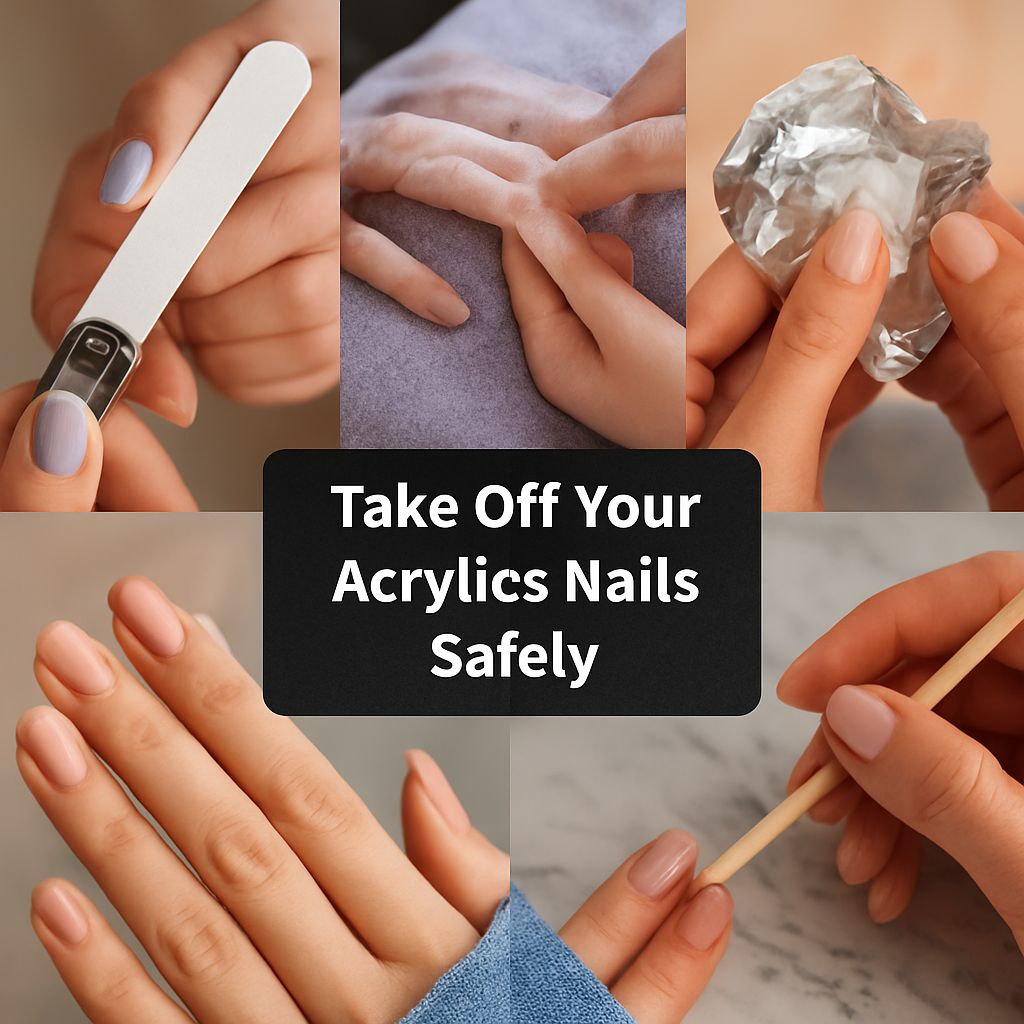
Clip the acrylic nails as short as possible without cutting into the natural nail. Use a coarse nail file (100 to 180 grit) to file off the top shiny layer of the acrylic or gel topcoat. Removing this seal allows acetone to penetrate the material. Skip this step and you could sit in a bowl of acetone for twice as long with half the results.
Foil Wrap Technique
Soak a cotton pad in acetone, place it directly over the nail, and wrap tightly with a small square of tin foil. Leave in place for 20 to 30 minutes. The foil holds heat and prevents evaporation, which significantly speeds dissolution. After 20 minutes, slide the cotton pad off with a twisting motion and use the cuticle pusher to gently push any remaining acrylic toward the tip. If resistance is met, rewrap for another 10 minutes rather than forcing the material.
Bowl Soak Alternative
Pour acetone into a glass or ceramic bowl, never plastic because acetone dissolves many plastics. Submerge the fingertips for 20 to 30 minutes. This is effective but dries out the surrounding skin more aggressively than the foil method. Apply petroleum jelly to the skin around each nail before soaking to limit damage to the cuticles and fingertips.
How to Take Off Acrylic Nails with Hot Water
The hot water method is gentler but works only for acrylics that have been on long enough for the adhesive bond to have weakened naturally. Fill a bowl with warm water, not boiling, and soak for 20 to 30 minutes. The combination of warmth and moisture can loosen the acrylic enough to gently lift it from the edges. If significant resistance remains, this method alone is not sufficient and acetone should be used instead. This approach works best for people with skin sensitivities who want to avoid prolonged acetone contact.
How to Remove Acrylic Gel Nails with a Dual Approach
Gel-over-acrylic systems require filing through the gel layer first. Use a 150-grit file to remove the glossy gel surface, being careful not to file so aggressively that heat builds up on the natural nail. Once the gel layer is broken, proceed with the acetone foil method described above. The acrylic underneath typically softens within 25 minutes. Gel components in the deeper layers may need a second round of acetone wrapping to fully dissolve.
Post-Removal Care for Healthy Nails
After removing gel acrylic nails, the natural nails will likely be thin, soft, and dehydrated. Apply a cuticle oil generously and massage it into the nail bed and surrounding skin. Give the nails a few weeks without any artificial enhancements to recover strength. A nail strengthener product with keratin or calcium can be applied daily during this recovery period. Avoid harsh cleaning products without gloves, as thin post-acrylic nails absorb chemicals rapidly and become even more brittle.
Safety recap: Always work in a ventilated space when using acetone, as the fumes are flammable and can cause dizziness with prolonged exposure. Keep acetone away from open flames and store it in its original sealed container. If you experience redness, swelling, or signs of nail infection after removal, consult a nail technician or dermatologist before reapplying any artificial product.




Leave a Reply