
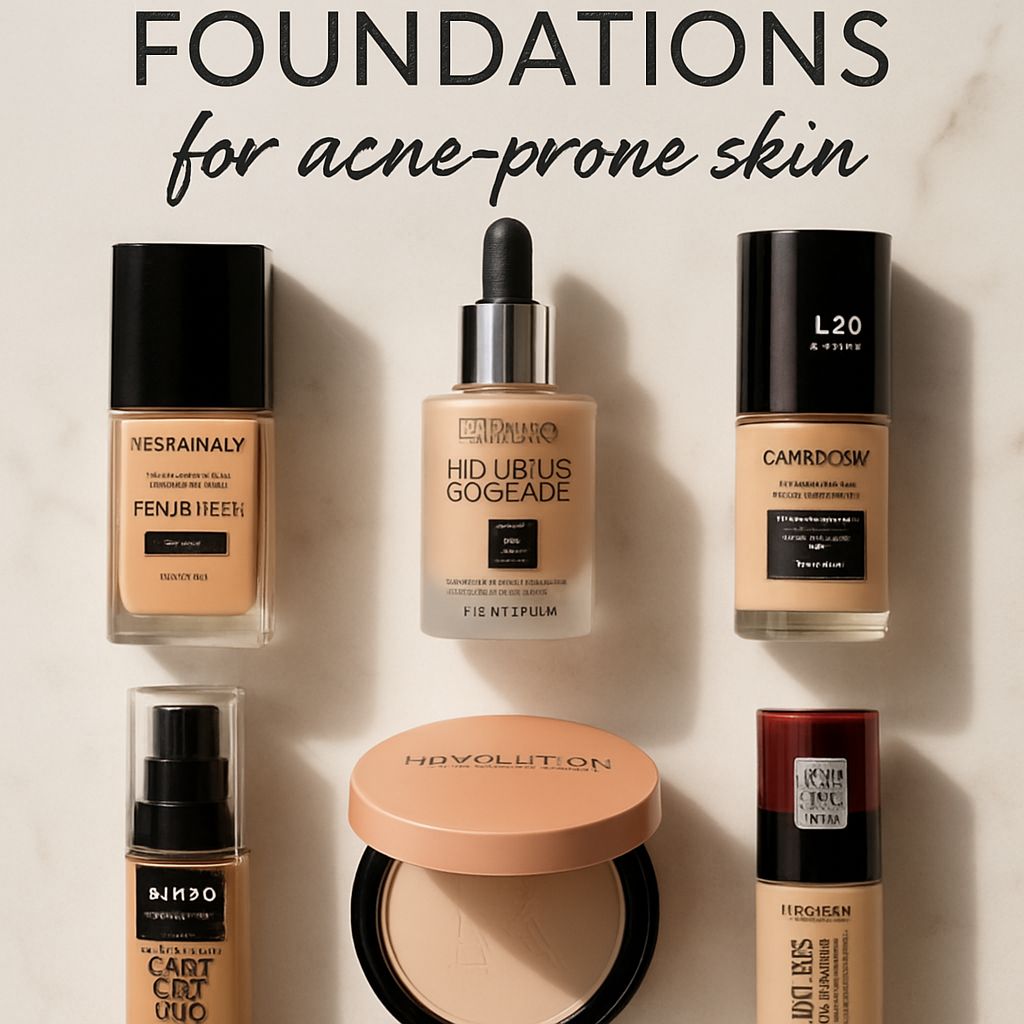
Best Foundations for Acne Prone Skin: How to Cover Breakouts Without Making Them Worse
Finding the best foundations for acne prone skin is genuinely challenging because most high-coverage formulas that hide breakouts effectively are also the ones most likely to clog pores and trigger new ones. An acne foundation needs to walk a very specific line: providing enough pigment to cover redness, post-acne marks, and active blemishes while keeping pores clear and the skin barrier intact. The wrong foundation for acne can cause purging, accelerate comedone formation, and create a difficult cycle where more blemishes require more coverage.
The best foundation for acne skin has consistent characteristics: oil-free, non-comedogenic, buildable rather than heavy in a single pass, and ideally containing skin-beneficial active ingredients. The best foundation for acne coverage may not be the thickest formula in the range; a lighter, buildable formula applied in layers over primer often covers better and looks more natural than one heavy coat of full-coverage foundation.
Key Features of Acne-Safe Foundations
Oil-Free and Non-Comedogenic
These two labels are the baseline requirements. Non-comedogenic formulas have been tested to avoid blocking pores. Oil-free formulas skip the heavy emollient oils that contribute to congestion. Not all non-comedogenic foundations are equal: some still contain comedogenic ingredients like isopropyl myristate or coconut oil derivatives that slip past the label because testing is not standardized. Learning to read ingredient lists helps identify these.
Beneficial Active Ingredients
The most progressive acne foundation formulas now incorporate ingredients that improve skin while covering it. Salicylic acid at 0.5 to 1 percent provides gentle in-pore exfoliation throughout the day. Niacinamide regulates sebum and reduces post-inflammatory redness and hyperpigmentation. Zinc oxide in mineral formulas has mild antibacterial properties and is inherently non-comedogenic. Choosing foundations with these actives makes wearing makeup a dual-purpose skin investment.
Finish and Coverage Type
Matte and semi-matte finishes suit acne-prone skin by controlling shine that gets worse when oil interacts with foundation throughout the day. Satin finishes work for those with combination skin where some areas are dry. Avoid luminous or dewy formulas on acne-prone complexions because the light-reflective particles exaggerate the texture around blemishes and create a greasy appearance over time.
Mineral vs. Liquid Foundations for Acne
Mineral foundations containing zinc oxide and titanium dioxide are among the most skin-friendly options for acne-prone complexions. They sit on the skin surface rather than penetrating pores and are less likely to cause irritation or breakouts in sensitive, reactive skin. Coverage is medium at best in loose powder form, though pressed mineral formulas and mineral-infused liquid foundations offer more. Liquid foundations provide the most coverage options and suit those who need to cover multiple blemishes or significant post-acne marks.
Application Approach for Acne Skin
Starting with a clean, moisturized face and a non-comedogenic primer significantly extends foundation wear and improves coverage while reducing the amount of product required. A damp beauty sponge applies liquid acne foundation without transferring the bacteria from bristles that brushes can carry. Replace beauty sponges every one to two months to prevent bacterial buildup. Apply in thin layers and build coverage only where needed rather than applying a uniform heavy coat across the entire face.
Removing Foundation Properly to Prevent Breakouts
The most sophisticated acne foundation becomes problematic if it is not removed thoroughly every evening. Double cleansing, beginning with a micellar water or cleansing oil to break down makeup, followed by a gentle foaming or gel cleanser, removes foundation residue that a single cleanse often misses. Leaving any foundation, particularly around the nose and chin, overnight significantly increases the risk of new breakout formation. Clean makeup brushes and sponges weekly with brush cleaner or baby shampoo.
Safety recap: Always patch test new foundation formulas before full application, particularly if your skin is currently experiencing an active breakout cycle. Introduce one new product at a time to identify whether any ingredient causes a reaction. A properly chosen and properly removed foundation protects rather than undermines acne-prone skin.





Leave a Reply