
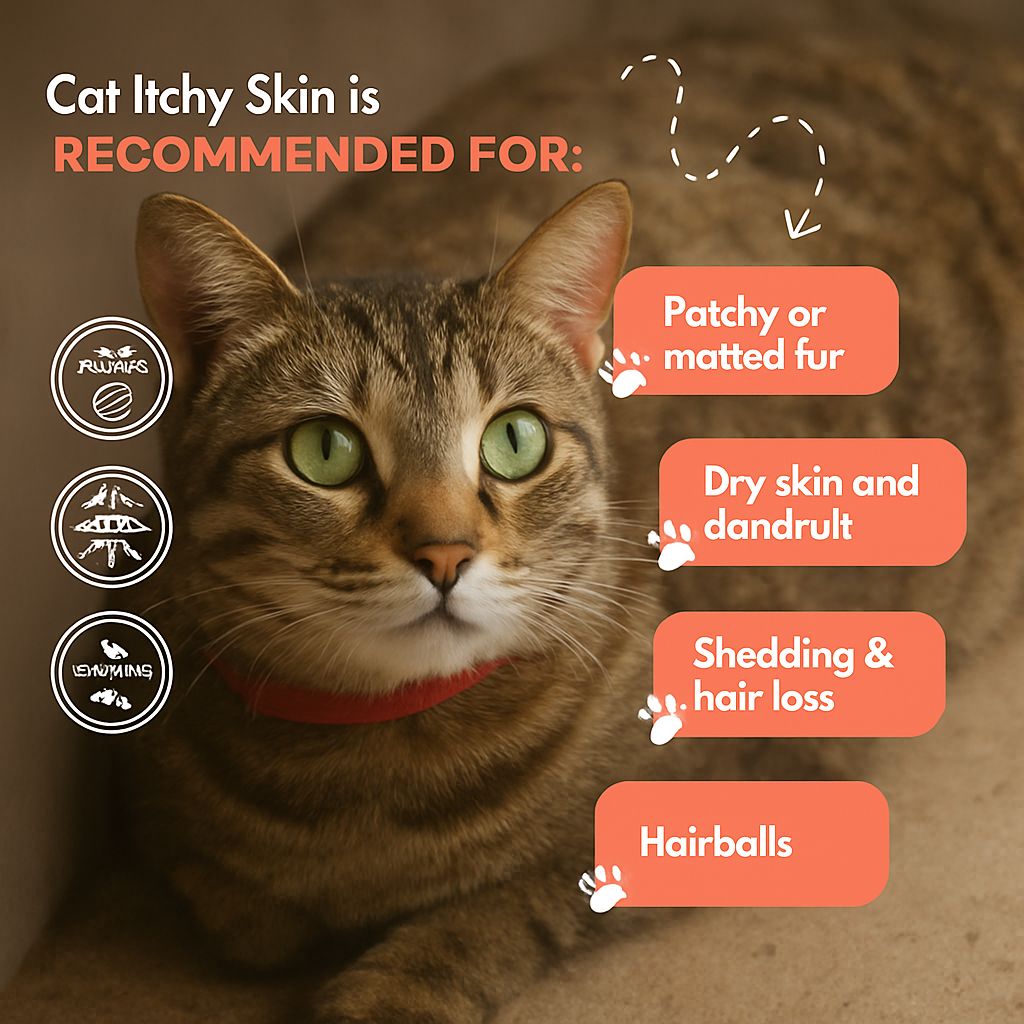
Home Remedies for Dry Skin on Cats: What Actually Helps and When to Call the Vet
Flaky coats and persistent scratching are common complaints from cat owners, and home remedies for dry skin on cats are often the first line of response. Before reaching for a product off the shelf, understanding why your cat’s skin has become dry is essential: environmental humidity, diet, over-grooming, allergies, and parasites can all play a role. Knowing how to treat dry skin on cats effectively means addressing both the symptom and the likely cause. Many of the remedies covered here are safe, inexpensive, and achievable with items already in your home.
You may have noticed that cats with dry skin often groom excessively or develop a dull, rough coat texture. If my cat has dry skin, the first step is ruling out underlying conditions, then applying the most appropriate remedy. A dry skin cat in winter is very common due to low indoor humidity; solutions are usually straightforward when the cause is environmental.
Why Do Cats Develop Dry Skin?
Cat skin dryness has several common origins. Low humidity indoors during winter months draws moisture from the skin surface. Diets lacking in essential fatty acids, particularly omega-3 and omega-6, impair the skin’s natural lipid barrier. Excessive bathing with harsh shampoos strips protective oils. Older cats produce less sebum naturally, making age-related skin dryness predictable. Food allergies and inhalant allergies can manifest as skin dryness and itching even without visible rashes. In all these cases, targeted home care offers real improvement.
Omega-3 Fatty Acid Supplementation
Why Omega-3s Help Cat Skin
Omega-3 fatty acids are among the most evidence-supported interventions for dry skin in cats. They reduce inflammation, support the skin’s moisture-retaining lipid layer, and improve coat shine and texture. Deficiency is common in cats fed exclusively dry kibble, which loses some fatty acid content during processing.
How to Add Omega-3s Safely
A small amount of fish oil or purpose-made feline omega-3 supplement added to food daily produces noticeable improvement over four to six weeks. Dose by weight according to product guidelines; too much fish oil can cause loose stools or vitamin E imbalance. Avoid cod liver oil, which contains high levels of vitamins A and D that are toxic to cats at elevated doses.
Humidifier Use in Dry Environments
Running a humidifier in rooms where your cat spends most of its time is one of the simplest and most effective remedies for environmentally caused dryness. Maintaining indoor relative humidity between 40 and 50 percent prevents transepidermal water loss from both human and feline skin. This remedy costs nothing beyond the initial appliance purchase and requires no handling of the cat, making it ideal for reluctant patients.
Coconut Oil as a Topical Remedy
Virgin coconut oil applied in tiny amounts directly to dry patches can soothe and moisturize affected skin. Massage a minimal amount, less than half a teaspoon for small areas, into the dry patches and allow it to absorb. Cats will often lick topical applications off quickly, so applying it immediately before feeding can minimize this. Coconut oil is not toxic to cats in small amounts but large oral ingestion causes digestive upset, so use sparingly and monitor the cat afterward.
Grooming Adjustments
Regular brushing with an appropriate cat brush distributes natural skin oils along the coat shaft and removes loose dander that builds up with dry skin. Long-haired cats benefit from daily brushing; short-haired cats do well with two or three sessions per week. Avoid any shampoo use unless a veterinarian recommends it, and if bathing is unavoidable, use a shampoo specifically formulated for feline skin and rinse thoroughly.
When to See a Veterinarian
If your cat’s dry skin does not improve within three to four weeks of home care, or if it is accompanied by hair loss, scabs, red or inflamed patches, excessive scratching, or weight changes, a veterinary evaluation is warranted. Conditions like ringworm, mange, hyperthyroidism, and food allergies all present with skin symptoms and require specific treatments that home remedies cannot address. Early diagnosis saves time and prevents the cat from unnecessary discomfort.




Leave a Reply