
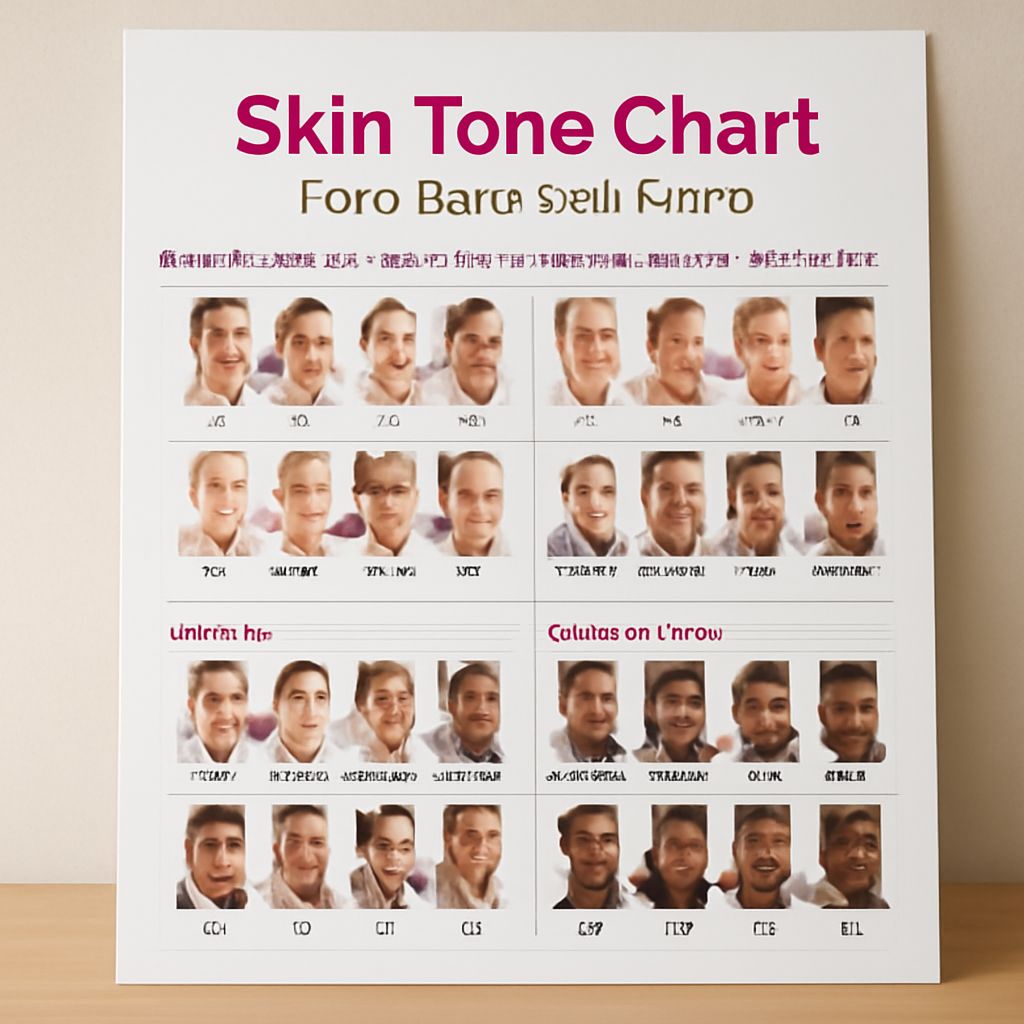
Skin Tone Chart: Understanding Skin Tones and Undertones
A skin tone chart helps explain the range of human complexions and the underlying qualities that influence how colors appear on different people. A skin tones chart organizes complexions from fair to deep while also accounting for warm, cool, and neutral undertones. Knowing where you fall on a skin colors chart is practical information for choosing makeup, hair color, clothing, and accessories that work with your natural coloring.
A skin complexion chart goes beyond surface lightness or darkness. Two people with the same surface shade can have very different undertones, which explains why the same lipstick can look great on one person and completely wrong on another. A skin colour chart that includes undertone categories gives more useful guidance than one based on shade alone.
What Is a Skin Tone?
Skin tone describes the surface color of the skin, determined largely by melanin concentration. More melanin produces deeper complexions. Less melanin results in lighter skin. The full spectrum on a skin tones chart runs from very fair (sometimes called porcelain) through light, light-medium, medium, medium-deep, and deep. Each of these broad categories contains considerable variation based on individual genetics, sun exposure, and health.
What Is a Skin Undertone?
Undertone is the underlying hue that influences the overall appearance of the surface skin color. Three main undertone categories appear across all skin tone chart systems:
- Warm undertones: Golden, yellow, or peachy cast. Common across many skin tones from fair to deep.
- Cool undertones: Pink, red, or blue cast. Also spans the full range of the skin complexion chart.
- Neutral undertones: A mix of warm and cool. These skin tones can wear both warm and cool colors well.
Undertone remains fairly stable regardless of tanning or other temporary changes to surface skin color.
How to Use a Skin Tone Chart
To locate yourself on a skin colours chart, consider several methods together rather than relying on just one:
- Vein test: Look at the veins on the inside of your wrist in natural light. Blue-purple suggests cool undertones. Greenish veins suggest warm. A mix suggests neutral.
- Sun response: Fair skin that burns easily often has cool undertones. Skin that tans easily typically has warm or neutral undertones.
- Jewelry test: Silver jewelry generally flatters cool undertones. Gold flatters warm undertones. Both suit neutral undertones.
- White vs. off-white: Pure white often flatters cool undertones. Cream or ivory tends to suit warm undertones better.
Common Skin Tone Categories
Most skin colors charts use six to twelve categories. Common labels include porcelain or ivory for the palest tones, fair or light, light beige or nude, medium, tan or caramel, olive, dark, and deep or rich. Olive is notable because it sits on the medium-to-deep portion of the skin tone chart but often has its own greenish or yellow-neutral undertone that does not fit cleanly into warm or cool categories.
Why Skin Tone Charts Matter for Beauty Choices
Foundation shade matching depends directly on both surface skin tone and undertone. A foundation with the right depth but the wrong undertone will look grey, orange, or pink rather than natural. The same principle applies to concealer, blush, bronzer, and lipstick. Hair color choices benefit from undertone awareness, as warm hair colors suit warm undertones and cool hair shades suit cool undertones. Clothing colors follow a similar logic, with certain palette ranges flattering warm undertones and others suiting cool skin tones better.
Digital Skin Tone Tools
Many cosmetic brands now offer digital tools or shade finders that use a skin tone chart as their underlying framework. These tools ask about vein color, sun response, and other factors to suggest foundation shades or hair color ranges. While they are useful starting points, results still benefit from in-person matching under natural light or in a beauty retailer with staff who can visually assess your undertone.
Key takeaways: A skin tone chart covers both surface shade and undertone. Undertone, not just surface color, determines which makeup, hair color, and clothing hues look most flattering. Understanding your position on a skin complexion chart makes beauty shopping considerably more efficient and accurate.




Leave a Reply