
Cat Skin Conditions: Common Types, Causes, and Treatments
Cat skin conditions are more prevalent than many owners realize. A cat’s dense coat can hide early signs of irritation, infection, or inflammation until symptoms become obvious. Skin conditions in cats range from mild allergic reactions and parasites to more complex autoimmune or hormonal disorders. Recognizing the signs early makes treatment more straightforward.
Skin issues in cats often show up as excessive grooming, hair loss, scabs, or flaking. Cats skin conditions can affect any breed at any age, though some issues are more common in certain coat types or age groups. Understanding cat skin disorders helps you know when home care is sufficient and when a veterinary visit is essential.
Most Common Cat Skin Conditions
Several conditions appear frequently in feline patients. Each has distinct characteristics that help with identification.
Flea Allergy Dermatitis
The most widespread of all skin conditions in cats, flea allergy dermatitis occurs when a cat reacts to proteins in flea saliva. Even a single flea bite can trigger intense itching. Typical signs include small crusts at the base of the tail, hair loss along the back, and constant scratching or chewing. Year-round flea prevention resolves most cases.
Ringworm
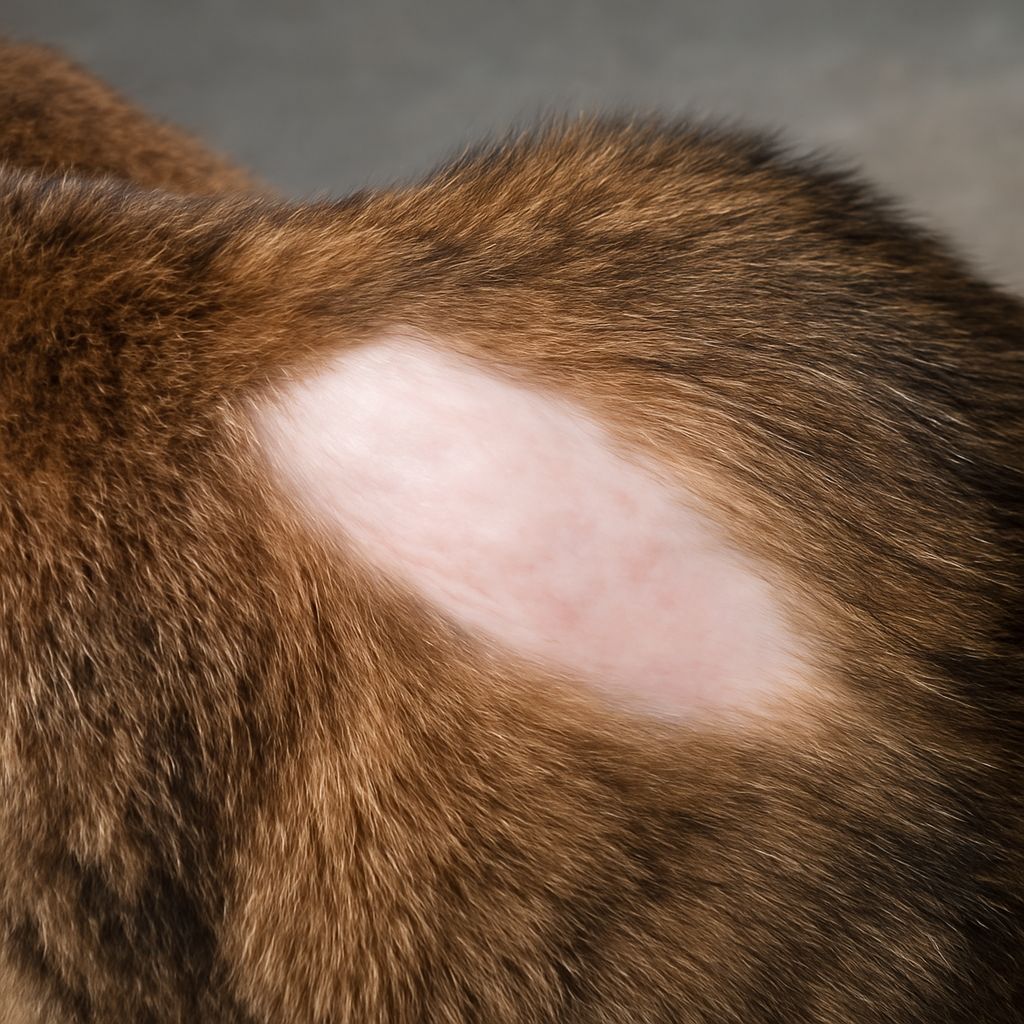
Despite the name, ringworm is a fungal infection, not a parasite. It produces circular patches of hair loss with scaly or inflamed skin at the edges. Ringworm is contagious to other cats, dogs, and humans, so prompt treatment and isolation of affected animals is important.
Miliary Dermatitis
This condition produces small, crusty bumps scattered across the back, neck, and face. It is not a specific disease but a reaction pattern that can stem from allergies, parasites, or other triggers. Identifying and removing the underlying cause is key to resolution.
Food and Environmental Allergies
Allergic skin issues in cats often cause symmetrical hair loss, facial itching, or recurring skin infections. Food proteins like chicken, beef, or fish are common triggers. Environmental allergens such as dust mites or pollen can also drive chronic skin reactions. Dietary trials and allergy testing help pinpoint the cause.
Signs That Indicate a Skin Problem
Cats hide discomfort well. Watch for these indicators of skin trouble:
- Excessive grooming or barbering of the coat
- Visible hair loss in patches or symmetrical areas
- Small crusty scabs along the back or neck
- Redness, swelling, or skin thickening
- Changes in coat texture, from glossy to dull or rough
Any of these signs, especially when persistent for more than a week or two, warrants a veterinary evaluation.
Diagnosis and Testing
A veterinarian will typically examine the skin closely, possibly using a Woods lamp to detect fungal infections, and may take skin scrapings or cytology samples. Blood tests help rule out hormonal imbalances such as hyperthyroidism. For suspected allergies, an elimination diet over eight to twelve weeks can identify food triggers. Intradermal testing or serum allergy panels may be used for environmental allergens.
Treatment Options for Cat Skin Disorders
Treatment depends entirely on the diagnosis.
Topical Treatments
Medicated shampoos, sprays, and creams treat localized infections, fungal conditions, and mild inflammation. Always use products formulated for cats. Some human or dog medications are toxic to cats.
Medications
Antihistamines, steroids, or newer targeted allergy medications like oclacitinib may be prescribed for allergic skin diseases. Antifungals treat ringworm systemically when topical treatment is insufficient. Antibiotics address secondary bacterial infections.
Parasite Control
Monthly flea and mite prevention is both a treatment and a preventive measure. Even indoor cats benefit from regular parasite control since fleas can enter the home on clothing or other pets.
When to See a Veterinarian
Seek veterinary care promptly if your cat has open sores, rapid hair loss, skin that looks infected or has a foul odor, or symptoms that do not improve within a week of home care. Cats with compromised immune systems or chronic disease need professional management for even minor skin issues.
Safety note: Never apply medicated creams or shampoos intended for humans or dogs to a cat without veterinary guidance. Many ingredients, including tea tree oil and permethrin, are toxic to cats and can cause serious harm.





Leave a Reply