
Dog Skin Ulcer and Rash Guide: Causes, Photos, and Treatment
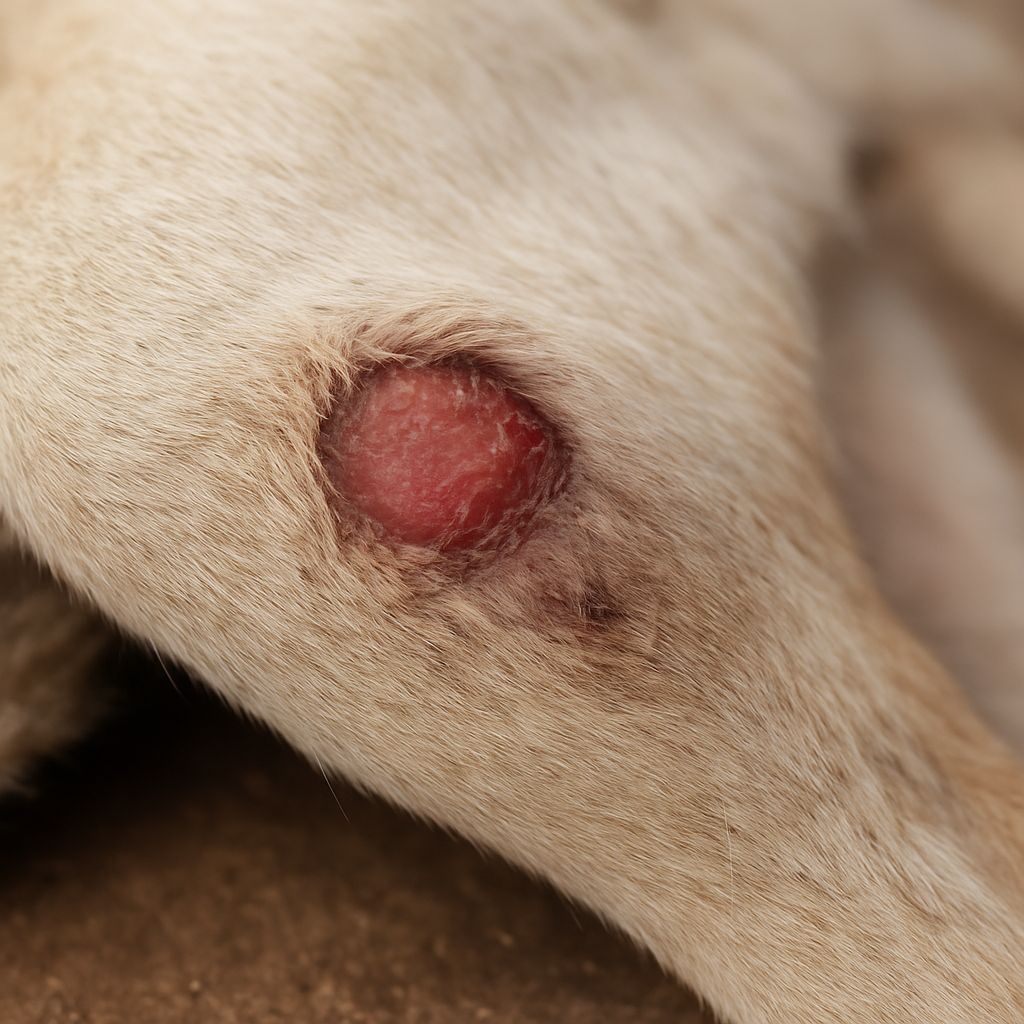
A dog skin ulcer is any open wound or erosion on the skin surface that fails to heal normally. Dog skin ulcer photos shared in veterinary forums show significant variation — some ulcers look like small round craters, others are larger weeping areas with irregular borders. What they have in common is that they don’t resolve on their own and require veterinary assessment. Dog skin rash treatment depends entirely on the underlying cause, which is why visual identification alone isn’t sufficient.
Dog skin rashes are far more common than true ulcers. Most dog skin rashes result from allergies, contact irritants, insect bites, or infections. Dog yeast infection skin pictures look different from bacterial rashes — yeast infections produce reddish-brown staining, thickened or “elephant skin” texture, and a distinctive musty odor, often in skin folds, armpits, groin, and between the toes. Identifying which type of condition you’re dealing with determines the treatment approach.
What a Dog Skin Ulcer Looks Like
A true ulcer is deeper than a surface rash. It involves loss of the outer skin layers (epidermis and dermis), creating an open wound. Dog skin ulcer photos typically show a moist, red, sometimes oozing crater that may have irregular or rolled edges. Surrounding skin is often inflamed or discolored. Common causes include:
- Pressure sores (decubital ulcers) in large or overweight dogs who lie on hard surfaces
- Infected lick granulomas — where a dog licks one spot obsessively until the skin breaks down
- Vasculitis (blood vessel inflammation)
- Deep bacterial or fungal infections
- Immune-mediated conditions like pemphigus
Any open wound that hasn’t healed within 7–10 days needs veterinary evaluation. Ulcers that grow in size, become very deep, or are accompanied by fever or lethargy need same-day or emergency attention.
Dog Skin Rashes: Common Types
Dog skin rashes present as redness, bumps, pustules, or scaling. Common types include:
- Hot spots (pyotraumatic dermatitis): Moist, red, rapidly spreading lesions caused by self-trauma. Common in summer in heavy-coated breeds. Dog skin rash treatment for hot spots involves clipping the hair around the lesion, cleaning with a gentle antiseptic, and topical or oral antibiotics.
- Folliculitis: Bacterial infection of hair follicles causing pustules and papules, often over the back or belly. Treated with antibiotics.
- Contact dermatitis: Rash from exposure to an irritant (fertilizers, cleaning products, certain plants). Clears when the irritant is removed.
- Ringworm: Fungal infection creating circular, scaly patches with hair loss. Treated with antifungals.
Dog Yeast Infection Skin: Recognizing It
Yeast infections in dogs are caused by Malassezia pachydermatis, a normally harmless skin resident that overgrows in humid, warm areas. Dog yeast infection skin pictures typically show reddish-brown or rust-colored staining (especially noticeable in white or light-colored fur), thickened, dark, or greasy skin, and hair loss in affected areas. The skin has a characteristic musty or corn-chip odor.
Common locations: ear canals, skin folds, between toes, armpits, groin. Dog skin rash treatment for yeast involves antifungal shampoos containing ketoconazole or chlorhexidine, and sometimes oral antifungal medication for severe or widespread infections.
When to See a Vet
See a vet immediately for: any open ulcer, rapidly spreading rash, signs of systemic illness alongside skin changes, or any dog skin ulcer that’s changing in size, color, or depth. A skin scrape, cytology, or culture determines the causative organism and guides targeted dog skin rash treatment.
Key takeaways: Dog skin ulcers are open wounds requiring veterinary care — they don’t heal reliably without identifying the underlying cause. Dog skin rashes have many causes with different treatments; don’t apply human topical products without vet guidance. Dog yeast infection skin is recognizable by its smell, texture, and location and responds to antifungal treatment.




Leave a Reply