
Difference Between Ombre and Balayage: Which Color Technique Is Right for You?
The difference between ombre and balayage comes up in nearly every salon consultation these days — and it is a genuinely useful distinction to understand before you book an appointment. Both techniques create a gradient from darker roots to lighter ends, and both are wildly popular, but they achieve that effect through different application methods, produce different visual results, and require different levels of upkeep. If you are weighing balayage hair vs ombre, this guide gives you a clear breakdown of each so you can walk into the salon knowing exactly what to ask for. What is the difference between ombre and balayage? Read on for the full picture.
The question of what’s the difference between ombre and balayage is not just aesthetic — it affects how your color grows out, how often you’ll need salon visits, and how much you’ll spend maintaining the look. Choosing between ombre or balayage with those factors in mind leads to a much more satisfying long-term result.
What Is Ombre Hair?
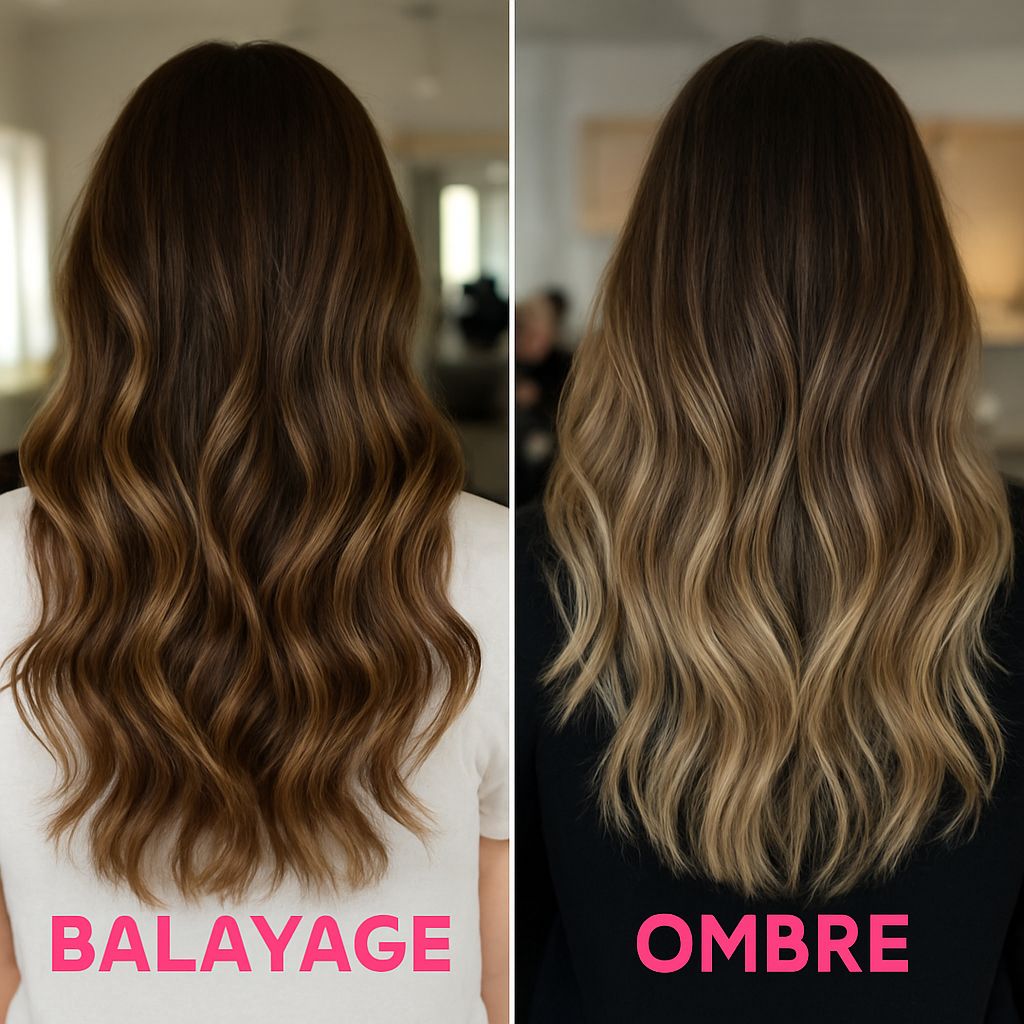
Ombre is a French word meaning “shaded” or “graduated.” In hair coloring, it refers to a two-tone effect where the roots are noticeably darker and the ends are significantly lighter, with a visible transition zone somewhere in the mid-lengths. Traditional ombres have a fairly sharp, defined line of demarcation — the transition from dark to light is obvious rather than blended. More modern ombre styles soften that transition with smudging and blending techniques, creating a smoother gradient. The contrast between root and tip is still greater in ombre than in most balayage results, which gives ombre its signature bold, graphic look.
What Is Balayage?
Balayage (pronounced bah-lee-AHZH) is a French word meaning “to sweep.” It is a freehand application technique where a colorist sweeps lightener or color onto the hair surface without foils, painting highlights in a way that mimics how the sun naturally lightens hair. The result tends to be softer, more dimensional, and more natural-looking than ombre — highlights concentrate at the mid-lengths and ends, are scattered rather than uniform, and blend seamlessly into the base color at the root. Balayage is less a specific “look” and more a technique that can produce many different effects depending on saturation, placement, and the colorist’s approach.
Balayage Hair vs Ombre: Key Technical Differences
How the Color Is Applied
Ombre is typically applied section by section with a brush, often with foils or plastic wrap, creating a more controlled and defined gradient. The colorist usually applies the lightener from a clear demarcation point downward and may use a blending technique at the line of transition. Balayage is applied freehand directly onto the surface of each section of hair, without wrapping in foil — the hair is exposed to air during processing, which creates a softer lift and a sun-kissed, lived-in appearance. The no-foil method is one of the defining characteristics that sets balayage apart from both ombre and traditional highlights.
The Resulting Look
Ombre creates bolder contrast between roots and ends — it tends to look more intentional, fashion-forward, and graphic. Balayage produces a softer, more dimensional color that blends naturally into the root color, making it appear as though you have spent summers on the water rather than at the salon. For natural-looking color with low visual effort, balayage is typically the better choice. For a striking, defined two-tone effect, ombre delivers more drama.
Maintenance: Ombre or Balayage — Which Is Easier to Keep Up?
This is where the two techniques diverge most dramatically in practical terms. Balayage grows out gracefully — because the lightener is applied away from the root and feathered into the base color, there is no obvious root line as the hair grows. Many balayage clients go 3–6 months between salon visits without the color looking neglected. Ombre, particularly the high-contrast traditional version, shows a more obvious grow-out because the demarcation line becomes more prominent as roots lengthen. Modern softened ombre styles grow out more naturally than their classic counterparts, but still typically require touch-ups every 3–4 months to keep the transition looking clean.
Cost Comparison: What to Expect at the Salon
Both techniques are time-intensive and typically cost more than a single-process color. Balayage pricing varies widely depending on your starting color, hair length, and how much lightening is involved — expect anywhere from moderate to premium salon pricing for a full balayage service, often with a toning step included. Ombre can be slightly faster to apply in experienced hands, but the complexity of blending and the multiple processing steps often puts the cost in a similar range. Balayage’s lower maintenance frequency can make it the more economical choice over the course of a year, even if the initial appointment costs more.
Which Technique Suits Your Hair Type and Lifestyle?
If your hair is fine or prone to breakage, balayage is gentler because it uses less overall lightener and never saturates the root area with bleach. Thick, coarser hair can support both techniques well. For people with very dark natural color wanting significant lightening, multiple sessions may be needed regardless of technique — your colorist should set realistic expectations at the consultation. Lifestyle matters too: if you travel frequently, prefer low-maintenance routines, or simply cannot commit to regular salon visits, balayage’s forgiving grow-out makes it the smarter choice. If you love bold, defined color transformations and enjoy regular salon appointments, ombre’s graphic look and more frequent touch-ups may suit you perfectly.
Key takeaways: The core difference between ombre and balayage lies in application method — foil-assisted gradient versus freehand sweeping — and the resulting contrast level. Balayage grows out more naturally and suits low-maintenance lifestyles; ombre delivers higher contrast and a more defined look. Discuss both options with your colorist, bringing photos of results you love, to choose the right approach for your hair and schedule.



Leave a Reply