
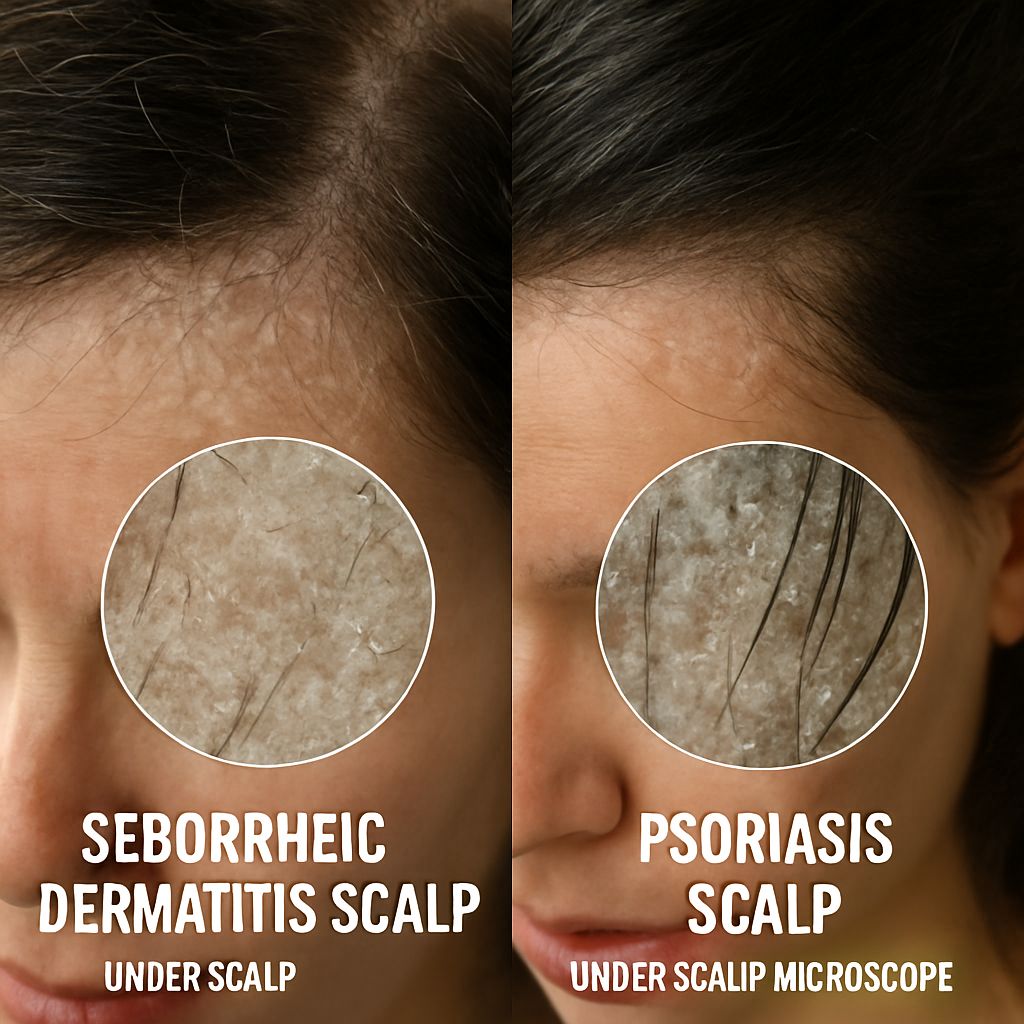
Scalp Psoriasis vs Dandruff: How to Tell the Difference
Both conditions produce flakes and scalp irritation, but scalp psoriasis vs dandruff are not the same thing — and treating them the same way can make things worse. The difference between dandruff vs psoriasis comes down to cause, appearance, and how each responds to treatment. If you’ve been applying anti-dandruff shampoo for weeks without improvement, the problem may not be dandruff at all.
When comparing psoriasis vs dandruff, look at the quality of the flakes, whether you have plaques or just loose skin, and whether the condition affects other areas of your body. Psoriasis or dandruff can both cause itching, but psoriasis sometimes produces a much heavier buildup and can even lead to what some people describe as bloody dandruff from scratching irritated plaques. This guide gives you a clear framework for telling them apart.
What Is Scalp Psoriasis?
Psoriasis is an autoimmune condition where the immune system speeds up skin cell production. Cells that normally take about a month to cycle to the surface do so in days, creating a thick buildup. On the scalp, this shows up as raised, reddish plaques covered with silvery or white scales. The plaques have defined edges and can extend beyond the hairline onto the forehead, behind the ears, or down the neck.
Psoriasis is chronic. It flares up and calms down over time, often triggered by stress, illness, certain medications, or injury to the skin. It cannot be cured, but it can be managed effectively with the right treatment plan.
What Is Dandruff?
Dandruff is a common, non-inflammatory scalp condition. It results from a combination of a naturally occurring yeast called Malassezia, excess oil production, and individual skin sensitivity. The scalp sheds dead skin cells faster than normal, producing white or yellowish flakes. Unlike psoriasis, dandruff flakes tend to be greasy and soft rather than silvery and adherent.
Dandruff improves reliably with the right shampoo — one containing zinc pyrithione, selenium sulfide, ketoconazole, or coal tar. It does not leave thick plaques or extend to other body parts.
Key Differences: Side-by-Side Comparison
- Flake texture: Psoriasis flakes are thick, silvery, and dry. Dandruff flakes are softer, oily, and smaller.
- Scalp appearance: Psoriasis creates red, raised plaques. Dandruff shows a slightly pink or normal-colored scalp beneath the flakes.
- Borders: Psoriasis plaques have sharp, defined edges. Dandruff patches are more diffuse.
- Location: Psoriasis can spread beyond the scalp to elbows, knees, lower back, or nails. Dandruff stays on the scalp.
- Response to dandruff shampoo: Dandruff clears up with consistent use. Psoriasis shows little improvement with standard dandruff products.
What Is Bloody Dandruff — and When Should You Worry?
Bloody dandruff is not a medical term, but it describes a real scenario: when someone scratches psoriasis plaques aggressively, the skin cracks or bleeds. Because psoriatic skin is inflamed and fragile, even moderate scratching can cause small wounds. If you notice blood or crusting in your flakes, that points more strongly toward psoriasis than dandruff. It can also indicate an infected scalp, which needs medical attention.
If you see blood in your scalp flakes, see a dermatologist. Do not continue self-treating with OTC shampoos alone.
How Each Condition Is Treated
Treating Dandruff
Start with an OTC anti-dandruff shampoo. Use it 2–3 times per week and leave it on for 3–5 minutes before rinsing. If one active ingredient stops working, rotate to a product with a different one. Most people see clear improvement within 2–4 weeks.
Treating Scalp Psoriasis
Mild scalp psoriasis may respond to medicated shampoos containing coal tar or salicylic acid, which help loosen scales. More moderate to severe cases typically require prescription treatments: topical corticosteroids, vitamin D analogs like calcipotriene, or — for widespread psoriasis — biologics or systemic medications prescribed by a dermatologist.
When to See a Doctor
See a dermatologist if:
- Your condition has not improved after 4 weeks of OTC treatment
- You notice thick, silvery plaques or bleeding
- The condition has spread to your ears, neck, or face
- You have joint pain alongside scalp symptoms (a sign of psoriatic arthritis)
Next steps: Start by examining your flakes closely and checking whether you have raised plaques with defined edges. If standard anti-dandruff shampoo hasn’t worked after a month, make an appointment with a dermatologist for a proper diagnosis. Accurate identification of the condition is the only way to choose a treatment that actually works long term.



Leave a Reply