
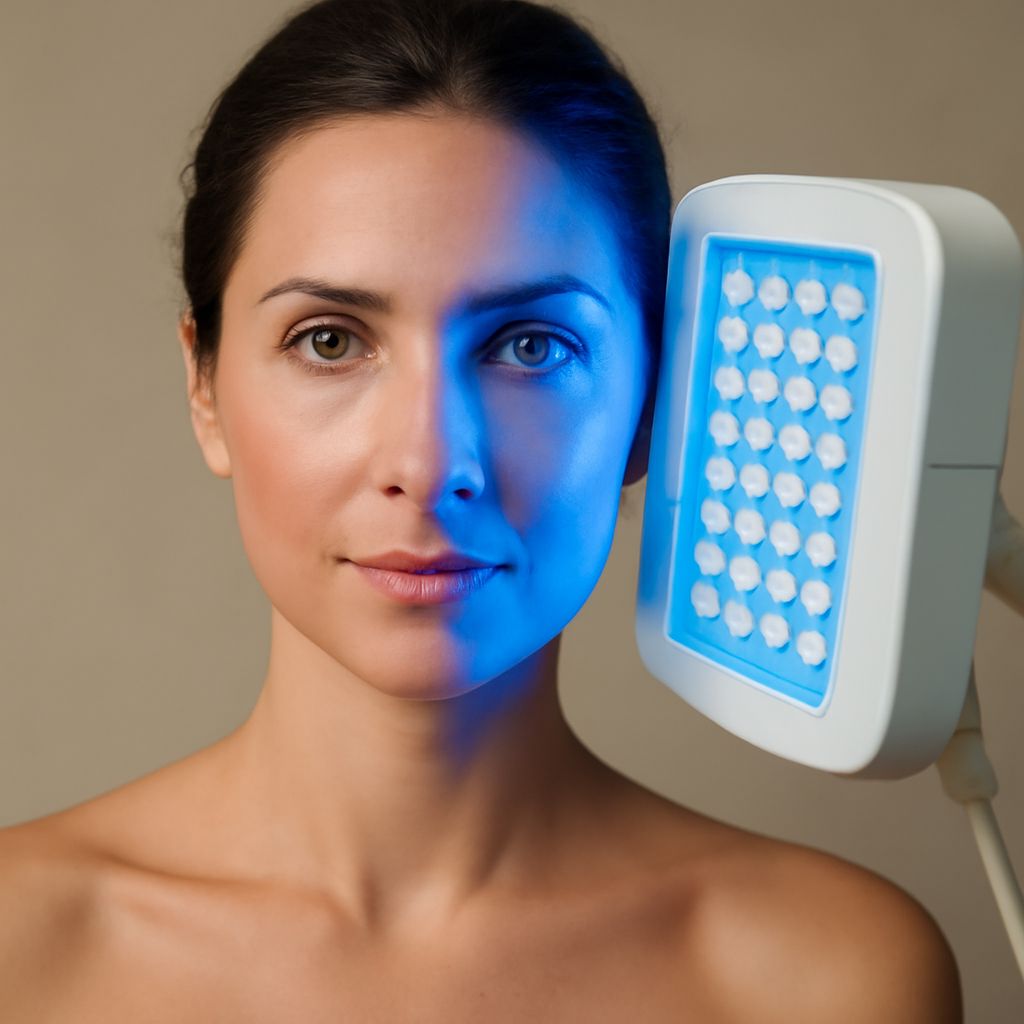
Blue Light Treatment for Skin Cancer: How It Works and What to Expect
Skin cancer affects millions of people annually, and early intervention is critical. Blue light treatment for skin cancer — a technique known as photodynamic therapy (PDT) — offers a targeted, non-surgical option for destroying precancerous and cancerous cells on the skin’s surface. If your dermatologist has recommended blue light skin treatment, understanding the process can ease anxiety and help you prepare.
This guide covers what blue light therapy for skin cancer involves, who qualifies, how sessions proceed, and how outcomes compare to other methods. Whether you’re exploring blue light for skin conditions such as actinic keratoses or early basal cell carcinoma, or you simply want a clearer picture of blue light therapy skin cancer protocols, you’ll find practical answers here.
What Is Blue Light Treatment and How Does It Work?
The Science Behind Photodynamic Therapy
Photodynamic therapy uses a light-activated chemical reaction to eliminate abnormal cells. A photosensitizing agent is applied to the target area, absorbed preferentially by rapidly dividing cells, and then activated by a specific wavelength of light — typically blue or red — to generate reactive oxygen species that destroy those cells.
How Blue Light Activates Photosensitizing Agents
The most common photosensitizer used in dermatological PDT is aminolevulinic acid (ALA). Blue wavelengths (around 417 nm) activate ALA-derived protoporphyrin IX, producing cytotoxic oxygen radicals within the targeted tissue. The surrounding healthy skin absorbs far less of the agent and sustains minimal damage.
Depth of Treatment and Tissue Penetration
Blue wavelengths penetrate shallower tissue layers compared to red light, making them ideal for surface lesions. Dermatologists choose wavelength and exposure time based on lesion depth and density, customizing each session for optimal results.
Conditions Treated with Blue Light Therapy for Skin Cancer
Blue light therapy is FDA-approved for actinic keratoses — sun-induced precancerous lesions that can progress to squamous cell carcinoma. Some dermatologists also use it off-label for superficial basal cell carcinoma, Bowen’s disease (squamous cell carcinoma in situ), and certain inflammatory skin conditions. The blue light therapies available differ in photosensitizer strength and incubation time, but all target aberrant cellular activity.
Who Is a Good Candidate for Blue Light Skin Treatment?
Age and Skin Type Considerations
Adults with fair to medium complexions who have developed actinic keratoses from chronic sun exposure are the most common candidates. Photosensitizer uptake can vary by skin thickness and sun damage history, so a dermatologist will assess individual suitability.
Lesion Type and Location Factors
Superficial lesions respond best. Deep nodular tumors, melanoma, and lesions on areas where the photosensitizer cannot be adequately applied are typically not suitable for blue-light-based PDT.
Medical History and Contraindications
Patients with photosensitivity disorders, certain porphyrias, or who take photosensitizing medications should inform their provider. Pregnancy status and current immunosuppressive therapy are also evaluated before proceeding.
The Treatment Process: What Happens During a Session
Photosensitizer Application
The provider applies ALA or methyl aminolevulinate (MAL) cream or solution directly to cleaned lesions. An incubation period — typically 1 to 3 hours — allows the agent to penetrate and accumulate in abnormal cells.
Light Exposure and Session Duration
After incubation, the skin is exposed to a blue-light lamp for a set period, usually 8 to 17 minutes depending on the device and protocol. Patients may experience a stinging or burning sensation during illumination. Protective eyewear is required for patient and staff.
Post-Treatment Skin Reactions
Redness, swelling, and peeling are normal and expected in the days following blue light PDT. These reactions indicate the targeted cells are being eliminated. Most people experience moderate discomfort for 24 to 72 hours.
Effectiveness and Success Rates of Blue Light Therapy Skin Cancer Treatment
Clinical studies show clearance rates of 70–90% for actinic keratoses after one or two sessions of blue-light PDT. Superficial basal cell carcinoma shows similar response rates in carefully selected patients. Cosmetic outcomes are generally superior to surgical methods, with less scarring — an important consideration for facial or high-visibility areas. Recurrence rates are comparable to alternative treatments when proper candidates are selected.
Comparing Blue Light for Skin to Other Skin Cancer Options
Blue Light vs. Surgical Excision
Surgery offers definitive margin confirmation and is preferred for invasive tumors. Blue light skin therapies excel in treating widespread, field-cancerized skin where multiple lesions make surgery impractical.
Blue Light vs. Topical Chemotherapy
5-fluorouracil (5-FU) and imiquimod creams treat similar conditions but require weeks of daily application and often produce more prolonged inflammation. Blue-light PDT typically resolves faster with a cleaner endpoint.
Blue Light vs. Radiation Therapy
Radiation is reserved for cases where surgery is not feasible. PDT is far less resource-intensive, non-ionizing, and carries no long-term radiation-related risks.
Aftercare and Recovery Following Blue Light Skin Therapy
After any blue-light treatment session, strict sun avoidance for at least 48 hours is mandatory — treated skin is highly photosensitive. Use broad-spectrum SPF 50 sunscreen, wear protective clothing, and stay indoors during peak UV hours. Cool compresses and gentle, fragrance-free moisturizers help ease discomfort. Follow-up appointments allow your dermatologist to assess clearance and determine whether additional sessions are needed. Never attempt to pick at or abrade treated skin, as this increases infection risk and impairs healing.
Safety recap: Blue light therapies are medical procedures that must be administered by trained providers. Always disclose all medications and supplement use before treatment, avoid photosensitizing agents in the days before sessions, and follow all post-treatment sun avoidance protocols precisely.


Leave a Reply