
Skin Tag on Eyelid Removal: Safe Options and What to Expect
Finding a small, soft growth on or near the eyelid is understandably concerning, but a skin tag on eyelid is almost always benign. Knowing how to safely approach skin tag on eyelid removal — and who is qualified to perform it — prevents the far more dangerous alternative of attempting DIY eyelid procedures. The process to remove skin tag on eyelid tissue differs from removing tags elsewhere on the body due to proximity to the eye. Understanding eyelid skin tag removal options and what makes eyelid skin tags challenging to treat helps you navigate the decision with confidence. Whether it’s a single skin tag removal eyelid procedure or addressing multiple growths, professional evaluation is always the starting point. This guide also addresses how to remove skin tag from eyelid safely through medical channels.
What Causes Skin Tags on the Eyelid?
Eyelid skin tags develop for the same reasons as skin tags elsewhere: friction, hormonal changes, age, and genetic predisposition. The eyelid skin is particularly thin and mobile, making it susceptible to the repeated mechanical friction that stimulates skin tag formation — from rubbing the eyes, from eyelashes, and from contact with glasses frames. They are more common in middle-aged and older adults, in individuals who are overweight, and in those with a family history of skin tags. They are benign, non-contagious, and typically painless unless they rub against the cornea or are caught by an eyelash.
Distinguishing Skin Tags from Other Eyelid Lesions
Before any eyelid removal procedure, professional identification of the lesion is essential. Eyelid lesions that may resemble skin tags but require different evaluation include: chalazion (a blocked meibomian gland presenting as a firm, painless nodule), hordeolum (stye — infected gland, painful and warm), papilloma (similar to skin tag, also benign), syringoma (benign sweat duct tumor), and more rarely, eyelid malignancies. Never self-treat an eyelid growth of uncertain identity. An ophthalmologist or dermatologist should examine the lesion before recommending any removal approach.
Professional Eyelid Skin Tag Removal Methods
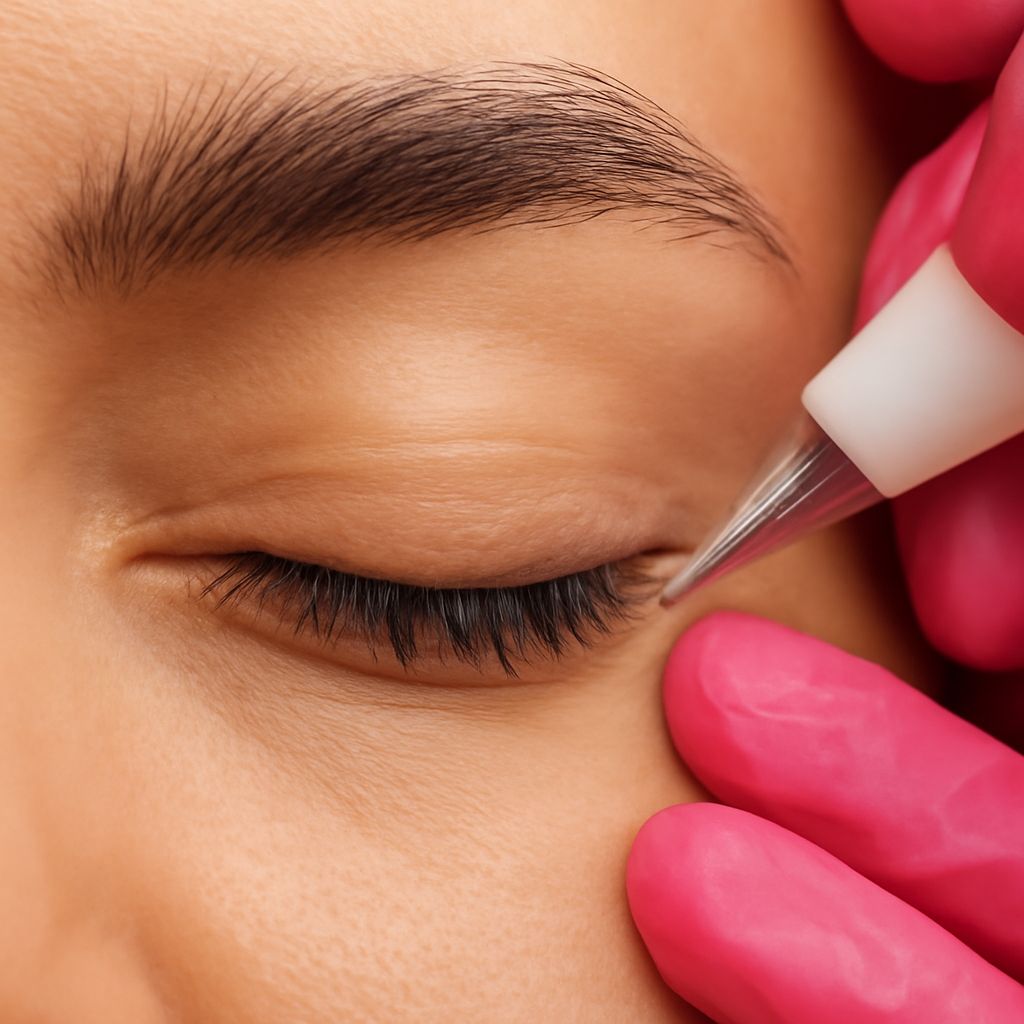
Eyelid skin tag removal is performed by ophthalmologists, oculoplastic surgeons, or dermatologists under local anesthesia. The most common methods include: snip excision (a quick scissor cut at the base of the tag’s stalk, the fastest and most common approach for small pedunculated tags), cryotherapy (liquid nitrogen freezing, which must be applied with extreme care to avoid ocular damage), and electrocautery or electrodesiccation (using a very low current to desiccate the tissue). All methods in the eyelid region require sterile technique, topical or injected local anesthesia, and eye protection for the patient throughout the procedure.
Why At-Home Removal Is Dangerous for Eyelid Tags
Attempting to remove skin tag from eyelid tissue at home carries uniquely serious risks due to the proximity to the eye. Any cutting, burning, chemical application, or ligation near the eye creates risks of: corneal chemical burn from topical agents, accidental ocular injury, severe bleeding from the highly vascularized eyelid tissue, infection spreading to orbital structures, and scarring that distorts eyelid alignment. Over-the-counter skin tag removal kits explicitly exclude eyelid use in their instructions for precisely these reasons. The short distance between an eyelid skin tag and the cornea provides essentially zero margin for error in home removal attempts.
What to Expect During and After Eyelid Skin Tag Removal
An in-office skin tag removal eyelid procedure typically takes 5 to 15 minutes. After local anesthesia is applied, you will feel minimal discomfort during removal itself. Immediately after, the area may be swollen and slightly bruised — this is normal and typically resolves within 3 to 7 days. Eyelid skin heals quickly due to its excellent vascular supply. Post-procedure care includes antibiotic ointment application, keeping the area clean, and avoiding eye rubbing or makeup in the area for 1 to 2 weeks. Scarring is generally minimal with expert technique on small tags.
Preventing Skin Tags Around the Eyes
While genetic predisposition and age are not preventable, minimizing eyelid friction reduces skin tag formation risk. Avoid habitual eye rubbing. If you wear glasses, ensure the frames do not regularly press against the upper eyelid or outer canthus. Maintain a healthy weight, as overweight individuals develop skin tags at higher rates. Keep the eyelid area clean to prevent skin fold maceration. If you are prone to eyelid tags, annual ophthalmological exams allow early detection and removal before tags become large enough to cause visual obstruction or corneal irritation.
Safety recap: Eyelid skin tag removal must be performed by a qualified medical professional. Even minor procedures near the eye carry meaningful risks if performed by untrained individuals. If a skin tag on or near the eyelid is causing visual disturbance, pain, or tearing, seek ophthalmological evaluation urgently rather than attempting any form of home treatment.





Leave a Reply