
Home Remedies for Cystic Acne: Natural Treatments That Actually Work
Dealing with painful, stubborn breakouts makes home remedies for cystic acne an urgent search topic for millions of people. Unlike surface-level pimples, cystic acne forms deep under the skin and doesn’t respond to typical spot treatments. Understanding how tools like a warm compress for acne work, which natural remedies for cystic acne have real evidence behind them, and how to build a consistent home remedy for cystic acne routine can meaningfully reduce both the frequency and severity of breakouts. This guide examines what works, what doesn’t, and when to escalate to professional cystic acne natural treatment support.
What Makes Cystic Acne Different
Why It Forms Deep Under Skin
Cystic acne develops when a pore becomes severely clogged with excess sebum, dead skin cells, and acne-causing bacteria (primarily Cutibacterium acnes, formerly Propionibacterium acnes). Unlike whiteheads or blackheads, which form close to the skin surface, cystic lesions develop deep in the dermis where the infection triggers a significant inflammatory response. This produces the painful, red, swollen nodules or cysts that characterize the condition.
The deep location is precisely why topical treatments that work on surface acne—benzoyl peroxide gel, salicylic acid washes—often fail to reach cystic lesions at full strength. The cyst wall acts as a barrier, and the inflammation that surrounds it makes the area far more sensitive and reactive than ordinary acne.
Why Standard Spot Treatments Fail
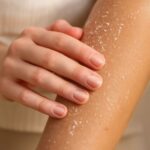
Most over-the-counter spot treatments are formulated for inflamed surface acne. Applied to cystic acne, they can dry out the overlying skin without reaching the cyst, leaving behind flaking and peeling on top of the original lesion. This makes the area look worse and can impair the skin’s ability to heal from the inside out.
Warm Compress for Acne: How and Why It Works
Application Method
A warm compress for acne is one of the most accessible and gentle home interventions. Soak a clean washcloth in comfortably warm (not hot) water and hold it against the cystic lesion for 10 to 15 minutes. The warmth increases circulation to the area, which can help bring the lesion to a head more quickly and reduce the tight, throbbing discomfort associated with cystic breakouts.
The compress also softens the surrounding skin, which may allow any internal pressure to release more naturally through the follicle rather than rupturing into surrounding tissue. This reduces the risk of spreading infection within the skin, which is a key reason cystic acne can leave scarring.
Frequency and Timing
Apply a warm compress for acne two to three times per day for best results. Consistency over several days matters more than any single application—results are gradual, not immediate. Avoid using very hot water, as it can cause burns and worsen inflammation. Always use a freshly laundered cloth each time to avoid reintroducing bacteria to the already-compromised skin barrier.
Best Home Remedies for Cystic Acne
Tea Tree Oil and Benzoyl Peroxide
Tea tree oil is among the most studied natural remedies for cystic acne. A 5% tea tree oil gel has been shown in clinical trials to reduce acne lesion count, though it works more slowly than pharmaceutical-strength benzoyl peroxide. Its antimicrobial activity against C. acnes makes it a legitimate adjunct treatment. Always dilute tea tree oil to 1–5% in a carrier oil before skin application—undiluted tea tree oil causes irritation and chemical burns on sensitive facial skin.
Benzoyl peroxide (2.5–10%) is technically an over-the-counter ingredient rather than a purely natural one, but it remains one of the most effective home treatments for cystic acne available without a prescription. It kills bacteria and helps clear plugged follicles. A leave-on gel applied overnight to cystic areas can reduce inflammation and lesion size over one to two weeks of consistent use.
Ice Therapy and Green Tea Extract
Ice applied to a cystic pimple (wrapped in a clean cloth, never applied directly) for one to two minutes at a time constricts blood vessels, reducing redness and swelling rapidly. Ice therapy is best used as an acute intervention to manage a painful new lesion rather than as a treatment to resolve the underlying infection.
Green tea extract, rich in epigallocatechin gallate (EGCG), has demonstrated anti-inflammatory and sebum-reducing effects in multiple studies when applied topically. A cooled green tea bag held against a cystic lesion or a serum containing green tea extract applied as part of an evening routine can reduce the inflammatory component of cystic breakouts over time.
Natural Remedies for Cystic Acne: Evidence Review
Among the many natural remedies for cystic acne, only a handful have meaningful clinical evidence. Tea tree oil and niacinamide (vitamin B3) have the most robust data for topical acne management. Zinc—both topical (zinc acetate, zinc gluconate) and oral (zinc sulfate at 30–45 mg/day)—has demonstrated anti-inflammatory and antimicrobial effects that reduce acne severity. Apple cider vinegar is frequently cited but lacks clinical studies demonstrating efficacy for cystic acne specifically, and its acidity can irritate compromised skin.
Dietary factors also influence cystic acne for many people. High glycemic index diets and dairy consumption—particularly skim milk—have been associated with increased acne severity in observational studies. An anti-inflammatory diet featuring whole grains, vegetables, omega-3 rich foods, and limited sugar can complement topical home remedies for cystic acne.
Home Remedy for Cystic Acne: Building a Routine
An effective home remedy for cystic acne routine combines several complementary approaches. Morning: gentle cleanser, niacinamide serum (5–10%), and sunscreen. Evening: gentle cleanser, warm compress on active lesions (10–15 minutes), diluted tea tree oil or benzoyl peroxide spot treatment, and a lightweight non-comedogenic moisturizer. Weekly: gentle exfoliation with salicylic acid to prevent new clogged pores.
Consistency over weeks—not days—produces measurable results with natural cystic acne treatments. Introduce one new product at a time, waiting two to four weeks before assessing its effect, to avoid confounding variables. Avoid harsh scrubs, alcohol-based toners, and touching your face, all of which worsen cystic acne.
When to See a Dermatologist
Cystic acne natural treatment approaches have limits. If home remedies and OTC products have not produced improvement after 8 to 12 weeks of consistent use, or if cystic lesions are leaving significant scars, a dermatologist consultation is the appropriate next step. Prescription options including topical retinoids, oral antibiotics, spironolactone (for hormonal acne in women), and isotretinoin (Accutane) address root causes that natural remedies cannot fully resolve. Dermatologist-administered cortisone injections can reduce an individual cystic lesion within 24 to 48 hours—a significant option when a large, painful cyst needs rapid resolution.
Key takeaways: Warm compress, diluted tea tree oil, and niacinamide form a solid foundation for home cystic acne care. Evidence-based oral zinc supplementation adds systemic support. Escalate to professional treatment if home remedies produce no improvement after three months or if scarring is occurring.
Leave a Reply