
Skin Tag on Eyelid: How to Remove Eye Skin Tags Safely
A skin tag on eyelid is one of the more uncomfortable benign skin growths simply because of its location—every blink is a reminder it’s there. If you’re wondering how to remove skin tag on eyelid safely or looking for information about eye skin tags in general, it’s important to understand that the eye area requires extra caution compared to skin tags elsewhere on the body. This guide covers what causes skin tags on eyelid, safe methods to remove skin tags around eyes, and what to absolutely avoid.
What Is a Skin Tag on Eyelid?
Causes and Risk Factors
A skin tag on eyelid—medically called an acrochordon or fibroepithelial polyp—is a small, soft, flesh-colored growth attached to the skin by a narrow stalk (peduncle). Skin tags are benign and form when skin rubs against skin or clothing repeatedly. On the eyelid, friction from blinking and rubbing, combined with areas of thin, delicate skin, creates favorable conditions for tag formation.
Common risk factors include obesity (which increases skin fold friction), middle age, pregnancy (due to hormonal changes), and a family history of skin tags. People with insulin resistance or type 2 diabetes develop skin tags more frequently—some studies suggest skin tags may be an external marker of metabolic syndrome. The eyelid, upper chest, neck, underarms, and groin are the most common locations.
Why the Eyelid Area Is Sensitive
The skin around the eye is the thinnest skin on the body, averaging 0.5 mm compared to 2 mm on most of the face. This thinness means the area is more prone to bruising, swelling, and scarring after any procedure. Proximity to the eye itself means any chemical, electrical, or cryogenic treatment carries additional risk if not applied with precision by a trained professional.
Are Eye Skin Tags Dangerous?
When a Tag May Not Be a Tag
Most eye skin tags are benign and pose no health risk beyond cosmetic concern and occasional irritation. However, not every eyelid growth is a skin tag, and misidentification can have serious consequences. Conditions that may resemble a skin tag on eyelid include syringomas (benign sweat gland tumors), xanthelasma (yellowish cholesterol deposits), milia (small keratin cysts), and—rarely—eyelid tumors including basal cell carcinoma.
Any growth on the eyelid that is irregular, multicolored, bleeds spontaneously, grows rapidly, or is associated with vision changes should be evaluated by a dermatologist or ophthalmologist before any attempt at removal.
Signs to Watch For
Benign eye skin tags are soft, movable, skin-colored, and grow slowly if at all. Warning signs that warrant professional evaluation include: any changes in size or color over weeks rather than years, surface ulceration or crusting, loss of eyelashes in the area near the growth, or a growth that feels firm or fixed to deeper tissue rather than pedunculated (on a stalk).
How to Remove Skin Tags on Eyelid at Home
Safe At-Home Options
Home removal of a skin tag on eyelid is more limited and risky than home removal of skin tags on the neck or underarm. The proximity to the eye rules out over-the-counter freezing kits and many topical tag-removal products, which are not formulated for use on eyelid skin and carry a risk of chemical irritation or splashing near the eye.
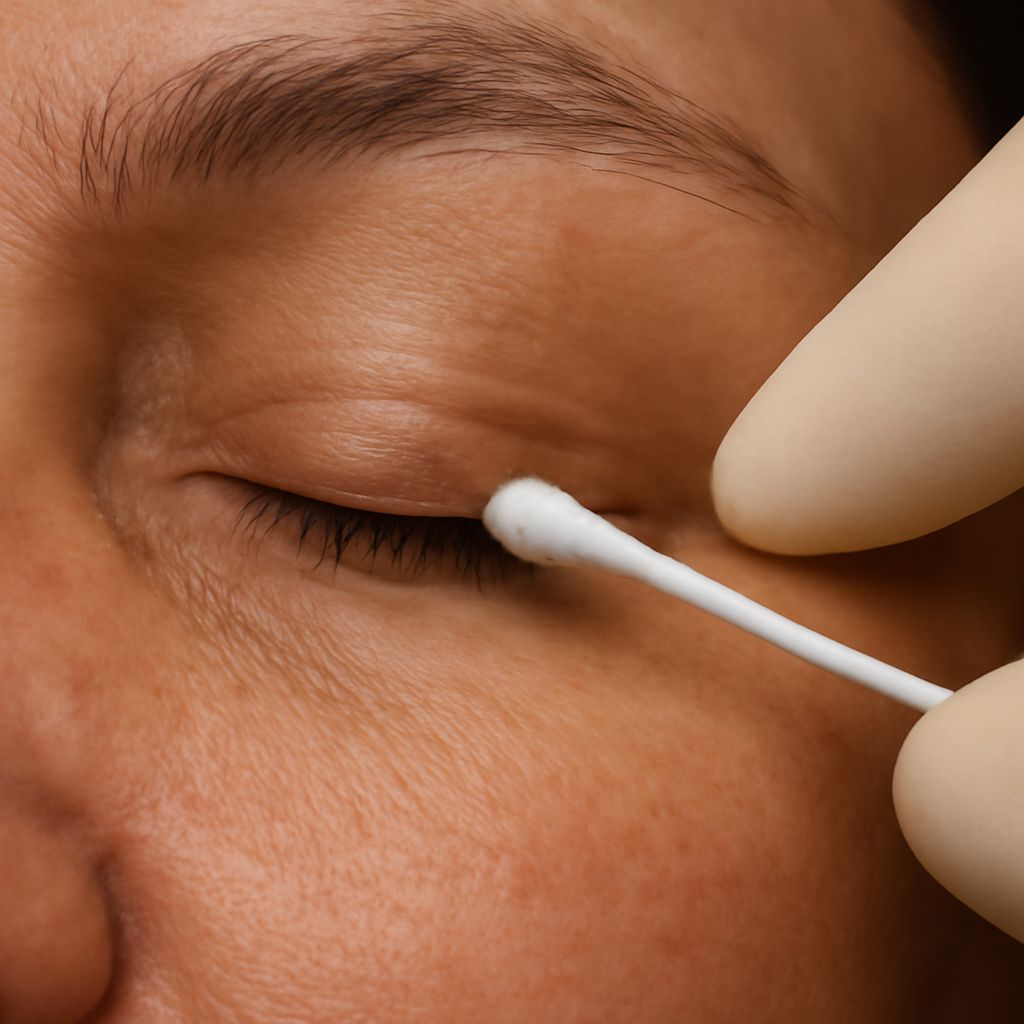
Some people have success with tea tree oil—applied carefully with a cotton swab to the tag itself (not the surrounding skin or eyelid margin) over several weeks. This anecdotal approach may gradually dry out and shrink small tags. DermaTend and similar natural tag removal products should be used only if explicitly stated as safe for periocular use by the manufacturer, and with extreme caution to avoid eye contact.
What to Absolutely Avoid
Do not attempt to cut, tie off with thread, or use nail scissors or clippers to remove a skin tag on eyelid at home. The eyelid’s rich blood supply means even a small cut bleeds significantly, and infection risk near the eye is serious. Over-the-counter freeze sprays (designed for body skin tags) are not approved for eyelid or periocular use—the freezing agent can cause corneal damage if it contacts the eye. Burning the tag with an at-home electrolysis device is equally risky.
Professional Removal of Skin Tags Around Eyes
Cryotherapy and Cauterization
Dermatologists can perform precise cryotherapy using a cotton-tipped applicator with liquid nitrogen, freezing only the tag stalk with a level of control not possible with at-home spray kits. This approach is effective for small to medium tags and typically requires one to two treatments. The treated area forms a small blister that heals within one to three weeks with minimal scarring.
Electrocauterization (burning with a fine electric probe) is another common in-office method for removing skin tags around eyes. The procedure takes only a few minutes under local anesthesia. The tag is vaporized at its base, leaving a small healing wound. This method provides precise control, making it well-suited to the delicate eyelid area.
Surgical Snip and Laser Options
Snip excision—cutting the tag off at its stalk using fine iris scissors under local anesthesia—is a fast and definitive method. Bleeding is controlled immediately with pressure or a mild styptic. This is often the preferred method for larger or more bothersome eye skin tags.
Laser removal using a CO2 or erbium laser is another option offered by dermatologists and plastic surgeons. Laser ablation is precise, minimizes bleeding, and can treat multiple small tags in one session. It is generally more expensive than cryotherapy or snip excision but leaves very little scarring when performed on eyelid skin.
Recovery and Aftercare
After professional removal of a skin tag on eyelid, expect mild swelling and redness for two to five days. Applying a cold compress (not directly on the eye) can help manage swelling during the first 24 hours. Keep the area clean and dry; avoid eye makeup until the healing site has fully closed. Use any prescribed antibiotic ointment as directed.
Avoid rubbing or touching the treated area. Sun protection with SPF 30+ once healed prevents post-inflammatory hyperpigmentation in the healing skin. Most removal sites heal with minimal or no visible scarring within two to four weeks.
Pro Tips Recap
Always have an eyelid growth evaluated by a professional before attempting removal to confirm it is indeed a benign skin tag. For at-home management, only gentle, eye-safe topical approaches are appropriate. For reliable, scar-minimizing results, a dermatologist-performed snip excision or cryotherapy is the safest path to removing eye skin tags without damaging the delicate periocular skin or risking injury to the eye itself.





Leave a Reply