
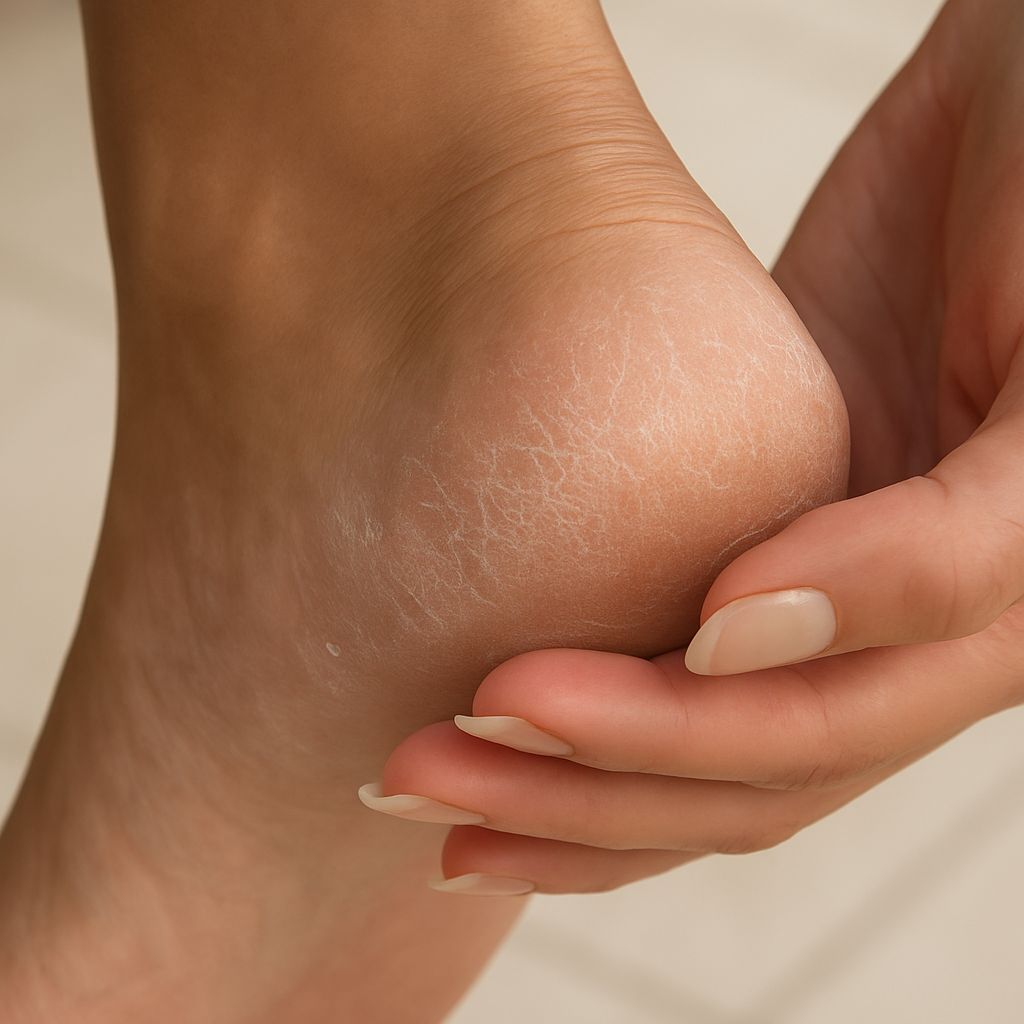
What causes skin to split under toes is a question that affects a surprising number of people, and the answer usually involves a combination of dryness, pressure, and inadequate moisture retention in the skin of the feet. Split skin between toes not athlete’s foot is a real and distinct presentation: the splitting may have nothing to do with fungal infection and everything to do with dry air, friction, or micronutrient deficiency. Skin peeling between toes no itch is another variant that points away from athlete’s foot and toward mechanical or contact causes. Cracked skin on feet, especially at the heels, results from the skin’s inability to keep up with the mechanical demands placed on it. Dry skin on heels is the most common location for deep fissuring because the heel bears the body’s full weight with each step.
This guide covers the causes behind each presentation, how to tell them apart, and what treatments resolve them effectively.
What Causes Skin to Split Under the Toes?
Dryness and Friction
What causes skin to split under toes most often is the combination of dry skin and mechanical shear from footwear or toe-on-toe contact during walking. The toe webs and undersides of the toes have less sebaceous (oil) gland activity than other body areas, making them naturally drier. Tight footwear compresses the toes, and repeated friction at the points of contact causes the skin to crack rather than flex. Synthetic socks that do not wick moisture away add humidity to the toe spaces, which actually worsens splitting by alternately over-hydrating and then rapidly drying the skin.
Other Contributing Factors
Nutritional deficiencies, particularly low vitamin E, omega-3 fatty acids, and zinc, reduce the skin’s elasticity and ability to maintain its barrier. Psoriasis and eczema can both present under the toes as splitting and scaling. Dehydration from low water intake is a systemic contributor. In people who shower frequently or use harsh soaps, the natural skin oils are removed more rapidly than they can be replenished.
How Do You Know the Split Skin Is Not Athlete’s Foot?
Split skin between toes not athlete’s foot lacks the signature features of fungal infection: intense itching, burning, maceration (white, soggy-looking skin in the toe webs), and sometimes blisters at the borders of the rash. Non-fungal splitting tends to be on the underside of the toe or at the toe pad rather than in the web space. It does not respond to antifungal treatment. If you have been applying antifungal cream for two weeks without improvement, and the splitting is dry rather than moist, the cause is mechanical or inflammatory rather than infectious.
What Causes Skin Peeling Between Toes Without Itching?
Skin peeling between toes no itch is most often caused by contact dermatitis from shoe materials (rubber, synthetic linings, adhesives in footwear), hyperhidrosis (excessive sweating that cycles wet-to-dry repeatedly), or a physical reaction to detergent residue in socks. Juvenile plantar dermatosis, a condition in children and adolescents, produces shiny, cracked, and peeling skin on the weight-bearing surfaces of the feet, including between the toes, without fungal involvement. The absence of itch, absence of maceration, and lack of response to antifungal treatment all point toward these non-fungal causes.
How Do You Treat Cracked Skin on Feet?
Cracked skin on feet responds well to a three-step routine: soak, exfoliate gently, and seal with a rich emollient. Soak feet in warm water for five to ten minutes to soften thickened skin. Use a pumice stone or foot file with light circular motions to remove dead surface layers without abrading live tissue. Immediately after drying, apply a foot cream containing urea (10-25%) or lactic acid, which both soften dead skin and lock in moisture. For very deep fissures, apply petroleum jelly and wear cotton socks overnight to allow extended occlusive treatment. Do not attempt to cut away deep cracks with scissors or blades; this risks infection.
What Helps Dry Skin on Heels?
Dry skin on heels is a structural problem: the skin of the heel is thick, has no oil glands, and bears enormous pressure. Daily moisturization with a keratolytic agent such as urea 25% cream or ammonium lactate lotion prevents the buildup of dead skin that leads to cracking. Wearing cushioned, supportive footwear rather than open-back sandals or flip-flops reduces the mechanical spreading of the heel pad that causes skin to crack at its edges. Avoid walking barefoot on hard floors. Use a heel balm in the morning and evening, not just once daily, for best results during active treatment.
How Do You Prevent Recurring Splits and Cracks?
Preventing skin splits requires consistent moisture, appropriate footwear, and addressing any underlying cause such as nutritional deficiency or underlying skin condition. Moisturize feet every day after bathing. Choose socks in cotton or moisture-wicking materials. Replace synthetic-lined footwear that contacts the toe webs if contact dermatitis is suspected. Increase omega-3 and vitamin E intake through diet or supplements if dietary intake is low. Check feet weekly for new splits or cracks and treat early with emollients before they deepen into painful fissures.
Safety recap: Deep heel fissures that bleed or show signs of infection such as redness and warmth around the crack should be evaluated by a podiatrist or physician, particularly in people with diabetes or peripheral vascular disease, as even small foot wounds carry elevated risk in these groups.



Leave a Reply