
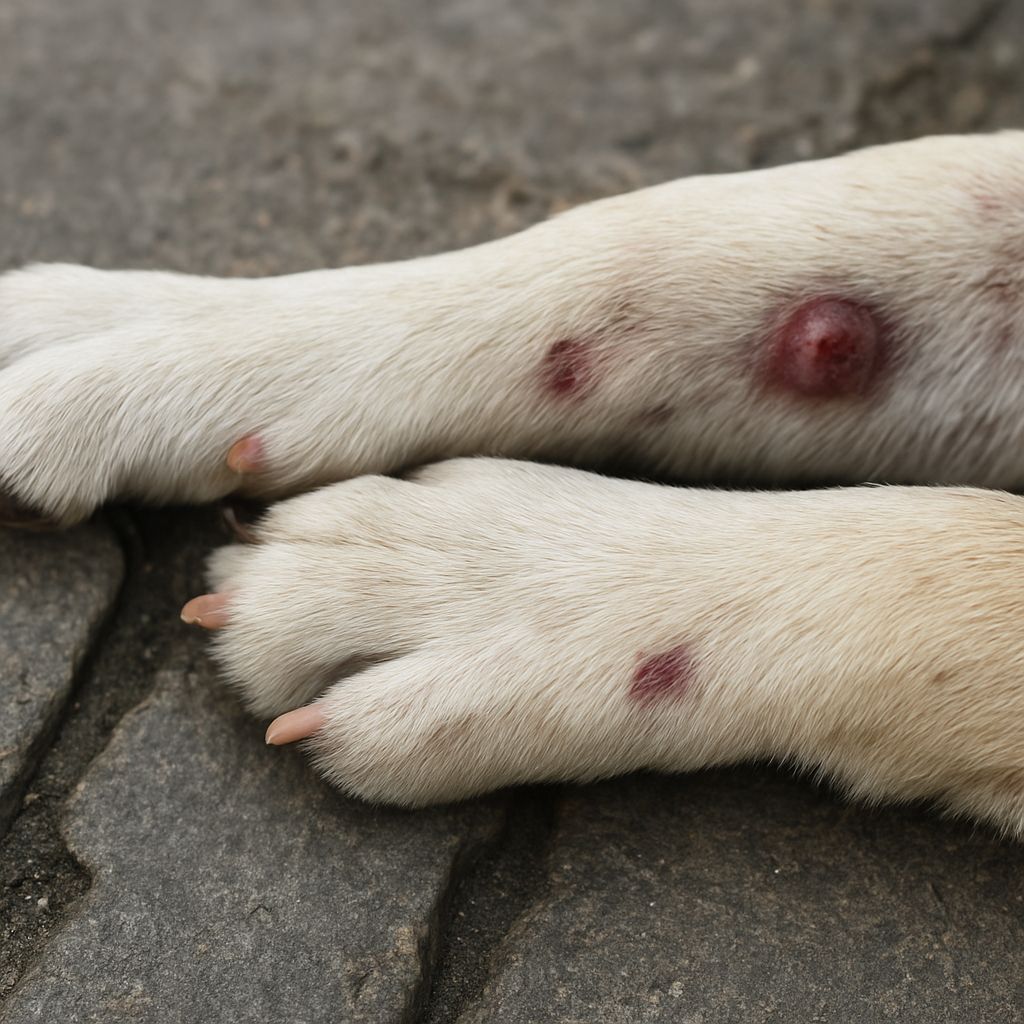
Noticing black spots on dog skin can be alarming, especially when they appear suddenly or spread. Dark spots on dogs’ skin have several possible causes, ranging from harmless pigmentation changes to conditions that need veterinary attention. A single black spot on dog skin might be nothing more than aging or friction, but a dog that has black spots on skin appearing in patterns, or accompanied by other symptoms, warrants a closer look. Understanding black spots on a dog’s skin helps you act appropriately rather than either panicking or ignoring something that needs care.
This article covers the main causes, associated symptoms, when to seek a vet, and what treatment looks like for the most common conditions.
Could the Black Spots Just Be Normal Pigmentation
Yes. Many dogs develop increased skin pigmentation as they age. This is particularly common in breeds like Dalmatians, Dachshunds, and some terrier types. Normal aging-related pigmentation tends to be flat, smooth, and consistent in texture with surrounding skin. If a dog has always had a particular dark marking and it’s been stable for years, it’s likely benign.
Friction from collars, harnesses, or where the dog habitually rests can also cause localized darkening. This is called post-inflammatory hyperpigmentation, where the skin produces more melanin in response to repeated low-level irritation.
What Is Hyperpigmentation in Dogs
Hyperpigmentation refers to an increase in skin pigmentation, resulting in darker patches or spots. It can be primary (genetic, with no underlying cause) or secondary (resulting from another condition like infection, allergy, or hormonal imbalance).
Primary Hyperpigmentation
Primary hyperpigmentation is most common in Dachshunds and typically appears in the armpit or groin area by age one or two. It starts as small dark patches that gradually spread. There’s no cure, though some management exists. It’s not painful or dangerous on its own.
Secondary Hyperpigmentation
Secondary hyperpigmentation is more common and is a symptom of an underlying problem. Treating the root cause often resolves or reduces the pigmentation over time. Allergies, chronic skin infections, and hormonal conditions are frequent culprits.
Can Skin Infections Cause Dark Spots
Yes. Bacterial infections (pyoderma) and yeast infections (Malassezia) can cause skin darkening, thickening, and scaling alongside the characteristic spots. These infections often also produce odor, redness, or discharge.
A black spot on a dog’s skin accompanied by crusty texture, scaling, or an unpleasant smell is more likely to be infection-related than benign pigmentation. Yeast infections in particular tend to cause dark, leathery patches that appear in skin folds, the belly, or between the toes.
Do Hormonal Issues Cause Black Skin Spots
Two hormonal conditions commonly cause skin darkening in dogs: hypothyroidism and Cushing’s disease (hyperadrenocorticism).
Hypothyroidism causes the thyroid to produce insufficient hormone, leading to skin and coat changes including darkening, thinning hair, and thickening skin. The dog may also be lethargic and gain weight.
Cushing’s disease involves excess cortisol and produces a range of symptoms including a pot-bellied appearance, increased thirst and urination, thin skin, hair loss, and darkening patches. Both conditions are diagnosable through blood testing and are treatable.
When Should Black Spots on Dog Skin Be a Concern
A safety note: while most dark skin spots in dogs are benign or secondary to a manageable condition, some warrant prompt veterinary attention. Contact your vet if the spot changes in size or texture quickly, if it’s raised, bleeding, ulcerated, or has irregular edges, if your dog is scratching the area excessively, or if any spots appear alongside other symptoms like weight change, lethargy, or increased thirst.
Melanoma can occur in dogs, though it’s less common than in humans and tends to appear in the mouth, toes, or areas with sparse hair. Any rapidly growing or irregularly shaped dark growth should be evaluated.
What Are the Next Steps If Your Dog Has New Skin Spots
Start by documenting the spots with clear photos over a two-week period, noting any changes in size, texture, or color. Check whether other symptoms are present: itching, odor, hair loss, or behavioral changes.
Bring this information to your vet. A physical exam is usually the first step. Depending on findings, your vet may recommend skin scraping, a cytology test (looking at cells under a microscope), blood work, or a biopsy. Treatment depends entirely on the underlying cause, ranging from antifungal shampoos to hormone-balancing medication.
Keeping your dog’s skin healthy through regular grooming, appropriate diet, and parasite prevention reduces the likelihood of secondary hyperpigmentation causes.
Next steps: If you notice new black spots on your dog’s skin, photograph and monitor them for two weeks while watching for associated symptoms. Schedule a vet appointment if spots change, grow, or appear alongside other health changes. Most causes are manageable once properly diagnosed.





Leave a Reply