
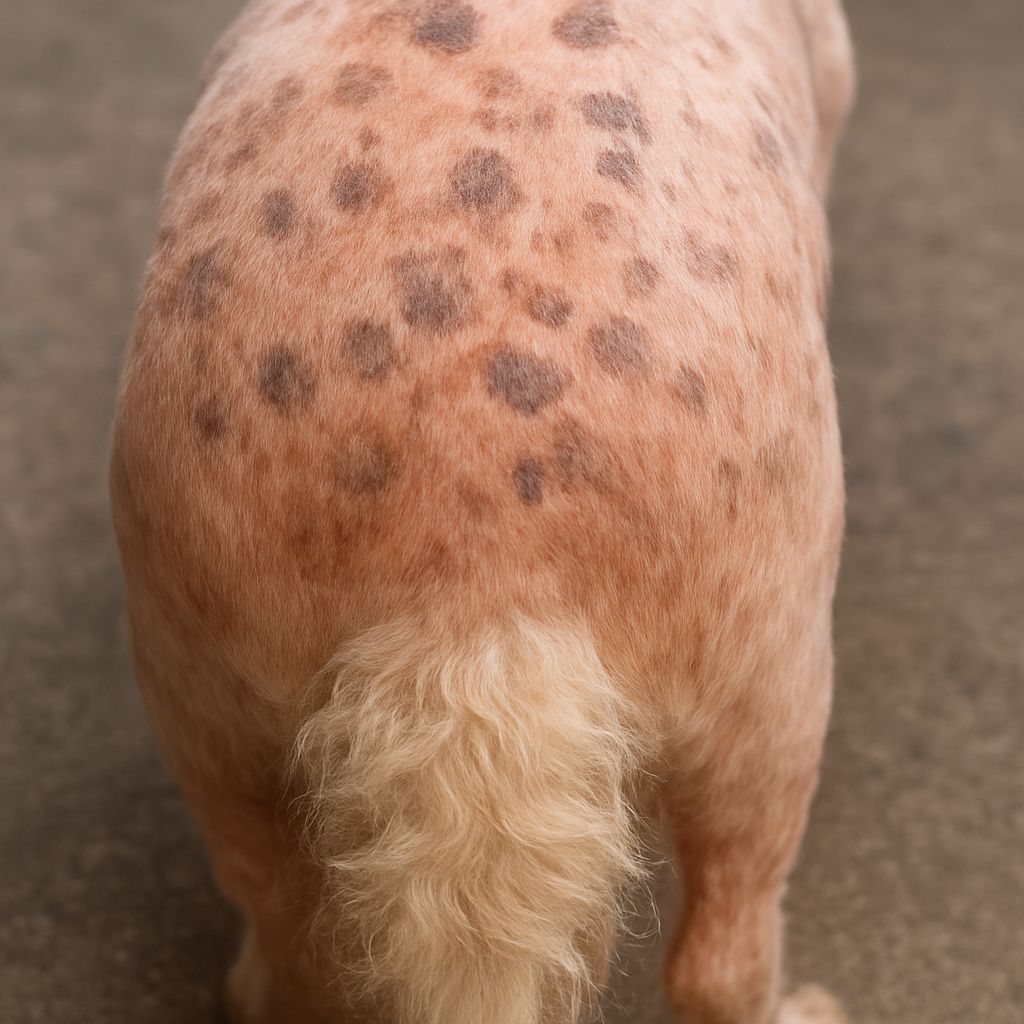
Dog skin irritation is one of the most common reasons pet owners search for answers online, and the range of possible causes is broader than most people expect. Red spots on dogs skin can trace back to allergies, parasites, infections, contact reactions, or even autoimmune conditions, and the correct treatment depends entirely on identifying which factor is driving the inflammation. A dog irritated skin presentation that looks like a rash one day can develop into a more complex condition within a week if the underlying trigger is not addressed.
Dog red skin that appears across the belly, between the toes, or under the tail often points to allergic origins, while more localized dog has red skin in a circular or spreading pattern may indicate a fungal infection or mite infestation. The location, pattern, and accompanying symptoms provide the most useful diagnostic clues before any treatment is started. This guide covers the most common causes of canine skin redness and irritation and the situations that require immediate veterinary attention rather than home management.
Common Causes of Dog Skin Irritation
Environmental and Food Allergies
Allergic dermatitis is the leading cause of chronic dog skin irritation, particularly in breeds prone to atopy such as Bulldogs, Retrievers, and Terriers. Environmental allergens including grass, dust mites, and mold spores cause the immune system to mount an inflammatory response that manifests as red, itchy skin on the paws, face, belly, and groin. Food allergies produce a similar skin picture but are less common than environmental allergies; the most frequent dietary triggers are chicken, beef, dairy, and wheat.
Flea Allergy Dermatitis A single flea bite can trigger an intense allergic reaction in sensitive dogs, causing widespread red spots on dog skin concentrated at the base of the tail, inner thighs, and abdomen. Even dogs without visible fleas can have flea allergy dermatitis if they are highly sensitive, since the fleas themselves may not be present when examined. A veterinarian-prescribed flea prevention product applied year-round rather than seasonally is the most effective management for this condition.
Hot Spots: Acute Moist Dermatitis
Hot spots are areas of acute, superficial bacterial infection that develop when a dog licks, chews, or scratches the same spot repeatedly. They appear as rapidly expanding patches of dog irritated skin that are moist, red, and often exude a serous or purulent discharge. The most common locations are the cheeks, around the ears, and the top of the hindquarters. Hot spots require clipping the surrounding fur, cleaning the lesion with a dilute antiseptic solution, and applying a topical antibiotic or anti-inflammatory product. An e-collar prevents the dog from reaching and worsening the lesion during healing.
Ringworm and Fungal Causes of Red Skin in Dogs
Despite its name, ringworm is a fungal infection caused by dermatophyte species rather than a parasite. It presents as circular patches of dog red skin with hair loss, scaling, and broken hairs at the edges. The circular pattern distinguishes it from bacterial infections or allergy, which rarely produce a perfectly ringed lesion. Ringworm is contagious to other animals and to people, making prompt diagnosis and treatment important. Antifungal shampoos and topical creams treat mild cases; systemic antifungals are needed for widespread infections.
Contact Dermatitis from Environmental Triggers
Lawn Chemicals and Cleaning Products
Dogs that walk on recently treated lawns or floors cleaned with harsh chemical products can develop contact dermatitis on the paws, belly, and lower legs where skin contacts the irritant. A dog has red skin on the areas closest to the ground after walking on treated surfaces is a classic presentation. Rinsing the paws thoroughly after walks and keeping the dog off freshly treated grass for 48 to 72 hours prevents recurrence.
Collar and Material Reactions Some dogs develop localized skin irritation under collars, particularly those made of synthetic materials, nylon, or materials treated with dyes. The skin under the collar appears red and may develop hair loss if the reaction is chronic. Switching to a natural fiber collar or a properly fitted harness, combined with a short course of topical hydrocortisone if recommended by a veterinarian, resolves most contact collar reactions within one to two weeks.
When Dog Skin Redness Requires Immediate Veterinary Attention
Seek veterinary care immediately if the redness spreads rapidly over hours, if the dog shows signs of pain, swelling, or systemic illness alongside skin changes, if the skin is breaking down and weeping pus or blood, or if red spots on dog skin are accompanied by facial swelling suggesting anaphylaxis. Chronic low-grade redness that persists despite home care for more than two weeks also warrants evaluation since long-term inflammation can cause skin thickening and hyperpigmentation that is difficult to reverse once established.
Next steps: Start by identifying when and where the dog skin irritation first appeared, what changed in the environment or diet around that time, and whether the redness is localized or widespread. This information significantly helps a veterinarian narrow the diagnosis at the first appointment. In the meantime, prevent further trauma by using an e-collar to stop licking and scratching, and avoid applying human medications, essential oils, or untested topical products to red or irritated dog skin.





Leave a Reply