
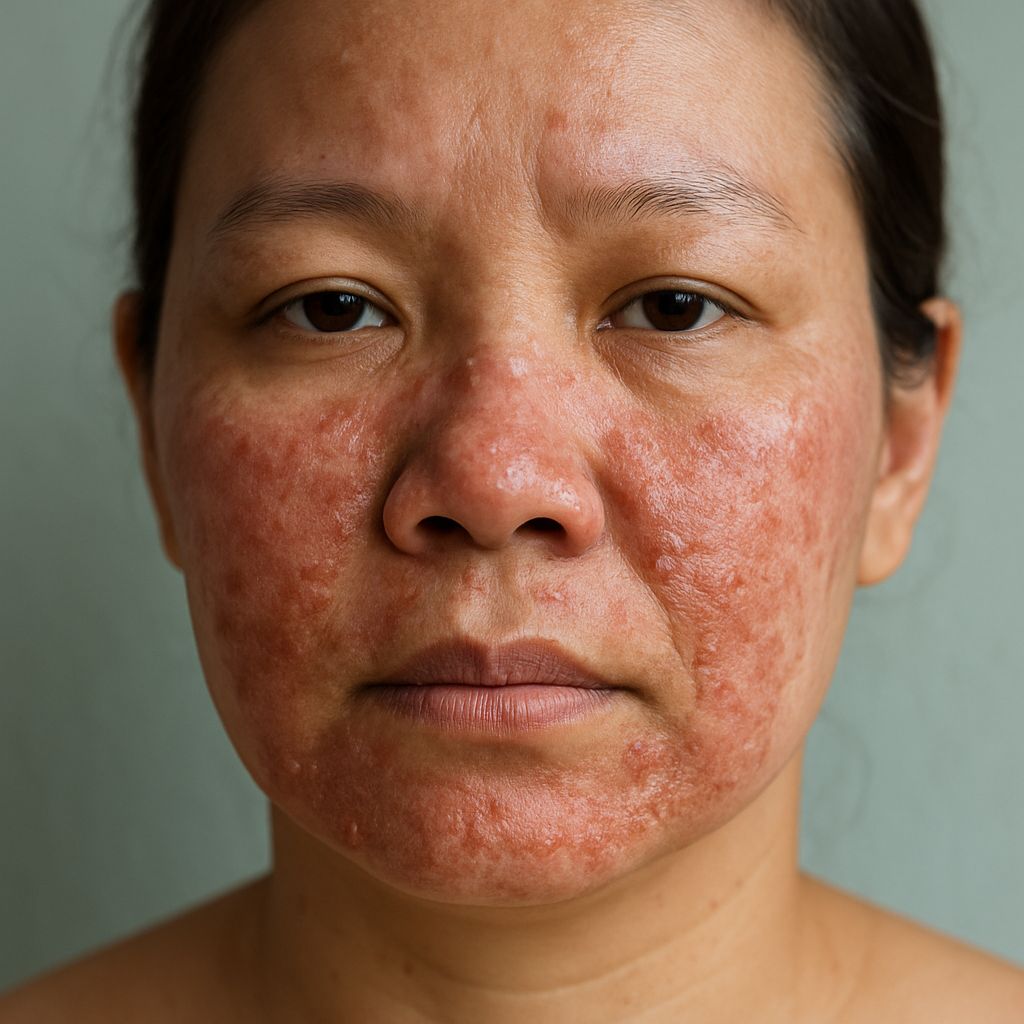
Eczema vs dry skin is a comparison that confuses even people who have dealt with both conditions for years. Both produce flaking, itching, and discomfort, but the underlying causes and treatments differ considerably. Understanding which condition you are managing determines whether over-the-counter moisturizing will provide relief or whether prescription treatment is needed. Whether the concern is choosing the best dry skin lotion or understanding whether can dry skin cause hives in your specific situation, the answers start with identifying the root problem accurately.
Dry skin after surgery is common and traces back to reduced circulation, anesthesia effects, and decreased fluid intake during recovery. Dry skin and hair loss can co-occur when the scalp becomes dehydrated or when nutritional deficiencies affect both the skin barrier and the hair growth cycle. Neither of these is eczema, but both may be confused with it during the initial assessment.
What Is Eczema and How Does It Differ from Ordinary Dry Skin?
Eczema, clinically known as atopic dermatitis, is a chronic inflammatory skin condition driven by an overactive immune response. It tends to cluster in specific areas such as the inner elbows, behind the knees, and on the eyelids, and it follows a pattern of flares and remissions. Ordinary dry skin, by contrast, affects the skin broadly, improves with regular moisturizing, and lacks the immune component. Eczema typically produces more intense itching, visible redness, and in severe cases, weeping or crusted lesions that do not respond to standard lotion alone.
Can Dry Skin Cause Hives?
Hives, or urticaria, are raised, itchy welts caused by histamine release from mast cells in the skin. They are not directly caused by moisture loss, but severely compromised dry skin may allow environmental allergens to penetrate the skin barrier more easily, triggering an immune response that resembles hives. This is more likely in people with eczema, where the skin barrier is structurally weakened. Standard dry skin without inflammation does not typically produce histamine-driven hive reactions, though the two can coexist in the same person.
Best Dry Skin Lotion: What Ingredients Actually Work
Not all moisturizers work equally well for very dry skin. The most effective formulas for people looking for the best lotion for dry skin share a few key ingredients.
- Ceramides restore the lipid matrix of the skin barrier and are particularly useful for both eczema-prone and ordinary dry skin.
- Urea at concentrations of 5 to 10 percent exfoliates dead skin cells while drawing water into the skin, making it one of the most practical actives for chronic dryness.
- Hyaluronic acid binds water in the upper layers of the skin but requires a sealing occlusive layer applied on top to prevent evaporation.
- Glycerin is a humectant that draws moisture from the environment and from deeper skin layers, effective in humid climates but less so in very dry air without an accompanying emollient.
For eczema, a fragrance-free cream or ointment rather than a lotion provides better barrier repair because ointments contain higher lipid content. Applying moisturizer within three minutes of bathing while skin is still slightly damp maximizes absorption.
Dry Skin After Surgery: Causes and Recovery
Post-surgical skin dryness commonly results from reduced oral fluid intake before and during procedures, exposure to dry hospital environments, and the effect of certain anesthetics on sebaceous gland activity. Some medications prescribed after surgery, particularly diuretics and certain pain medications, further dehydrate the skin. Gentle, fragrance-free moisturizers applied twice daily during recovery support the skin barrier without irritating surgical sites. Avoid applying any lotion directly to healing incisions unless specifically directed by the surgical team.
Dry Skin and Hair Loss: Is There a Connection?
Dry scalp is not the same as hair loss, but the two can share causes. Iron deficiency, thyroid disorders, and severe protein malnutrition all manifest in dry, flaking skin and concurrent hair thinning. A very dry scalp that produces white, non-greasy flakes and is accompanied by itching without oiliness is more consistent with scalp dryness than seborrheic dermatitis. If scalp dryness and hair loss occur together, bloodwork to check thyroid function and ferritin levels is a reasonable first step before assuming the cause is purely cosmetic.
When Moisturizing Is Not Enough
If topical moisturizers do not improve symptoms within two weeks of consistent twice-daily application, the condition may be eczema or another inflammatory skin disorder rather than ordinary dryness. A dermatologist can assess whether topical corticosteroids, calcineurin inhibitors, or biologics are appropriate. Using over-the-counter hydrocortisone cream for more than seven days without guidance is not advised, as prolonged use can thin the skin and suppress local immunity.
Pro tips recap: Apply moisturizer immediately after bathing for maximum absorption. For eczema-prone skin, choose ceramide-rich creams over water-based lotions. If dry skin keeps returning despite consistent care, ask a dermatologist to check for underlying hormonal or nutritional triggers.


Leave a Reply