
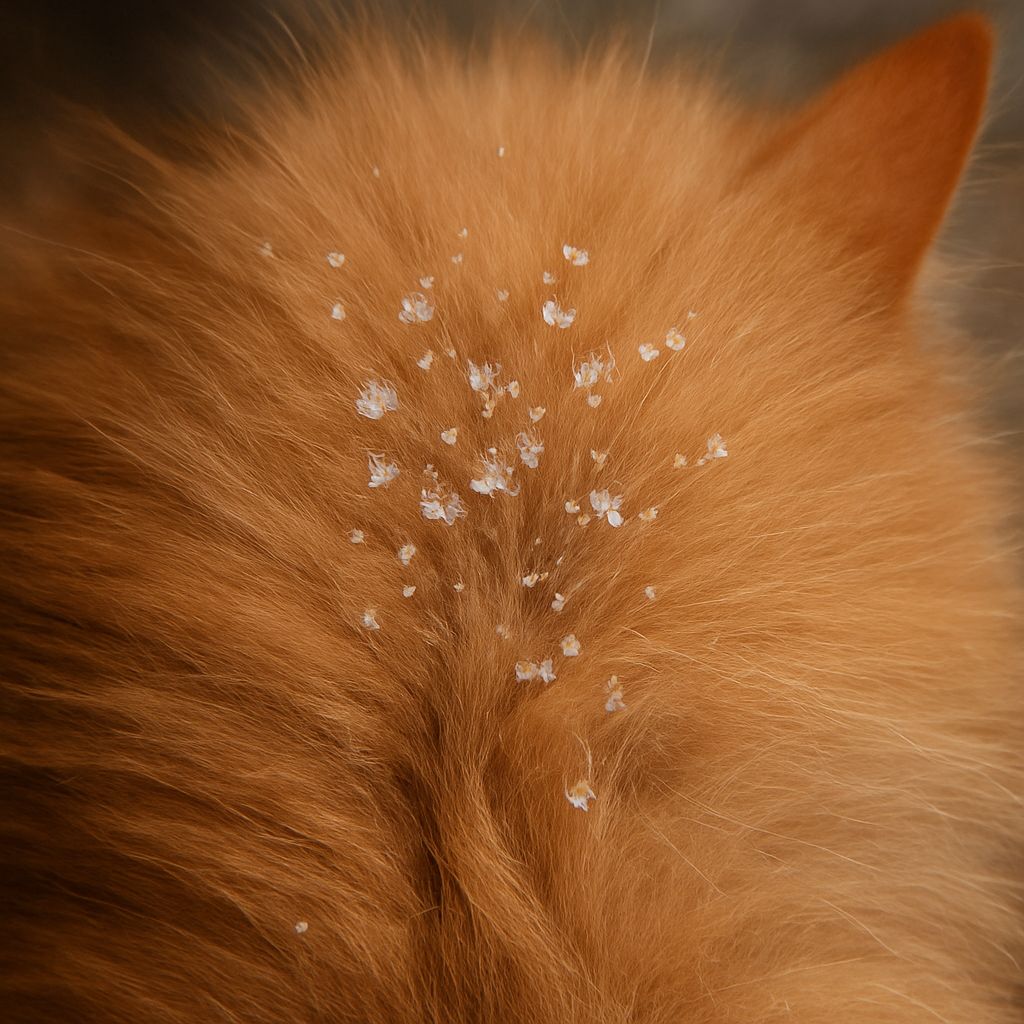
If you’ve been asking “why does my cat have dandruff,” you’re not alone. Can cats have dandruff? Yes — and it’s fairly common. Dandruff in cats shows up as white flakes on the fur and around sleeping areas. Why do cats get dandruff? The reasons range from dry indoor air to dietary gaps to underlying health issues. Understanding what causes cat dandruff is the first step toward clearing it up.
Most cases are mild and respond to simple care changes. A few situations require veterinary help. Here’s how to tell which one you’re dealing with.
What Causes Dandruff in Cats?
Dandruff in cats happens when the skin produces excess dead cells or when the skin’s natural moisture balance breaks down. Several factors drive this.
Dry Air
Indoor heating during winter dramatically lowers humidity. Cats spend most of their time indoors, so they feel the effects of dry air more than outdoor animals. Low humidity dries out the outer skin layer, causing flaking.
Poor Grooming (Obesity or Arthritis)
Cats groom themselves to distribute natural skin oils. Overweight cats or cats with arthritis can’t reach certain areas of their back and base of tail. Ungroomed skin in those areas quickly becomes flaky. If you see dandruff concentrated toward the tail end, limited self-grooming is a likely reason.
Allergies
Both food and environmental allergies can inflame cat skin, disrupting the skin barrier. Common food triggers include certain proteins (chicken or fish); environmental triggers include dust mites or mold. Allergic skin in cats often shows dandruff alongside itching, over-grooming, or hair thinning.
Nutritional Deficiencies
A diet low in essential fatty acids produces dull, flaky skin. Many budget cat foods use rendered fats and by-products that don’t provide adequate omega-3 and omega-6 levels for optimal skin function.
Parasites and Infections
Cheyletiella mites cause a condition called “walking dandruff” — the flakes literally move because mites are inside them. Ringworm (a fungal infection, not a worm) also causes patchy, flaky skin with hair loss. Both require veterinary diagnosis and treatment.
Is Cat Dandruff Normal or a Health Concern?
Light seasonal dandruff — especially during winter or after a move to a new climate — is typically harmless. Reasons to take it more seriously:
- Heavy, persistent flaking that doesn’t clear up in 2–3 weeks
- Flakes that appear to move (parasite sign)
- Dandruff alongside hair loss, bald patches, or thickened skin
- Your cat scratching, biting, or over-grooming excessively
- Any skin sores, redness, or scabbing alongside the flaking
One specific concern: sebaceous adenitis, an inflammatory condition affecting oil-producing glands, can cause significant scaling and hair loss. This needs a skin biopsy to diagnose and long-term veterinary management.
How Can You Treat Cat Dandruff at Home?
For mild cases of dandruff in cats, these steps often resolve the problem:
- Run a humidifier: A cool-mist humidifier in your cat’s main living area during dry months can make a noticeable difference within 1–2 weeks.
- Brush regularly: Daily or every-other-day brushing distributes skin oils along the coat and removes loose flakes. A fine-toothed comb works well for short-haired cats; a slicker brush helps with medium and long coats.
- Wipe down the coat: A warm, damp cloth wiped gently along the fur removes surface flakes and adds a little moisture to the skin.
- Avoid overwashing: Most cats don’t need baths. When baths are necessary (for very oily or matted coats), use only cat-specific shampoo and rinse very thoroughly. Residual soap dries skin further.
- Help overweight cats groom: Use a grooming brush to reach the areas your cat can’t. Addressing the underlying weight issue with vet guidance is a longer-term solution.
What Role Does Diet Play in Feline Dandruff?
Skin health in cats depends heavily on dietary fat quality. Cats are obligate carnivores and need animal-based fats and proteins. Signs your cat’s diet may be contributing to dandruff:
- The food is a budget brand with non-specific “meat by-products” as the main protein source
- The food contains very little fish or fish oil
- Your cat eats dry-only kibble with no wet food component
Practical dietary upgrades for skin health:
- Add a small omega-3 supplement (fish oil formulated for cats — dosing varies by weight, so check with your vet)
- Introduce some wet food, which provides better hydration alongside animal-based fats
- Switch to a food with a named fish protein (salmon, sardine) as the primary ingredient
When Should Your Cat See a Vet for Dandruff?
Take your cat in if:
- Dandruff persists despite 3–4 weeks of improved grooming and diet
- You see moving flakes or your cat scratches relentlessly
- There is patchy hair loss, skin thickening, or open sores alongside the flaking
- Your cat has lost or gained significant weight recently alongside the skin changes
Key takeaways: most cat dandruff responds to better humidity, diet upgrades, and regular brushing. Concentrated flaking near the tail, moving flakes, or dandruff with hair loss all point toward conditions that need a vet’s diagnosis rather than home remedies alone.




Leave a Reply