
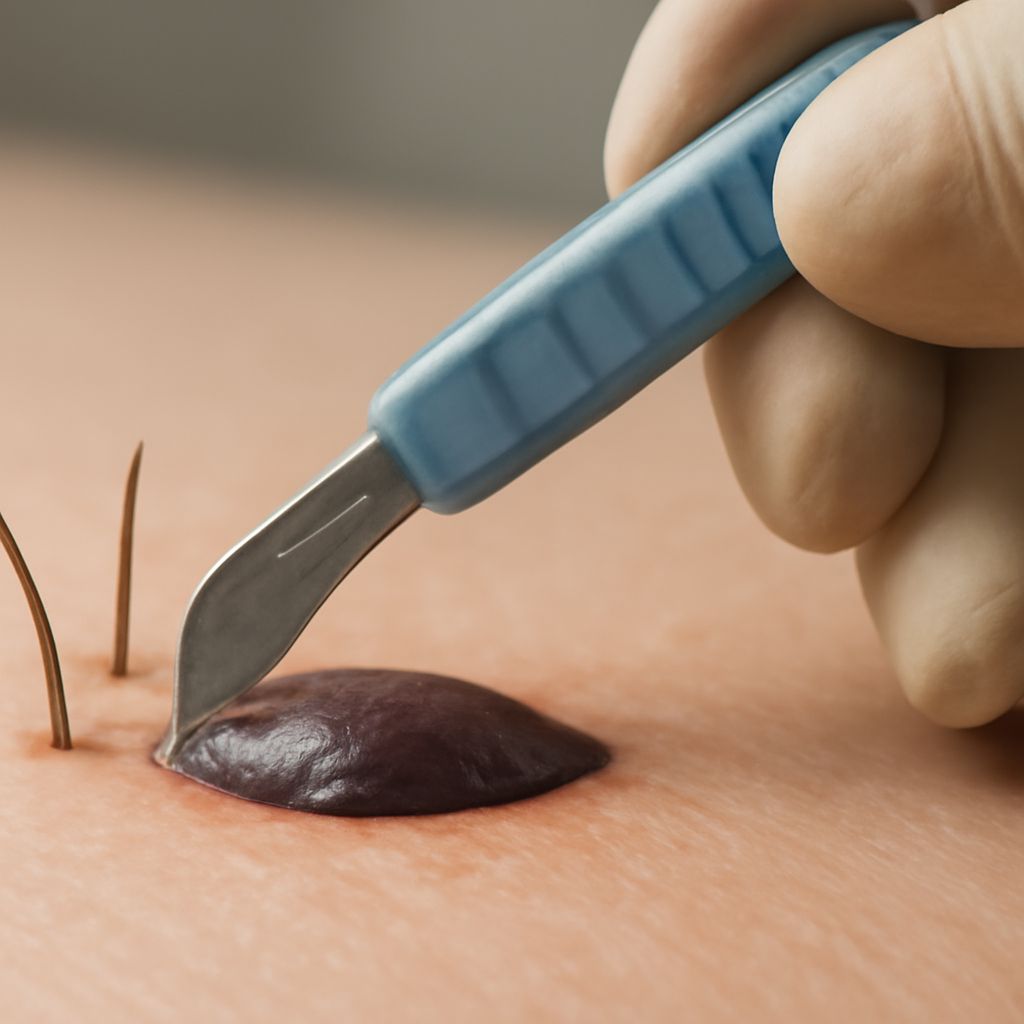
A skin cancer biopsy is often the procedure that confirms or rules out a diagnosis. Skin biopsy results carry critical information, but the waiting period raises anxiety for most patients. Knowing how long it takes to get skin biopsy results, what different outcomes mean, and what skin biopsies actually involve helps manage the process. Skin biopsy healing pictures found online show what normal recovery looks like, which can be reassuring when you’re unsure if your healing is on track.
This guide walks through the biopsy procedure itself, the timeline for results, what results mean, and how to care for the wound during healing.
What Types of Skin Biopsies Are Used to Check for Cancer
Several types of skin biopsies exist, and the choice depends on the size, depth, and location of the suspicious area.
Shave Biopsy
A shave biopsy removes a thin layer of skin using a blade, without going into the deeper dermis. It’s used for raised lesions and is among the most common techniques. Healing is usually quick and scarring minimal.
Punch Biopsy
A punch biopsy uses a small circular blade to remove a cylindrical core of tissue, going deeper than a shave. It provides a full-thickness sample, useful for diagnosing melanoma or deeper conditions. One or two sutures are typically placed afterward.
Excisional Biopsy
An excisional biopsy removes the entire suspicious lesion plus a margin of normal tissue. This is used when melanoma is strongly suspected, as it provides the most complete sample and may also serve as the initial treatment if margins are clear.
What Happens During a Skin Biopsy Procedure
Skin biopsies are typically performed in a dermatologist’s office under local anesthesia. The area is cleaned and injected with lidocaine, which causes brief stinging before the area becomes numb. Most patients feel pressure during the biopsy but no significant pain.
The procedure itself takes five to fifteen minutes. Depending on the technique, the wound may be left to heal naturally (shave biopsy), covered with steri-strips, or sutured (punch or excisional biopsy). A small bandage covers the site afterward.
How Long Does It Take to Get Skin Biopsy Results
How long it takes to get skin biopsy results depends on several factors. Standard processing takes five to ten business days. Some labs offer results in three to five days, while complex or ambiguous samples may require additional staining or specialist review and take up to three weeks.
Most dermatology practices will contact you by phone when results are available, regardless of whether the news is good or concerning. If you haven’t heard back within two weeks, it’s appropriate to call the office for an update.
What Do Skin Biopsy Results Mean
Results come back as a pathology report. Several outcomes are possible:
Benign: no cancer present. The tissue is normal or shows a non-cancerous condition. No further treatment is usually needed.
Atypical or dysplastic: cells show some abnormal features but are not yet cancerous. Depending on the degree of atypia, the dermatologist may recommend a re-excision to ensure clean margins as a precaution.
Basal cell carcinoma (BCC): the most common skin cancer. Usually slow-growing and rarely spreads. Treated by removal with clear margins.
Squamous cell carcinoma (SCC): more likely than BCC to spread if left untreated, but still very manageable when caught early.
Melanoma: the most serious. Stage and depth (Breslow thickness) from the biopsy guide treatment decisions. Early melanoma detected at a thin depth has a very high survival rate.
What Does Normal Skin Biopsy Healing Look Like
The first few days bring redness, minor swelling, and possibly some clear or slightly bloody discharge at the biopsy site. This is expected. Skin biopsy healing pictures from medical resources show a progression from small raw wound to scab to pink healing tissue over one to three weeks.
Keep the site clean and covered with a thin layer of petroleum jelly and a bandage, changed daily. This keeps the wound moist, which promotes faster healing and reduces scab formation. Don’t pick at scabs or sutures.
Shave biopsy sites typically leave a flat, slightly pinkish scar that fades over months. Punch and excisional biopsies leave a small linear scar if sutured well.
Signs of infection to watch for: increasing redness spreading outward, warmth, significant swelling, pus, or fever. These need prompt medical evaluation.
What Happens After a Positive Skin Cancer Biopsy
A positive skin cancer biopsy doesn’t mean the worst. Most skin cancers, caught at biopsy stage, are treated with surgical excision, Mohs surgery (for BCC and SCC in complex areas), radiation, or topical therapies depending on type and stage. Melanoma may require wider excision and sentinel lymph node biopsy to assess spread.
The dermatologist will discuss treatment options based on the specific diagnosis, location, and pathology details. For most non-melanoma skin cancers detected early, treatment is straightforward and outcomes are excellent.
Pro tips recap: Keep your biopsy wound moist with petroleum jelly rather than letting it dry out to promote faster healing. Follow up with your dermatologist within two weeks if you haven’t received results. And always ask about the pathology report directly so you understand exactly what was found and what it means for your health.


Leave a Reply