
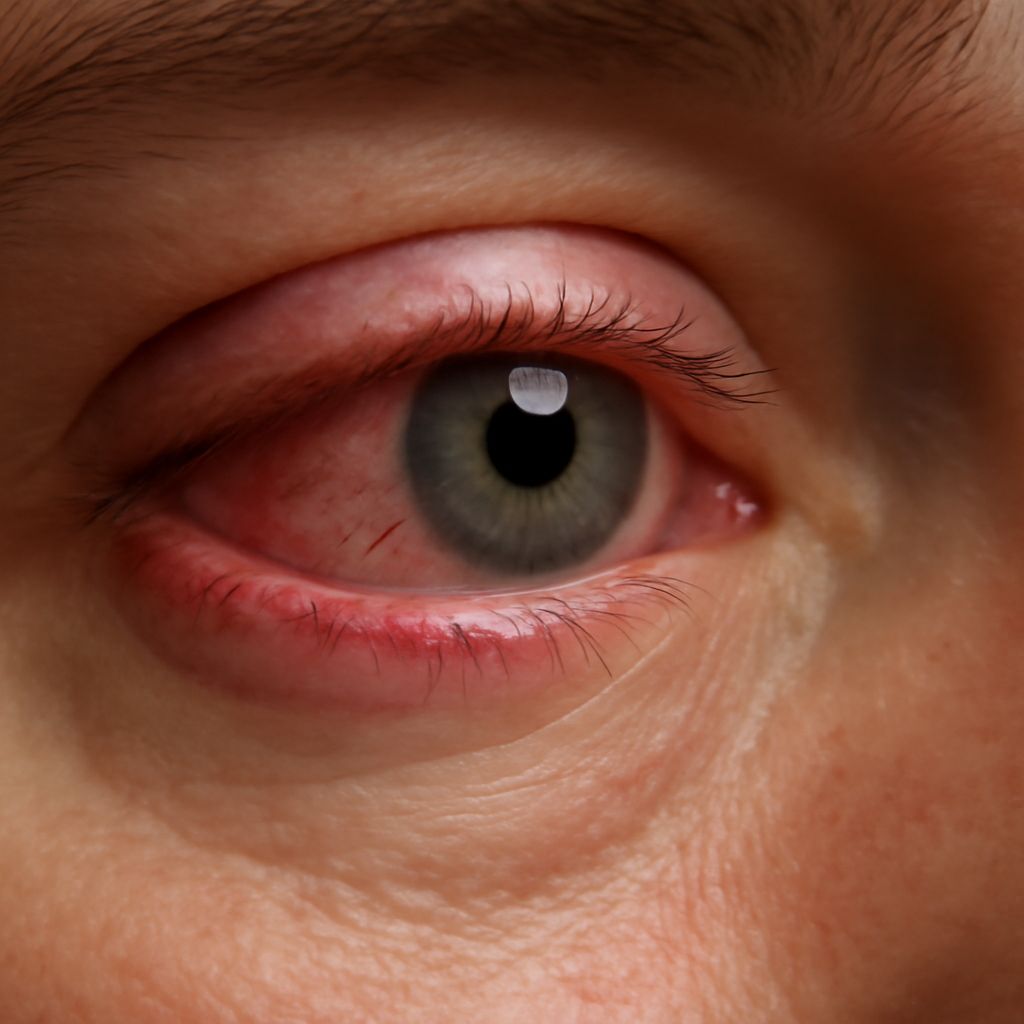
Red dry skin around eyes is more specific than general eye area dryness. When the skin around the eye is also red, it signals inflammation in addition to dryness. Dry skin around the eye that’s also irritated and itchy points to a different set of causes than simple low-humidity dryness. Dry itchy skin around eyes and scaly skin under eyes can result from allergic reactions, eczema, or product irritation. Dry red skin around eyes that persists beyond a few days warrants a systematic approach to identifying the trigger.
This guide covers the causes specific to red and inflamed periorbital dryness and how to address them effectively.
Why Does Redness Accompany Dryness Around the Eyes
Redness in skin indicates vasodilation, where blood vessels expand in response to inflammation. When dryness and redness appear together around the eye, it usually means the barrier is compromised and an inflammatory process is underway, not just simple dehydration.
The periorbital skin is uniquely thin and delicate with a rich capillary network, making redness highly visible here compared to other facial areas. Even mild inflammation that would go unnoticed on the cheek shows up clearly around the eyes.
How Does Contact Dermatitis Cause Red Dry Skin Around Eyes
Contact dermatitis is the most common cause of red dry skin around the eye area. Both allergic contact dermatitis (immune-mediated) and irritant contact dermatitis (direct damage) present with redness, dryness, itching, and sometimes swelling or scaling.
Allergic Contact Dermatitis
A delayed reaction, typically appearing 24-72 hours after contact with an allergen. The eye area is particularly vulnerable because people frequently touch it, products migrate there from other face and hair applications, and the thin skin here is more permeable to allergens. Common allergens include fragrance, preservatives (methylisothiazolinone), nickel (from glasses frames), nail polish chemicals transferred from touching the eye, and hair dye or products.
Irritant Contact Dermatitis
Direct damage from a substance that’s too harsh for the skin, rather than an immune reaction. Makeup remover rubbed vigorously, high-concentration retinoids applied near the eye, or over-washing are common causes. The reaction is usually immediate rather than delayed.
Can Eczema Affect the Eye Area Specifically
Yes. Atopic dermatitis commonly affects the eyelids and periorbital skin. Eyelid eczema presents as dry, red, scaly, itchy patches on the upper and lower eyelids. It may worsen seasonally or in response to allergens, stress, or certain products.
The itch-scratch cycle is particularly problematic around the eyes. Rubbing provides temporary relief but introduces more irritants, further breaks the skin barrier, and contributes to hyperpigmentation around the eye area over time.
What Products Commonly Trigger Red Eye-Area Skin
The eye area accumulates product exposure from multiple sources that people don’t always connect to their symptoms:
- Mascara and eyeliner: tested for safety but not universally tolerated. Preservatives and pigments in eye makeup are common sensitizers.
- Eye cream and undereye serums: the preserved, sometimes active-ingredient-heavy nature of these products can irritate.
- Makeup remover: micellar waters and oily removers can leave residues that sensitize the eye area over time, especially with rubbing.
- Hair products: conditioner, shampoo, dry shampoo, and styling products running from hair to face are frequent unrecognized triggers.
- Sunscreen: particularly chemical sunscreens, can cause eye-area irritation that presents as dryness and redness.
How Do You Treat Red Dry Skin Around the Eyes
Start by simplifying the routine. Remove all non-essential products from the eye area for two weeks, using only gentle, fragrance-free cleanser and a minimal fragrance-free eye-safe moisturizer. If the redness and dryness resolve, you’ve confirmed a product trigger and can reintroduce items one at a time to identify the culprit.
For moisturizing inflamed skin, ceramide-containing creams or pure petroleum jelly (applied gently with a ring finger, not rubbed) provide barrier repair without irritants. Cool compresses reduce inflammation and provide comfort during flares.
A safety note: do not self-treat with hydrocortisone cream around the eyes longer than a few days without medical guidance. Prolonged steroid use near the eye thins the skin and carries risks including cataract formation with heavy use.
When Does Red Dry Skin Around the Eyes Need Medical Evaluation
See a doctor if: the redness and dryness persist beyond two weeks of simplified home care, if there is swelling of the eyelid itself, discharge, or pain in the eye, if the presentation looks like blistering rather than just dryness, or if you suspect a systemic condition. A dermatologist can perform patch testing to identify specific contact allergens if the cause remains unclear after home investigation.
Bottom line: Red dry skin around the eyes with itching most commonly results from contact dermatitis or eczema, both of which respond to product elimination and barrier repair. Scaly skin under the eyes that persists despite simplifying the routine needs patch testing and professional evaluation to identify the specific allergen or underlying condition.




Leave a Reply