
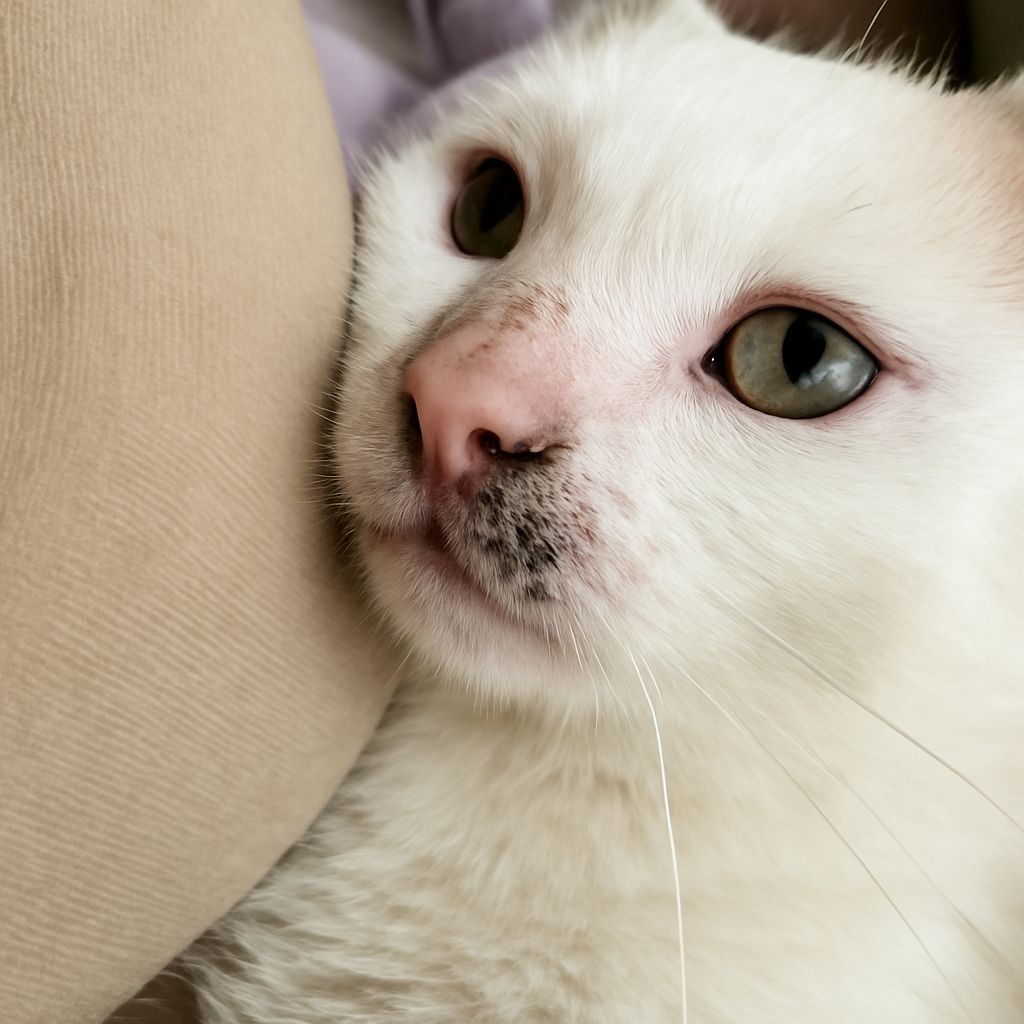
When your cat’s skin looks unusual—whether you notice scaling, dark patches, or black specks on cat skin not fleas—getting to the correct diagnosis quickly is important. Cat fungal infection skin conditions are among the more commonly overlooked causes of skin changes in cats, often mistaken for parasite activity or simple dry skin. This guide explains how to identify a cat fungal infection skin problem, what distinguishes non-flea black specks on cat skin from other conditions, what amyloidosis skin means in cats, and how tools like skin id can assist with diagnosis.
Understanding Cat Fungal Infection on Skin
Common Fungal Pathogens in Cats Cats are susceptible to several fungal organisms that cause skin disease. The most common is Microsporum canis, the primary cause of ringworm (dermatophytosis) in cats—despite the name, it is a fungal and not a parasitic infection. Ringworm in cats does not always produce the classic circular lesion seen in humans; feline cases often present as patchy hair loss, broken hairs, and scaling without prominent ring formation.
Malassezia pachydermatis, a yeast organism, can also colonize cat skin in excess, particularly in cats with underlying allergies or immune compromise. Less commonly, systemic fungi such as Cryptococcus neoformans can affect the skin as part of a broader infection, often presenting near the nose or with nodular skin lesions. Blastomycosis and sporotrichosis are additional fungal pathogens that can cause feline skin disease depending on geographic region.
Symptoms and Early Signs
Early cat fungal infection skin signs include circular or irregular areas of hair loss, stubby or broken hairs, fine scaling or flakiness around the edges of bald patches, and mild redness or crusting at the skin surface. Some cats show little to no itching with ringworm, making the condition easy to miss until the lesions enlarge. Cats with Malassezia overgrowth may show greasier-than-normal skin with a musty odor, excessive flaking, and more pronounced itching.
Kittens, geriatric cats, and immunocompromised cats are at highest risk for significant fungal skin disease. Outdoor cats that hunt or have contact with soil and other animals are also more exposed to dermatophyte spores and environmental fungi.
Black Specks on Cat Skin: Not Always Fleas
How to Differentiate Flea Dirt from Fungal Deposits When you find black specks on cat skin not fleas, the first step is to confirm their nature. The wet paper towel test is reliable: collect a few specks, place them on a damp white towel, and wait one to two minutes. Flea dirt (flea feces) contains digested blood and will produce a reddish-brown smear when wet. If the specks do not dissolve or stain red, flea dirt is an unlikely cause.
Non-flea black specks may be dried skin debris, accumulations of dried sebum and keratin (comedones), yeast overgrowth deposits, or melanin-related hyperpigmentation. In cats with fungal skin infections, the scaling may appear dark or grayish under certain lighting, particularly in areas with dense coat.
Other Causes of Dark Specks Feline acne—particularly common on the chin—produces comedones (blackheads) that look like dark specks. These are clogged hair follicles filled with sebum and dead cells. Lentigo simplex, a benign condition that causes flat, dark spots on the skin (especially around the mouth and nose in orange cats), is another source of dark marks that are not fleas. Hyperpigmentation following resolved inflammation is also common, where areas that were previously irritated develop darker pigmentation as the skin heals.
Amyloidosis Skin Conditions in Cats
Amyloidosis skin involvement in cats is rare but significant. Amyloidosis occurs when abnormal proteins called amyloid fibrils deposit in tissues. In cats, the most recognized form is systemic amyloidosis, particularly in Abyssinian and Siamese breeds, where amyloid deposits primarily in the kidneys and liver. Cutaneous manifestations of amyloidosis in cats are uncommon and typically appear as waxy, thickened plaques or nodules that may ulcerate.
Diagnosis requires biopsy with Congo red staining, which highlights amyloid deposits under polarized light microscopy. There is no specific treatment to reverse amyloid deposition; management focuses on supportive care, addressing underlying inflammatory triggers, and monitoring affected organs. If you notice unusual skin nodules or persistent plaques in a breed predisposed to amyloidosis, veterinary biopsy is the appropriate next step.
Skin Dive: What It Means in Dermatology Context
The term “skin dive” in a dermatology or veterinary diagnostic context refers to an actinic or physical examination technique where the clinician closely inspects the skin surface under specific light conditions or magnification to identify subsurface lesions, vascular patterns, or pigmentation changes that are not visible to the naked eye. In human dermatology, dermoscopy (skin diving with a handheld magnification device) is a standard tool for evaluating pigmented lesions.
In veterinary practice, similar magnification-based examination tools are used to identify mites (Demodex, Sarcoptes), fungal hyphae on surface scales, and early pigmentation changes. A veterinary dermatologist may use a Wood’s lamp (ultraviolet light) alongside magnification to screen for Microsporum canis infections, which fluoresce apple-green under UV light in some (but not all) strains.
Using Skin Id and Diagnostic Tools
Skin identification tools—whether digital apps, veterinary dermoscopes, or cytology kits—have become more accessible and can support preliminary screening before a full veterinary workup. Consumer skin id applications designed for humans use AI-based image analysis to flag skin lesions of concern; while not validated for veterinary use, they illustrate the direction diagnostic technology is moving.
For cats, the most reliable diagnostic tools remain: direct microscopic examination of a hair pluck or skin scraping (DTM culture for dermatophytes), cytology of skin surface samples (to identify yeast or bacterial overgrowth), biopsy for definitive histopathology, and serology or fungal culture for suspected systemic infections. Use a Wood’s lamp as a quick screening tool, but understand that a negative result does not rule out ringworm, as some strains of Microsporum canis do not fluoresce.
Key Takeaways for Cat Skin Health
Prompt identification of cat fungal infection skin conditions, non-flea black specks on cat skin, and rarer conditions like amyloidosis skin involvement depends on accurate observation and appropriate diagnostic testing. Never assume dark specks are flea dirt without confirming with the wet paper towel test. Ringworm is contagious to humans and other pets, so isolate affected cats and consult your veterinarian promptly. Annual wellness exams with a skin assessment are among the best tools for catching early skin changes before they progress to more serious conditions.




Leave a Reply