
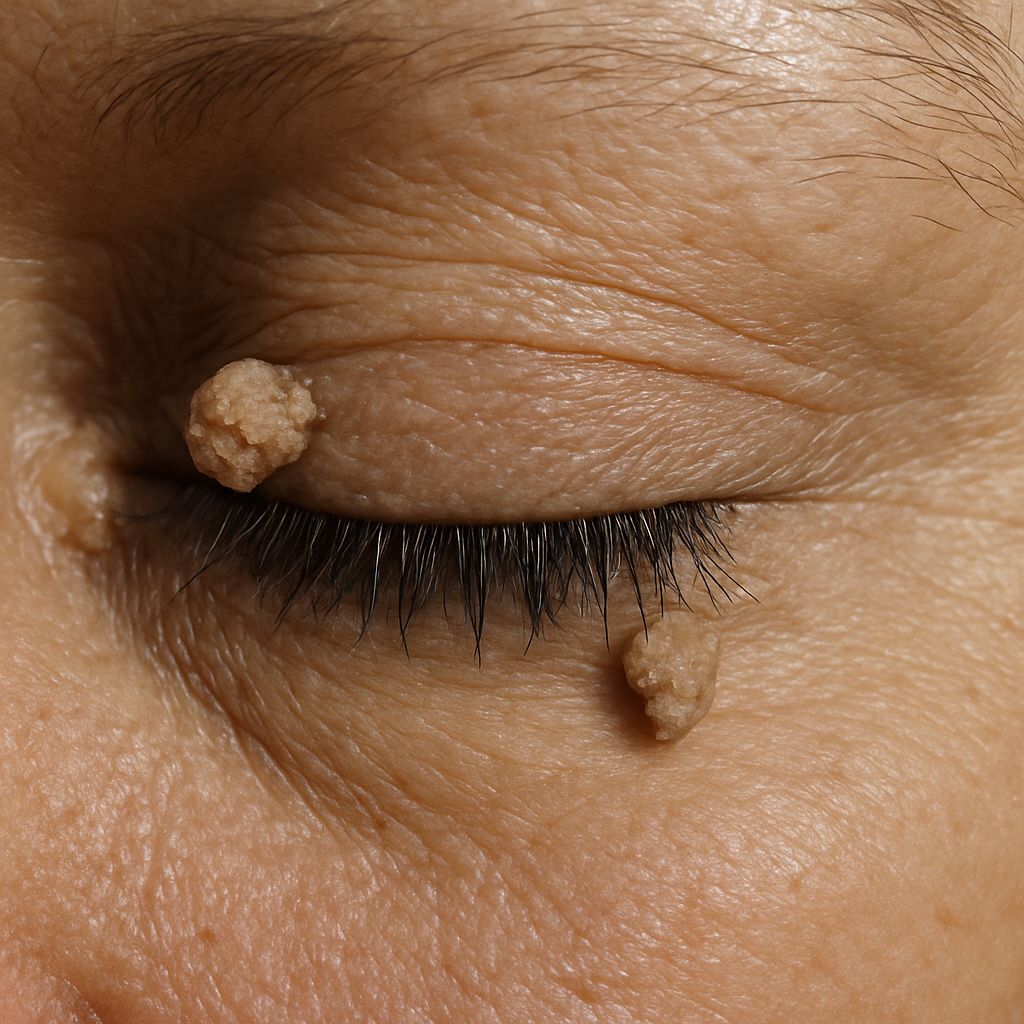
Finding a small, soft protrusion along the eyelid margin is unsettling, but skin tags on eyelids are a benign and very common occurrence. An eyelid skin tag is simply an overgrowth of skin that forms on a narrow stalk, identical in structure to tags that develop on the neck, underarms, or groin. The eyelid location, however, makes them more noticeable and more sensitive to manage because the tissue there is among the thinnest and most delicate on the entire body. A skin tag eyelid treatment approach differs substantially from removing tags on other areas because home remedies that are acceptable on thick neck skin are genuinely unsafe this close to the eye.
A skin tag on eye area is almost always benign, but it is important to have any new eyelid growth evaluated by a physician before attempting removal. Skin tags on eyelid tissue can sometimes be confused with more serious lesions, and accurate diagnosis prevents inappropriate home treatment of something that requires professional attention.
What Causes Eyelid Skin Tags?
The exact cause of skin tags is not fully established, but friction, genetics, and hormonal factors all contribute. Eyelid tags often develop where the upper and lower lids make frequent contact, particularly in the inner corners. Age is a significant factor: tags become more common after 40. Overweight individuals and those with diabetes or insulin resistance develop tags more frequently, possibly because elevated insulin stimulates skin growth factors. Pregnancy hormones also increase the likelihood of new tag formation.
Symptoms and When to Seek Evaluation
Typical Tag Characteristics
Eyelid skin tags are typically flesh-colored or slightly darker, soft to touch, movable, and attached by a narrow stalk. They usually do not hurt, bleed, or change color. Most people notice them incidentally while rubbing their eyes or applying makeup. When rubbed repeatedly, they can become mildly irritated and appear slightly red, but this resolves quickly once the irritation stops.
When Professional Evaluation Is Necessary
Any eyelid growth that bleeds spontaneously, changes in size or color rapidly, has an irregular surface texture, is firm rather than soft, or causes changes in vision should be evaluated by a dermatologist or ophthalmologist promptly. These features can distinguish a benign tag from a sebaceous cyst, papilloma, syringoma, or in rare cases a malignant lesion. Never assume; have any new eyelid growth confirmed as benign before considering removal.
Safe Removal Options for Eyelid Skin Tags
Professional Removal by a Dermatologist or Ophthalmologist
The safest removal approach for eyelid skin tags is always professional treatment. Options include precise surgical excision with small scissors under local anesthetic, cryotherapy using a very controlled application of liquid nitrogen, and electrocautery. These procedures take only minutes in an office setting, produce minimal discomfort, and carry very low complication rates in experienced hands.
Why Home Removal Is Unsafe for Eyelid Tags
Over-the-counter freeze kits, string ligation, and topical acids like tea tree oil or salicylic acid are strongly discouraged for eyelid tags. The thin, sensitive eyelid skin is easily damaged, and proximity to the eye creates risks of chemical injury, infection, or scarring affecting vision. Tea tree oil at any concentration applied near the eye can cause significant chemical irritation. Physical ligation with thread risks cutting through tissue rather than restricting blood supply cleanly. These methods are inappropriate for this location regardless of how well they work elsewhere.
Post-Removal Care and Recurrence
After professional removal, most eyelid tags heal quickly with minimal care: keep the area clean, avoid rubbing or touching the healing site, and apply any prescribed antibiotic ointment as directed. Skin tags do not recur at the same exact site after proper removal, but new tags can form elsewhere on the eyelid or surrounding skin. Maintaining a healthy weight and managing blood sugar levels may reduce the rate of new tag formation over time.
Safety recap: Eyelid skin tags require professional removal; home remedies near the eye carry real risks of chemical injury and scarring. Always confirm that an eyelid lesion is benign before pursuing any removal approach, and consult a dermatologist or ophthalmologist for treatment guidance.




Leave a Reply