
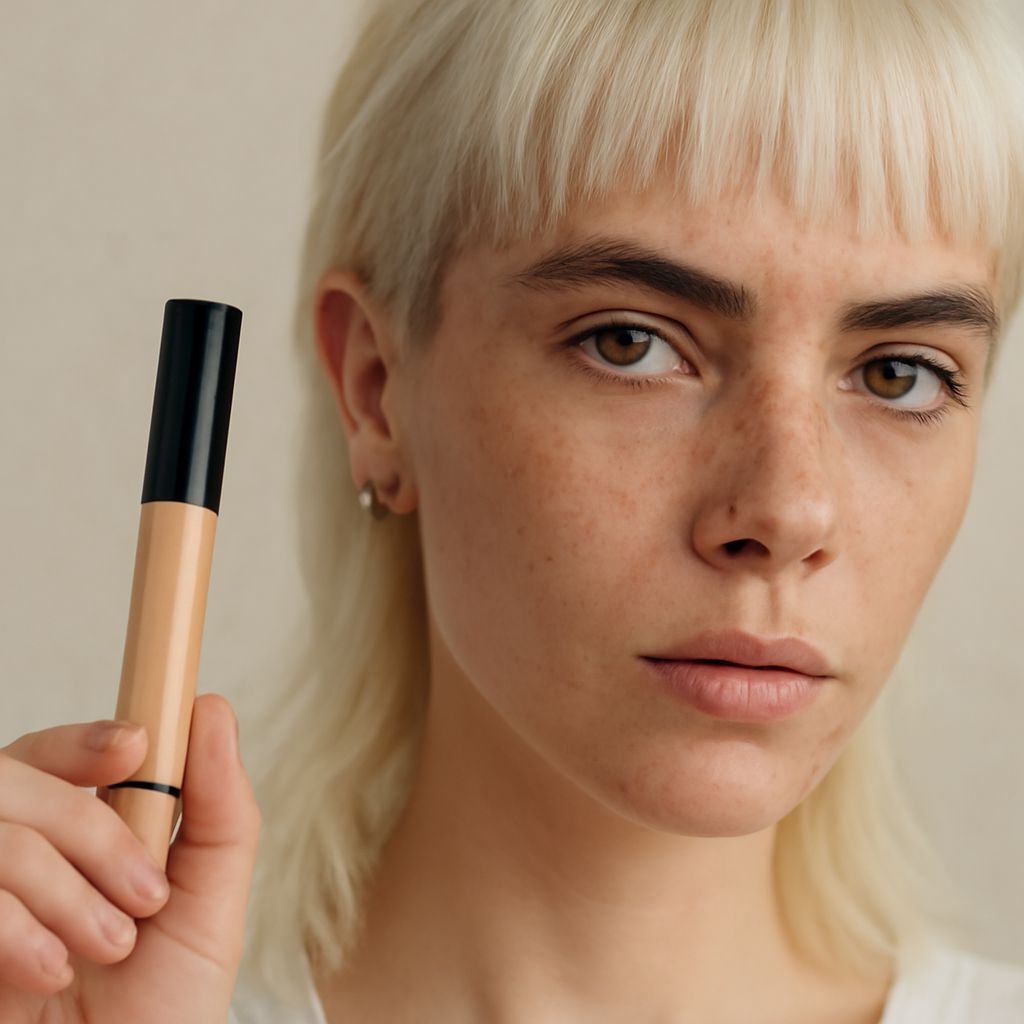
Coverage products have evolved well beyond traditional face makeup. Today’s blemish concealer formulas are engineered for precision spot coverage, while hair loss concealer and scalp concealer products address the growing demand for non-surgical hair thinning solutions. Finding the best concealer for acne prone skin requires avoiding pore-clogging ingredients, and selecting the right bald spot concealer means understanding which formulas hold up under heat, humidity, and daily wear. This guide covers all four application categories.
What Makes a Great Blemish Concealer?
An effective blemish concealer needs full coverage in a small concentrated footprint, a non-comedogenic formula that won’t worsen the underlying breakout, and a finish that blends seamlessly with surrounding skin. Look for formulas containing salicylic acid (which treats while covering), niacinamide (which reduces redness and inflammation), or zinc oxide (which offers mild antimicrobial benefit). Avoid blemish concealers with heavy mineral oils, lanolin, or isopropyl myristate, which are among the highest-rated comedogenic offenders.
Best Concealer for Acne Prone Skin: Formula Priorities
The best concealer for acne prone skin is fragrance-free, non-comedogenic, and ideally oil-free. Water-based or silicone-serum concealers provide coverage without the risk of additional pore congestion. Mineral concealers (iron oxide-based) are an excellent choice for sensitive and acne-prone individuals, as they avoid most common sensitizers and comedogens. Always apply with a clean brush or your fingertip — never a sponge that has been contaminated with foundation or other product residue.
Hair Loss Concealer: How It Works
Hair loss concealer products are designed to minimize the visual contrast between thinning areas and surrounding scalp. They come in several formats: colored powders that coat existing hairs to create the visual impression of density, sprays that coat fine hairs and temporarily color the scalp to match hair color, and fiber products (often keratin-based) that statically cling to existing hairs to increase their apparent thickness. These products are temporary cosmetic solutions — they do not stimulate new growth — but they provide immediate confidence-building results while longer-term treatments take effect.
Scalp Concealer Formulas and Application
A scalp concealer is typically either a powder or a spray applied directly to visible scalp areas to camouflage thinning. The best scalp concealer formulas match a wide range of hair colors, resist transfer onto clothing and pillows, and are water-resistant enough to stay in place through light perspiration. Application technique matters: apply in small amounts and build coverage gradually, blending the edges into surrounding hair for a natural finish. Setting with a light mist of hairspray or a dedicated hold spray helps lock the product in place.
Bald Spot Concealer: Targeted Coverage for Specific Areas
A bald spot concealer differs from general scalp coverage in that it addresses a defined, visible area of complete or near-complete hair loss — such as those resulting from alopecia areata, post-surgical sites, or localized traction alopecia. These areas require higher coverage density and better staying power. Fibers work well when at least some fine hairs remain to anchor them. For completely hairless patches, a waterproof, skin-toned scalp powder or even dermatological-grade cosmetic camouflage cream (typically used for scars and birthmarks) provides better coverage.
Matching Concealer to Skin and Scalp Undertone
Whether choosing a blemish concealer or scalp concealer, shade matching is critical. For blemish coverage, match to your exact skin tone or select one shade lighter specifically for under-eye use. For scalp coverage, match to your hair color rather than your skin tone — this minimizes contrast at the hairline. Most scalp concealer brands offer a range from blonde to black, with several intermediate brown shades. Those with gray hair should look for brands that offer specific gray or salt-and-pepper shade options.
Removing Scalp and Blemish Concealers Properly
Scalp concealers require thorough shampooing to remove completely — use a clarifying shampoo weekly if using hair concealer products daily to prevent buildup. Blemish concealers on active acne should be removed with a gentle, non-stripping micellar cleanser to avoid further irritating the skin. Double-cleanse the face at the end of any day when spot concealer was applied. Never sleep in blemish coverage on active breakouts, as this traps product and bacteria against the skin overnight.
Safety recap: Avoid applying scalp concealer to irritated, broken, or infected scalp areas — allow any active dermatitis or folliculitis to resolve before using covering products. Blemish concealers applied to open or bleeding spots can introduce infection risk; address the lesion medically before using cosmetic coverage.





Leave a Reply