
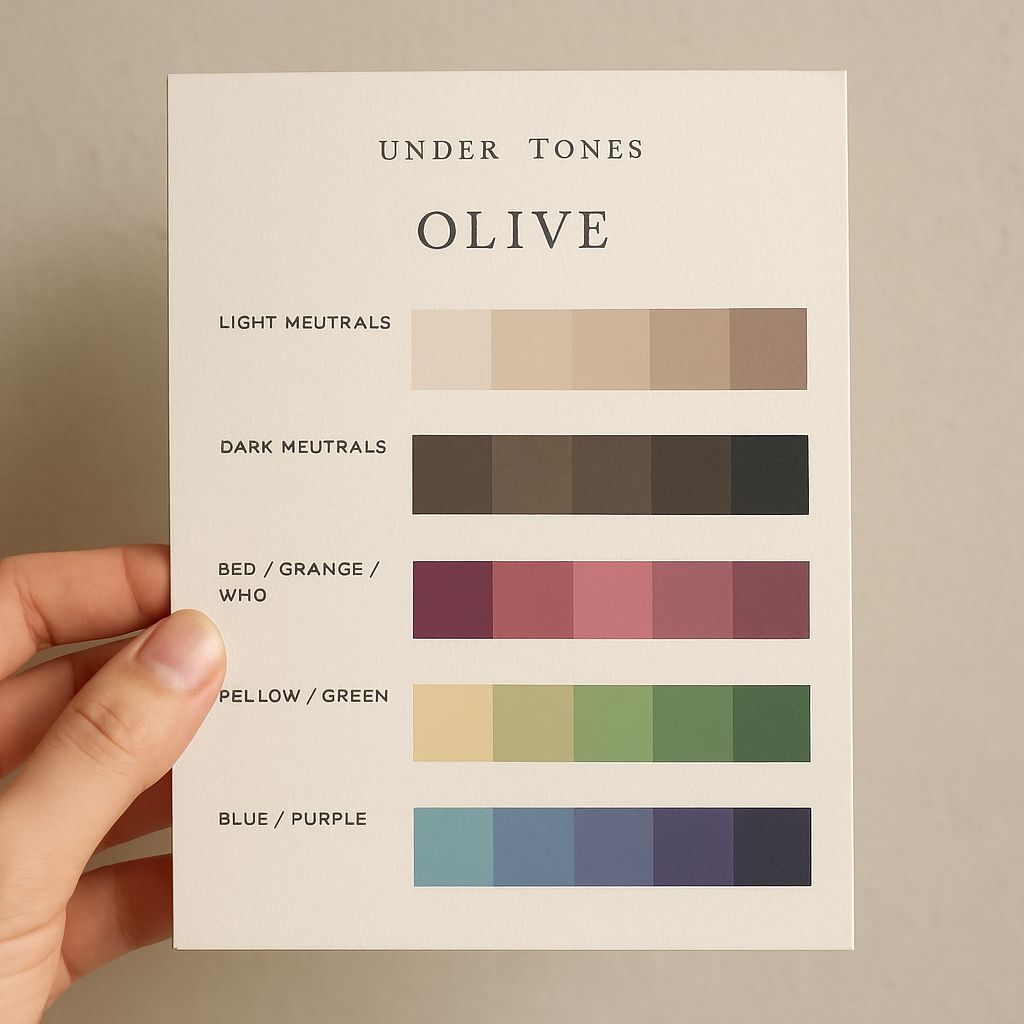
Finding the right shades for olive skin can feel like solving a puzzle. The best colors for olive skin range from warm earthy tones to rich jewel hues, but knowing which work for your specific depth and undertone makes all the difference. Whether you want the best bronzer for olive skin, a flattering bronzer for olive skin in general, or the best clothing colors for olive skin, this guide covers everything. We also look at light olive skin celebrities to see what actually works in real life.
Olive skin sits in a unique middle zone, with both warm and neutral undertones. That means you have flexibility, but you also need to be deliberate. Some shades will make you look tired; others will make your skin glow.
What Makes Olive Skin Different from Other Skin Tones
Olive skin has a greenish-yellow undertone layered beneath the surface. Unlike clearly warm or cool complexions, olive sits at a crossroads. It tends to tan easily, looks golden in sunlight, and can appear slightly sallow in poor lighting. This combination means the usual warm-versus-cool color rules don’t always apply cleanly.
The green and yellow pigmentation means pure white and icy pastels can wash olive complexions out. But deep, saturated colors and warm neutrals tend to pull out the richness instead.
Which Clothing Colors Work Best for Olive Skin
The best clothing colors for olive skin tend to fall into a few reliable families.
Earth tones are a natural fit. Warm browns, camel, terracotta, burnt orange, and rust all echo the natural warmth already present in olive skin. These shades don’t compete with the complexion; they harmonize with it.
Jewel tones are another strong category. Deep emerald, rich plum, burgundy, and sapphire blue all have enough depth to contrast nicely without washing out the skin. They draw attention up toward the face and create visual interest.
Olive and army green are surprisingly effective. While wearing the same color as your skin tone might seem odd, these shades tend to blend and unify in a flattering way, especially in matte fabrics.
Warm whites and creams outperform stark, blue-based whites. If you want to wear white, choose ivory or off-white instead of a crisp optical white, which can make olive skin look ashy.
Are There Colors Olive Skin Tones Should Avoid
No color is strictly off-limits, but a few tend to cause problems. Light pastels, especially lavender, baby pink, and mint, often make olive skin look dull or sickly. Similarly, neon shades can clash with the yellow-green undertone and look garish rather than vibrant.
Very light, cool grays are another common issue. They can amplify the yellowish quality of olive skin in an unflattering way. Charcoal and warmer mid-toned grays work far better.
What Kind of Bronzer Suits Olive Skin
The best bronzer for olive skin has a warm, golden-brown or terracotta base, not orange and not too cool or taupe. You want a bronzer for olive skin that adds depth without making you look muddy or overly bronzed.
Matte or satin finishes typically work best. Heavy shimmer can look patchy or too metallic on olive tones. A soft shimmer bronzer worn only on high points, like cheekbones and the bridge of the nose, can work for specific looks, but for daily wear, matte reads more natural.
Avoid bronzers with a strong orange tint. While orange-adjacent tones are common in budget bronzers, they tend to make olive skin look muddy. Choose bronzers described as warm brown or golden tan.
A safety note: when applying bronzer to olive skin, build gradually. Since olive complexions already have warmth, it’s easy to overdo it. Start with a light hand and add more as needed.
What Makeup Shades Complement Olive Skin
Beyond bronzer, makeup for olive skin follows a few consistent patterns.
For lips, warm nudes like warm caramel, terracotta, peachy-brown, and deep berry all work well. Steer away from very pale, cool-toned pinks, which can read as washed out.
For eyeshadow, warm copper, bronze, brown, gold, and deep burgundy all complement the yellow-green undertone rather than fighting it. Taupe and warm gray also work as neutral options for everyday looks.
For blush, choose peachy-warm, warm pink, or terracotta shades. Cool-toned mauves and dusty roses can clash with olive undertones and look misplaced against the skin.
Foundation shade selection deserves care. Olive skin often needs shades labeled N (neutral), N/W (neutral-warm), or W (warm). Yellow-based foundations are usually better than pink-based ones.
Which Celebrities with Light Olive Skin Are Worth Looking At for Inspiration
Light olive skin celebrities offer useful real-world examples of what works. Penelope Cruz, Jennifer Lopez, Eva Longoria, and Jessica Alba all have olive or light olive complexions and regularly demonstrate color choices in clothing and makeup that suit this skin tone.
Cruz often gravitates toward rich reds and warm earth tones in her clothing. Lopez frequently wears warm bronzed makeup with gold-toned clothing. Longoria opts for deep jewel tones and warm caramel beauty looks. Alba tends toward natural warm shades in both clothing and makeup.
Looking at these choices in context confirms that the warm, rich, and deep color families do the most work for olive complexions.
Key takeaways: The best colors for olive skin lean warm, deep, and earthy, while cool pastels and optical whites tend to flatten the complexion. A good bronzer for olive skin should read warm brown or golden, never orange. Light olive skin celebrities consistently show that embracing warmth rather than fighting it produces the most flattering results.




Leave a Reply