
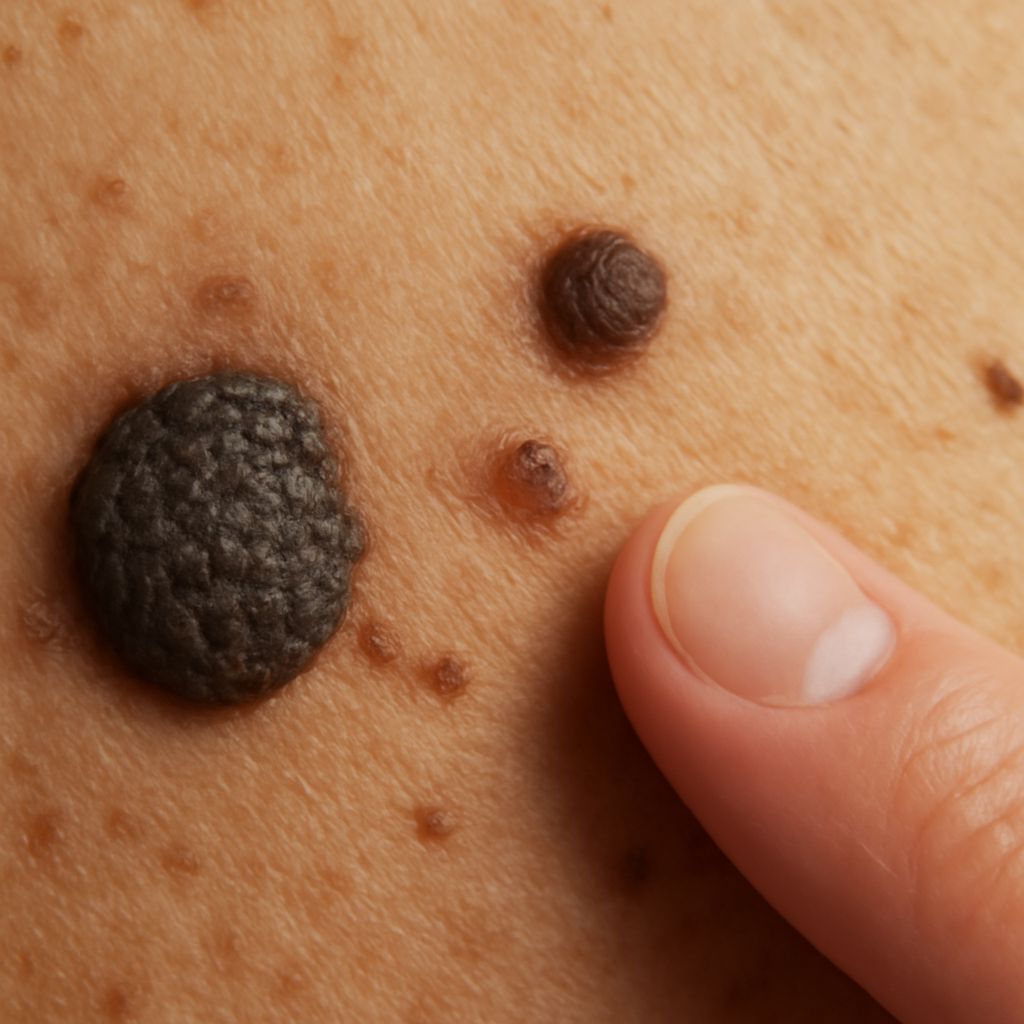
Many people notice new or changing patches on their skin as they age, from pale brown marks to darker spots that seem to appear overnight. While age spots on skin and liver spots on skin are usually harmless, their sudden appearance can be concerning—especially if they resemble small black spots on skin that might signal something more serious. In this article, we’ll clarify what causes brown marks on skin, how to distinguish between benign and suspicious spots, and what steps you can take to treat or prevent them.
If you have noticed liver spots on skin, or are worried about brown marks on skin or even small black spots on skin, understanding the reasons behind these changes can help you make informed decisions about your skin health. Let’s explore the key facts about these common skin features, including when to seek medical advice, which treatments are effective, and how to reduce future risk.
What are Liver Spots on Skin and How Do They Look?
Liver spots—also called solar lentigines, age spots, or sun spots—are flat, usually oval-shaped patches that develop on areas of the body most frequently exposed to the sun. Despite the old-fashioned name, liver spots have no connection to liver function or liver disease. Instead, their brownish or grayish appearance comes from an accumulation of pigment cells (melanocytes) in the upper layers of the skin.
These marks vary in size, typically ranging from a few millimeters up to over a centimeter in diameter. The color can shift from light tan to dark brown. Liver spots on skin are most often found on the face, hands, shoulders, upper back, and forearms—areas that have had the most cumulative sun exposure over the years.
Unlike some other skin changes, age spots on skin are usually painless, not raised, and have well-defined edges. They tend to appear in clusters or as single spots, and their surface is usually smooth rather than scaly or rough. Over time, brown marks on skin may darken or increase in number, especially if sun exposure continues without protection.
It’s important to note that while liver spots themselves are not dangerous, their appearance can sometimes be confused with other pigmented lesions, including moles or early skin cancers. Knowing the typical look and behavior of common age spots can help you monitor your skin with greater confidence.
What Causes Liver Spots, Age Spots, and Brown Marks on Skin?
The development of age spots and similar brown marks on the skin is most strongly linked to chronic sun exposure. Ultraviolet (UV) radiation accelerates the production of melanin—the pigment that gives skin its color—and over the years, this can result in localized overgrowths of pigment cells. Individuals who spend time outdoors without adequate sun protection, or who have lighter skin tones, are at greater risk for developing these spots.
While sun damage is the main driver, liver spots on skin can also be influenced by aging itself. As our skin matures, it becomes less able to repair damage from UV rays, environmental pollutants, and even hormonal shifts. Genetic factors also play a role, as some people are simply more prone to developing lentigines due to inherited skin characteristics.
Other contributors to brown marks on skin include the use of tanning beds, certain medications that increase photosensitivity (such as some antibiotics or diuretics), and skin inflammation or injury that heals with increased pigmentation. It’s worth noting that, although these spots are called “liver spots,” they are not caused by liver problems or poor health habits.
Unlike freckles, which may fade in winter or with reduced sun exposure, age spots and liver spots tend to persist indefinitely unless treated. Their persistence is a hallmark of chronic sun-induced pigment changes rather than transient fluctuations in skin tone.
How Can You Tell the Difference Between Age Spots and Small Black Spots on Skin?
For the average person, distinguishing between harmless age spots and potentially worrisome small black spots on skin can be challenging. There are, however, some general guidelines that can help. Age spots on skin are generally uniform in color, have smooth borders, and remain flat. They do not itch, bleed, or change rapidly over time.
Small black spots, on the other hand, may represent a variety of conditions—ranging from benign moles or seborrheic keratoses to more serious lesions like melanoma. Warning signs to watch for include rapid changes in size, irregular or jagged edges, multiple colors within the same spot, or new symptoms such as itching, pain, or bleeding. Any spot that looks clearly different from your other marks—what dermatologists call the “ugly duckling” sign—should be evaluated by a healthcare professional.
In some cases, small black spots on skin may simply be collections of melanin, minor trauma, or even tiny blood vessels (angiomas). If you are uncertain about a new or changing spot, especially if you have a personal or family history of skin cancer, it is always safest to seek professional guidance for a definitive answer.
Regular self-examinations and familiarity with your skin’s normal appearance are key to identifying new or suspicious changes early, when intervention is most effective.
Are Liver Spots on Skin a Sign of Cancer?
Most age spots and liver spots on skin are entirely benign and do not progress to skin cancer. Their presence is primarily a cosmetic issue rather than a health threat. However, because some forms of skin cancer, particularly melanoma, can resemble brown marks or dark lesions, it’s important not to ignore new or changing spots.
Melanoma and other skin cancers may sometimes appear as small black spots on skin or as patches that change color, shape, or texture. While genuine age spots do not become malignant, the risk lies in misidentifying a cancerous lesion as a harmless spot. For this reason, dermatologists recommend the “ABCDE” rule: watch for Asymmetry, irregular Borders, Color variation, Diameter larger than 6mm, and Evolution or change in a spot’s characteristics.
If you have numerous brown marks on skin or a family history of melanoma or non-melanoma skin cancers, regular check-ins with a dermatologist can provide peace of mind and early detection if problems do arise. Prompt professional assessment is the safest route if you notice anything unusual, especially a new or rapidly changing black spot.
Ultimately, while most liver spots pose no threat, vigilance and proper identification are crucial for long-term skin health.
What Are the Best Treatments for Liver Spots and Brown Marks on Skin?
Many individuals seek treatment for cosmetic reasons, especially when liver spots or age spots on skin become prominent or numerous. Several effective options are available, both over-the-counter and through dermatology clinics.
Topical lightening creams containing hydroquinone, retinoids, or vitamin C can help fade brown marks on skin over time. Prescription-strength preparations may be recommended for stubborn or widespread spots, but sun protection is essential during treatment to prevent further pigmentation.
Professional procedures such as laser therapy, intense pulsed light (IPL), chemical peels, and microdermabrasion can also target liver spots. These treatments work by removing or breaking up excess pigment in the upper skin layers. Each method has its benefits, risks, and potential side effects, so a consultation with a board-certified dermatologist is advised to determine the best option for your skin type and medical history.
For those with sensitive skin or a preference for gentler approaches, gradual improvements are possible through consistent use of sunscreen, moisturizers with antioxidants, and avoiding further UV exposure. Regardless of the chosen method, persistence and patience are essential, as results typically take several weeks to months to become apparent.
How Can You Prevent Age Spots and Small Black Spots on Skin?
Prevention is the most effective way to minimize the appearance of liver spots and brown marks as you age. Consistent sun protection is vital: wear broad-spectrum sunscreen with an SPF of at least 30 every day, even on cloudy days or in winter. Wide-brimmed hats, sunglasses, and protective clothing provide additional barriers against UV rays.
Try to stay out of direct sunlight during peak hours (10 a.m. to 4 p.m.), when ultraviolet radiation is strongest. If you use photosensitizing medications, take extra precautions, as your skin may be even more vulnerable to pigment changes and sunburn.
Healthy lifestyle practices also support skin resilience. A balanced diet rich in antioxidants, adequate hydration, and avoiding smoking can all contribute to a more even skin tone. Promptly addressing skin injuries or inflammation helps reduce the risk of post-inflammatory pigmentation, another source of brown marks on skin.
Lastly, periodic self-checks will help you notice and document any new small black spots on skin or evolving lesions early, enabling timely intervention if needed.
When Should You See a Doctor About Liver Spots or Other Skin Changes?
Most brown marks and liver spots on skin can be managed at home or with over-the-counter remedies. However, it’s important to consult a healthcare provider if you notice any spot that changes rapidly, has irregular borders, bleeds, itches, or looks significantly different from your other skin features.
Individuals with a history of extensive sun exposure, fair skin, or a family history of melanoma should seek regular skin checks from a dermatologist. Any doubt about the nature of a spot, especially small black spots on skin or lesions in hard-to-see areas, warrants professional assessment.
Prompt evaluation is essential for early detection of skin cancers or precancerous changes. A dermatologist can use tools such as dermoscopy to analyze pigment patterns and may perform a biopsy if there is concern.
Remember, early intervention for suspicious lesions can be life-saving, and most skin changes turn out to be harmless with expert reassurance.
Safety Recap: If you try professional treatments or home remedies for liver spots or brown marks, always follow safety instructions and seek medical advice for persistent, changing, or unusual skin lesions. Protecting your skin from sun damage is the most effective long-term strategy for maintaining skin health.




Leave a Reply