
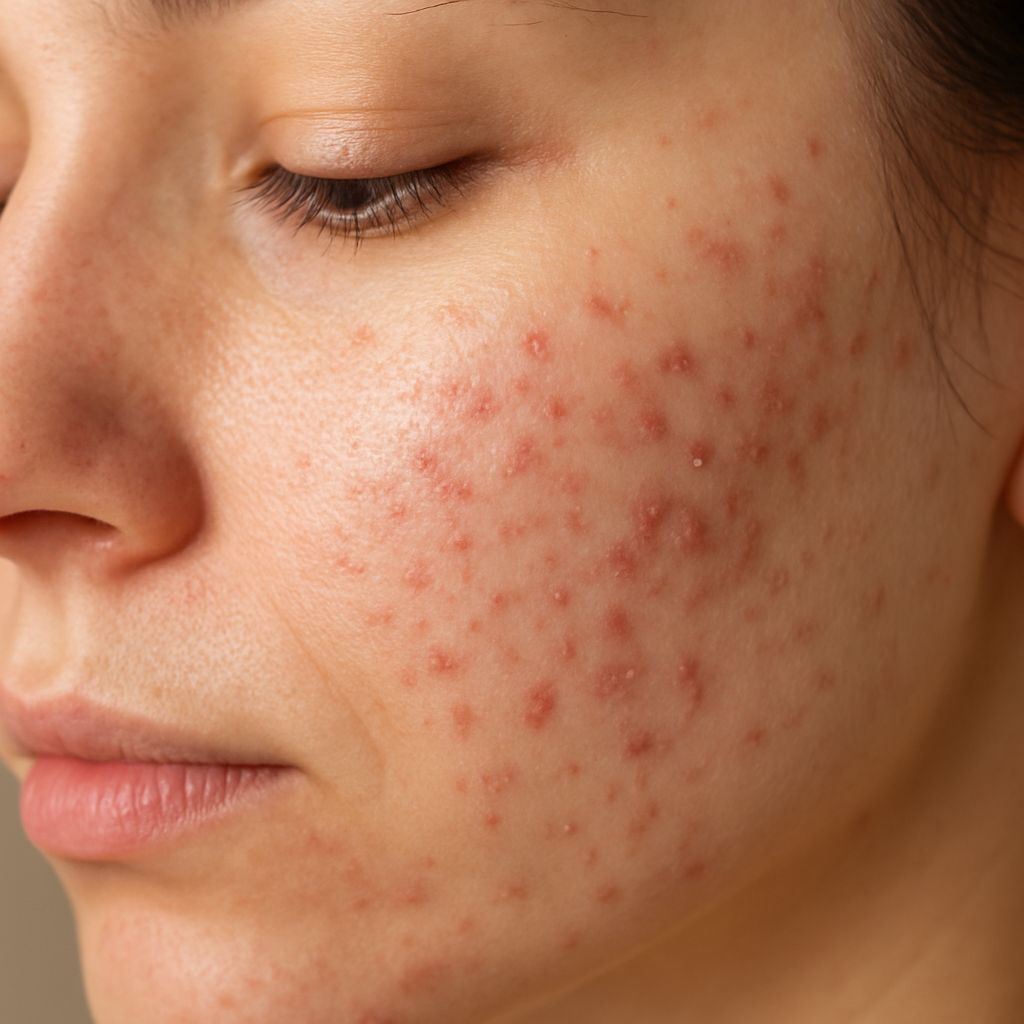
Jawline acne is one of the most frustrating breakout patterns because it tends to be deep, painful, and persistent in a way that typical forehead or nose acne is not. Acne on jawline areas differs from other facial zones in both its causes and its optimal treatment approach. While many facial breakouts respond to topical salicylic acid alone, jaw acne often requires understanding and addressing the hormonal and lifestyle triggers that make this specific area prone to recurring lesions.
Noticing a pattern of acne around jawline areas, particularly if it flares predictably around the menstrual cycle or during high-stress periods, is a strong signal that internal factors, not just topical skin conditions, are driving the problem. Even acne under jawline and neck breakouts often connect to the same hormonal chain. This guide covers the causes, the most effective treatments, and when to consider professional help.
Why Does Acne Form on the Jawline?
The jawline and chin are dense with androgen-sensitive sebaceous glands that respond to testosterone and its derivatives with increased sebum production. When androgen levels spike, whether from the luteal phase of the menstrual cycle, polycystic ovary syndrome, stress-related cortisol elevation, or dietary factors, these glands produce excess oil that combines with dead skin cells to clog pores. Inflammatory papules and cysts, the most painful type of blemish, form deep within these blocked follicles. This is why jawline breakouts often feel like hard lumps under the skin rather than surface-level whiteheads.
Hormonal Triggers for Jaw Acne
The Menstrual Cycle
Progesterone levels rise in the week before menstruation, increasing sebum production and skin congestion. This is why many people experience a predictable flare of jaw and chin breakouts in the days before their period. Tracking this pattern in a skin journal confirms whether hormonal fluctuation is the primary driver and supports the case for hormonal treatment options.
PCOS and Androgen Excess
Polycystic ovary syndrome produces elevated androgens that drive chronic jawline and chin acne in many affected individuals. If jawline acne is persistent rather than cyclical, does not respond to standard topical treatments, and occurs alongside other androgen excess symptoms such as irregular periods or hirsutism, evaluation by a gynecologist or endocrinologist is appropriate.
Stress and Cortisol
Cortisol, the primary stress hormone, stimulates sebaceous gland activity independently of sex hormones. Consistently high stress levels maintain elevated cortisol and perpetuate the sebum overproduction that feeds breakout cycles. Managing stress through sleep, exercise, and mindfulness produces measurable skin improvements over time.
External Triggers Around the Jawline
Phone screens, chin resting on hands, helmet straps, pillowcases, and tight turtleneck collars all transfer bacteria and friction to the jawline area. Disinfecting your phone daily, sleeping on clean pillowcases, and being conscious of how often you touch your jaw reduces this contact-based component. Under-jawline breakouts especially may connect to hair products that drip onto the neck and jawline during rinsing or heat styling.
Effective Treatments for Jawline Acne
Topical retinoids, particularly adapalene 0.1 percent gel available over the counter, are among the most effective non-prescription treatments for the comedonal congestion that underlies cystic jawline breakouts. They work over weeks to months rather than days and should be applied consistently every evening. For inflammatory cysts, niacinamide serums reduce redness and regulate oil production. Benzoyl peroxide 2.5 percent applied as a spot treatment to active lesions reduces bacterial colonization and shortens healing time.
When to See a Dermatologist
Persistent or cystic acne around the jawline that does not respond to at-home treatment within two to three months is a clear indication for professional care. Dermatologists can prescribe oral medications including spironolactone, which blocks androgen receptors directly at the sebaceous gland level and has an excellent track record for adult female hormonal jawline acne. Combined oral contraceptives also reduce androgen activity for appropriate patients. Isotretinoin remains an option for severe, scarring cases.
Key takeaways: Jawline acne is predominantly driven by hormonal androgen activity at androgen-sensitive sebaceous glands. Identifying whether the pattern is cyclical or chronic helps guide treatment; topical retinoids and niacinamide address surface symptoms while hormonal treatments tackle the root cause. Persistent cystic acne around the jawline needs dermatological management rather than continued home care alone.




Leave a Reply