
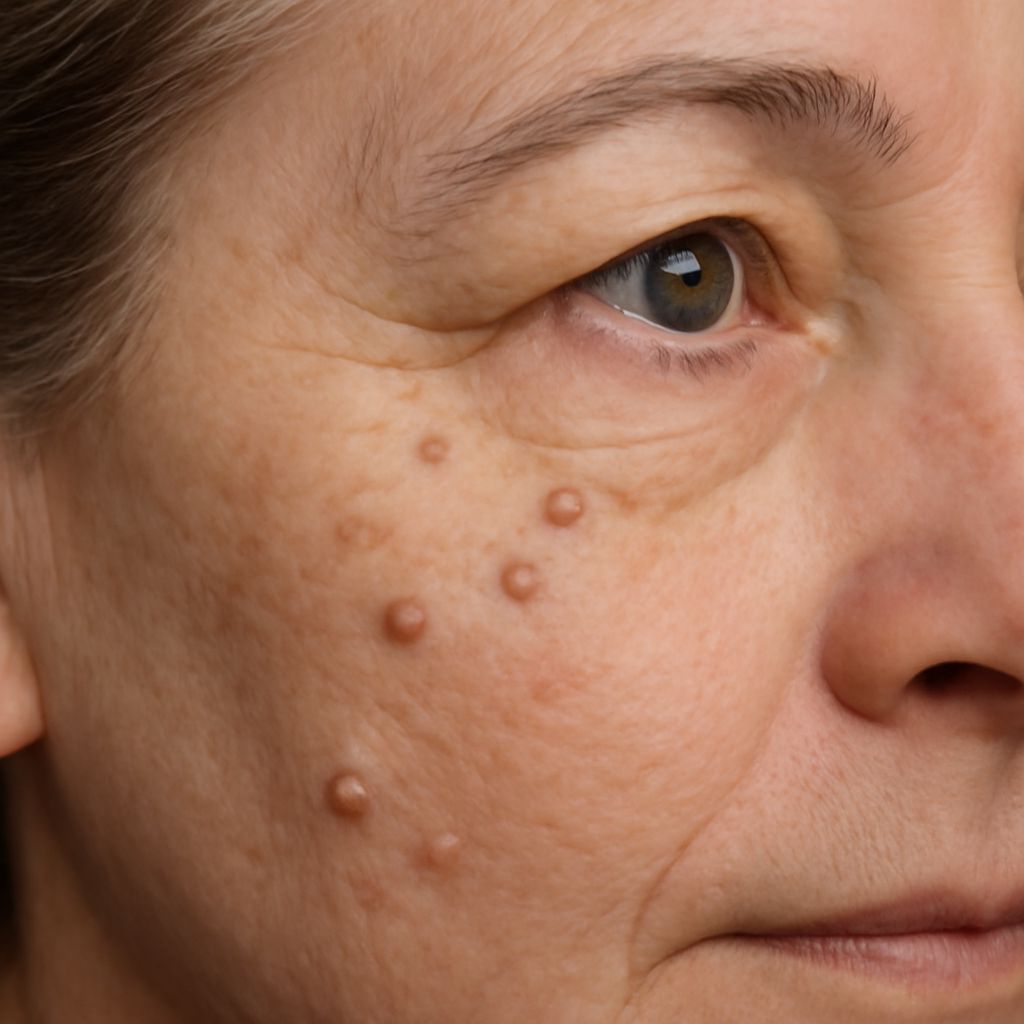
Skin tags on eyelids are a specific challenge. Knowing how to get rid of skin tags on eyelids safely requires understanding why the eyelid area demands a different approach than skin tags elsewhere. Methods commonly used on body skin tags are not appropriate near the eye. How to remove skin tags from eyelids involves professional treatment in most cases, not home remedies. If you’re searching for how to remove skin tags on eyelids or how to remove skin tags on an eyelid specifically, this guide covers what’s safe, what’s not, and why you should not attempt DIY removal on or near the eyelid. Similarly, how to get rid of skin tags on an eyelid without damaging sensitive tissue requires professional involvement.
This article covers what eyelid skin tags are, why they form near the eye, and what removal options are appropriate in this sensitive location.
What Are Skin Tags on the Eyelid
Skin tags, medically known as acrochordons, are benign, soft, fleshy growths connected to the skin by a thin stalk (peduncle). They’re made of loose collagen fibers and blood vessels covered by skin. On the eyelid, they typically appear on the upper or lower lid, sometimes at the lid margin or within the orbital area.
They’re not dangerous, don’t spread, and don’t become cancerous. But on the eyelid, location makes them problematic. They can irritate the eye surface through contact with the cornea or conjunctiva, cause discomfort when blinking, affect vision in some cases, and create cosmetic concern.
Why Do Skin Tags Form Near the Eyes
Skin tags generally form in areas of friction or skin folds: the neck, armpits, under the breasts, and groin. The eyelid area is subject to constant movement and contact from blinking, rubbing, and wearing glasses or contact lenses, all of which can contribute to skin tag formation over time.
Age increases risk. Most skin tags develop in people over 40. Metabolic factors including insulin resistance and type 2 diabetes are associated with increased skin tag frequency. Weight and skin-on-skin friction are also contributing factors.
What Professional Treatments Remove Eyelid Skin Tags
Because of the location, eyelid skin tag removal is performed by dermatologists or ophthalmologists. Several methods are used depending on the size and exact location of the tag.
Surgical Excision
The most common approach. Under local anesthesia, the skin tag is cut off with fine surgical scissors or a scalpel at its base. This is quick, definitive, and has very low recurrence. The wound heals without stitches in most small tags.
Cryotherapy
Liquid nitrogen is applied to freeze the skin tag, causing it to fall off over several days. Near the eye, this requires precision and is used more cautiously to avoid freeze damage to surrounding tissue.
Electrocautery
Electrical current burns off the skin tag. A common technique for very small tags, it requires a steady hand and is performed under local anesthesia near the eye.
Why Is DIY Removal of Eyelid Skin Tags Dangerous
Home removal methods, including tying off with thread, applying tag removal creams or acids, or using scissors, are not appropriate anywhere near the eye. A safety note: the eyelid has a rich blood supply and is adjacent to the eye itself. Any accidental contact with the eye from chemicals, instrument slippage, or infection can cause serious and permanent damage to vision.
Tag removal creams and acid-based products are explicitly contraindicated for use near the eyes by their own manufacturers. Do not apply any chemical removal product to the eyelid area.
The eyelid skin is also among the thinnest on the body. Rough handling causes bruising, tearing, and scarring that are difficult to repair.
What Does Eyelid Skin Tag Removal Involve
A consultation with a dermatologist or ophthalmologist is the first step. The clinician examines the growth to confirm it is a skin tag and not another type of lesion (cysts, papillomas, or in rare cases, early tumors can look similar).
If removal is indicated, local anesthetic is injected at the base of the tag. After the area is numb, the procedure takes minutes. The eye is typically covered or the patient looks away during the procedure. Most patients report feeling pressure but no pain.
What Is Recovery Like After Eyelid Skin Tag Removal
Recovery is typically straightforward. Minor redness and swelling around the removal site last one to three days. A small scab forms and falls off within a week. Most people return to normal activities the same day.
Keep the area clean and avoid rubbing or touching the eyelid while healing. The clinician may recommend a gentle antibiotic ointment for the first few days to prevent infection. Recurrence at the same site is uncommon after complete removal.
Safety recap: Eyelid skin tag removal must be performed by a medical professional, never attempted at home. The proximity to the eye makes DIY approaches, whether mechanical or chemical, unacceptably risky. A dermatologist or ophthalmologist can remove eyelid skin tags safely in a straightforward office procedure.




Leave a Reply