
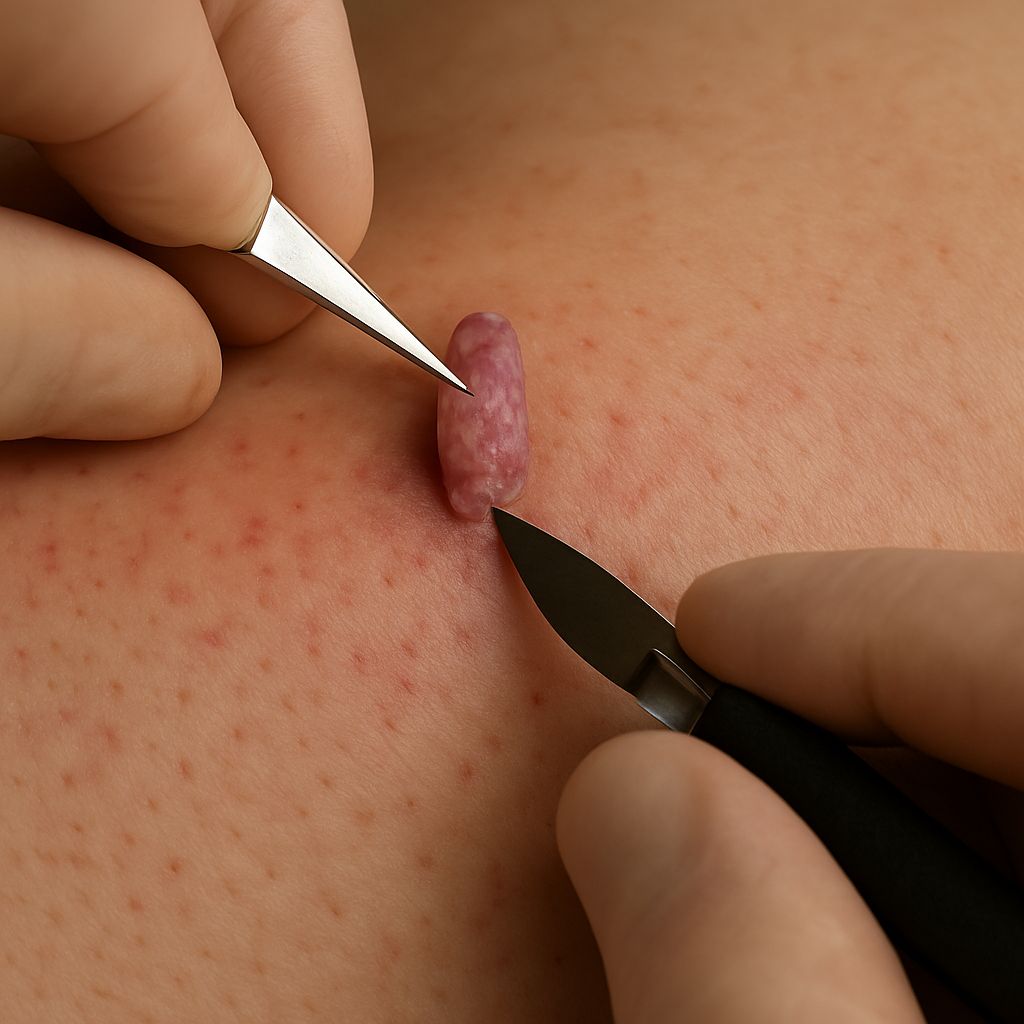
Skin tags on vagina are benign, soft growths of excess skin that form in the vulvar area and are among the most common benign lesions in that region. A skin tag near vagina may develop on the labia majora, labia minora, or the perineum, often without causing any symptoms. A labia skin tag forms when skin folds rub repeatedly or when hormonal and metabolic factors increase skin tag formation across the body. Skin tag vagina presentations are frequently discovered by accident during bathing or gynecological examination. Skin tags vagina are not sexually transmitted and not related to HPV or any other infection, though their appearance in an intimate area naturally causes concern until confirmed by a healthcare professional.
This guide explains what vaginal skin tags are, how they differ from other vulvar growths, and what removal options are appropriate.
What Are Skin Tags on Vagina?
Skin tags on vagina are pedunculated (stalk-attached) benign fibrous growths that contain collagen fibers and small blood vessels. They are not malignant and do not become cancerous. Most measure between 1 and 5 millimeters but can grow larger. They are typically the same color as the surrounding skin or slightly darker. They feel soft, compressible, and move freely when touched. Many women have them for years without knowing because they produce no symptoms until they become large enough to cause friction from clothing or underwear, or until they are noticed during self-examination.
Why Do Skin Tags Near Vagina Appear?
The formation of a skin tag near vagina follows the same general mechanism as skin tags elsewhere on the body: repetitive friction between skin surfaces causes clusters of collagen and blood vessels to become trapped in a small outgrowth. In the vulvar area, the labia rubbing together during walking, the friction from underwear waistbands, and the natural moisture of the area contribute to this process. Pregnancy increases skin tag formation significantly due to hormonal stimulation of melanocyte and fibroblast activity. Obesity increases skin fold contact and friction in the groin and vulvar region. Insulin resistance, including pre-diabetes and type 2 diabetes, is associated with higher skin tag formation rates across the body.
How Does a Labia Skin Tag Differ From Other Vulvar Growths?
A labia skin tag is soft, smooth-surfaced, and attached by a narrow stalk. Genital warts (condylomata acuminata) caused by HPV have a rough, irregular, cauliflower-like texture and tend to appear in clusters. Molluscum contagiosum lesions are small, firm, dome-shaped papules with a central umbilication (dimple). Bartholin’s gland cysts form deeper in the tissue near the vaginal opening rather than on the surface of the labia. Herpes lesions appear as vesicles, ulcers, or painful erosions. A smooth, stalk-attached, painless, and long-stable growth is most consistent with a benign labia skin tag, but any new vulvar growth requires medical evaluation to confirm the diagnosis.
How Do You Identify a Skin Tag Vagina Presentation?
Skin tags vagina presentations share these features: a soft, movable attachment at the skin surface; flesh-toned or slightly darker color; painless unless irritated by clothing; stable appearance over months or years without rapid growth; absence of ulceration, bleeding, or discharge; and no associated itching or burning in the absence of irritation. Any growth that bleeds spontaneously, grows rapidly over weeks rather than months, changes color, has an uneven surface, or is associated with genital symptoms such as discharge, odor, or pain should be evaluated by a gynecologist or dermatologist without delay.
What Removal Options Exist for Skin Tags Vagina?
Clinical removal of skin tags on vagina is safe, quick, and definitive. Available methods include surgical excision (scissors or scalpel under local anesthetic), cryotherapy (liquid nitrogen freezing), and electrocautery. The procedure is typically brief, involves minimal discomfort with proper anesthetic, and heals within one to two weeks. A vulvar skin tag biopsy is occasionally performed at the time of removal if the growth has any features that make the diagnosis uncertain. Recurrence in the exact same location after clinical removal is uncommon.
Can Skin Tags on Vagina Be Treated at Home?
Home removal of skin tags on vagina is not recommended. The vulvar skin is delicate and sensitive; applying over-the-counter removal products designed for hand or arm skin can cause chemical burns or irritation. Attempting to tie off or cut a vulvar skin tag risks bleeding, infection, and scarring in an area with a high bacterial load. The most important home action is avoiding manipulating the growth, keeping the area clean and dry, and scheduling a medical evaluation to confirm the diagnosis and discuss clinical removal options if desired.
Pro tips recap: Skin tags near vagina are benign and common; they require no treatment unless they cause discomfort or diagnostic uncertainty. Do not attempt home removal on any vulvar growth. A gynecologist or dermatologist can confirm the diagnosis and arrange a brief, low-risk clinical removal procedure. New vulvar growths that are unexplained should always be evaluated medically, regardless of how benign they appear.




Leave a Reply