
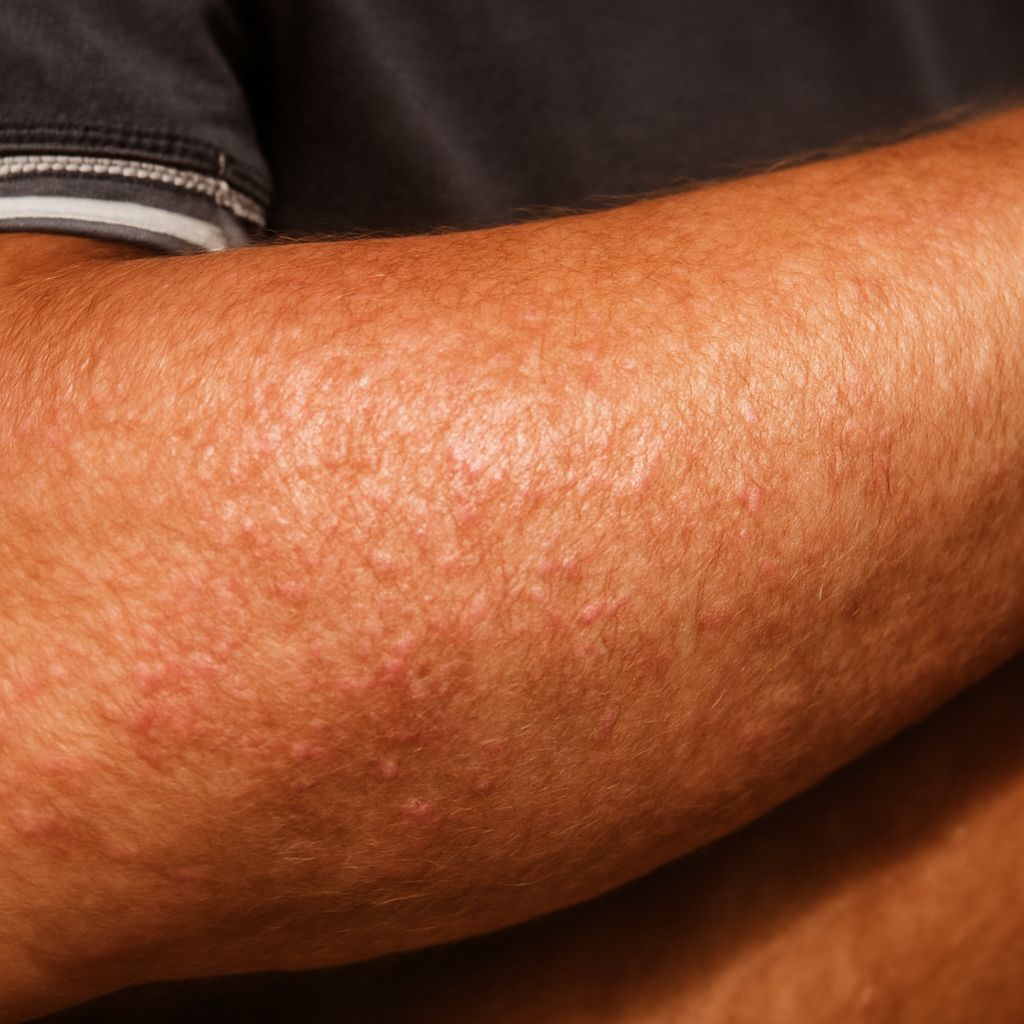
Exposure to the sun is a vital part of life, providing us with warmth and essential vitamin D. However, for some, this exposure leads to uncomfortable skin reactions, such as a skin rash from sun exposure. These reactions can manifest as bumps on skin from sun exposure, causing discomfort and raising concerns about long-term effects. Understanding the causes and solutions to this condition is crucial for prevention and treatment.
Fortunately, there are effective ways to both identify and manage these sun-induced skin conditions. By knowing the causes, symptoms, and preventive measures, you can enjoy the sun responsibly while minimizing risks.
What Causes Bumps on Skin from Sun Exposure?
Sun exposure can lead to various types of skin conditions, with polymorphic light eruption (PLE) being one of the most common. This is an allergic reaction to sunlight that results in red, itchy bumps. Other possible causes include solar urticaria, a rare condition where hives appear after UV exposure, and heat rash, which occurs when sweat ducts are blocked.
Understanding these causes can help individuals tailor their sun protection strategies effectively. Factors like skin type, genetic predisposition, and environmental conditions play significant roles in how the skin reacts to the sun.
How to Identify a Skin Rash from Sun?
Identifying a sun-induced rash involves observing the skin for specific signs. These rashes often appear as itchy, red patches or small bumps in areas exposed to sunlight, such as the arms, neck, and face. The onset can occur within minutes or hours after exposure.
To accurately identify a sun-related rash, consider the timing and location of the symptoms. Rashes that emerge shortly after time spent outdoors and improve when sun exposure is limited are likely sun-induced.
What Are the Common Symptoms of Sun-Induced Rashes?
Sun-induced rashes typically present with a range of symptoms that can vary in intensity. Common symptoms include redness, itching, and a burning sensation. In more severe cases, blisters or raised spots may form. These symptoms can be exacerbated by continuous sun exposure.
Recognizing these symptoms early is crucial for managing discomfort and preventing further irritation. Taking timely action can reduce the risk of complications such as infections from excessive scratching.
How Can You Prevent Bumps on Your Skin from the Sun?
Prevention is key when it comes to managing sun-induced skin conditions. Wearing protective clothing, applying broad-spectrum sunscreen, and seeking shade during peak sunlight hours are effective strategies. Additionally, gradually increasing sun exposure can help the skin adapt, potentially reducing sensitivity.
Using sun-protective accessories like wide-brimmed hats and sunglasses can also reduce the risk of developing sun rashes. Incorporating these practices into daily routines ensures a comprehensive approach to sun protection.
What Are the Effective Treatments for Sun-Induced Skin Rashes?
Treating sun-induced rashes involves both immediate and long-term strategies. Over-the-counter creams containing hydrocortisone can alleviate itching and inflammation. Aloe vera gel is also soothing and can provide relief from burning sensations.
If the rash is severe, oral antihistamines may be prescribed by a healthcare provider. Keeping the affected area cool and moisturized helps in reducing symptoms. It’s important to avoid further sun exposure until the rash heals completely.
When Should You Consult a Dermatologist for Sun-Related Skin Issues?
While most sun-induced rashes are manageable at home, consulting a dermatologist is advisable if symptoms persist or worsen. Persistent rashes may indicate underlying conditions that require professional evaluation and treatment.
If you experience severe swelling, pain, or signs of infection like pus or fever, seek medical advice promptly. Dermatologists can provide personalized treatment plans, ensuring effective management of skin issues related to sun exposure.
Key takeaways: Bumps and rashes from sun exposure are common but manageable with the right knowledge and precautions. Understand the causes, recognize the symptoms, and apply preventive measures to enjoy safe sun exposure. For persistent or severe cases, seek professional advice to ensure optimal skin health.





Leave a Reply