
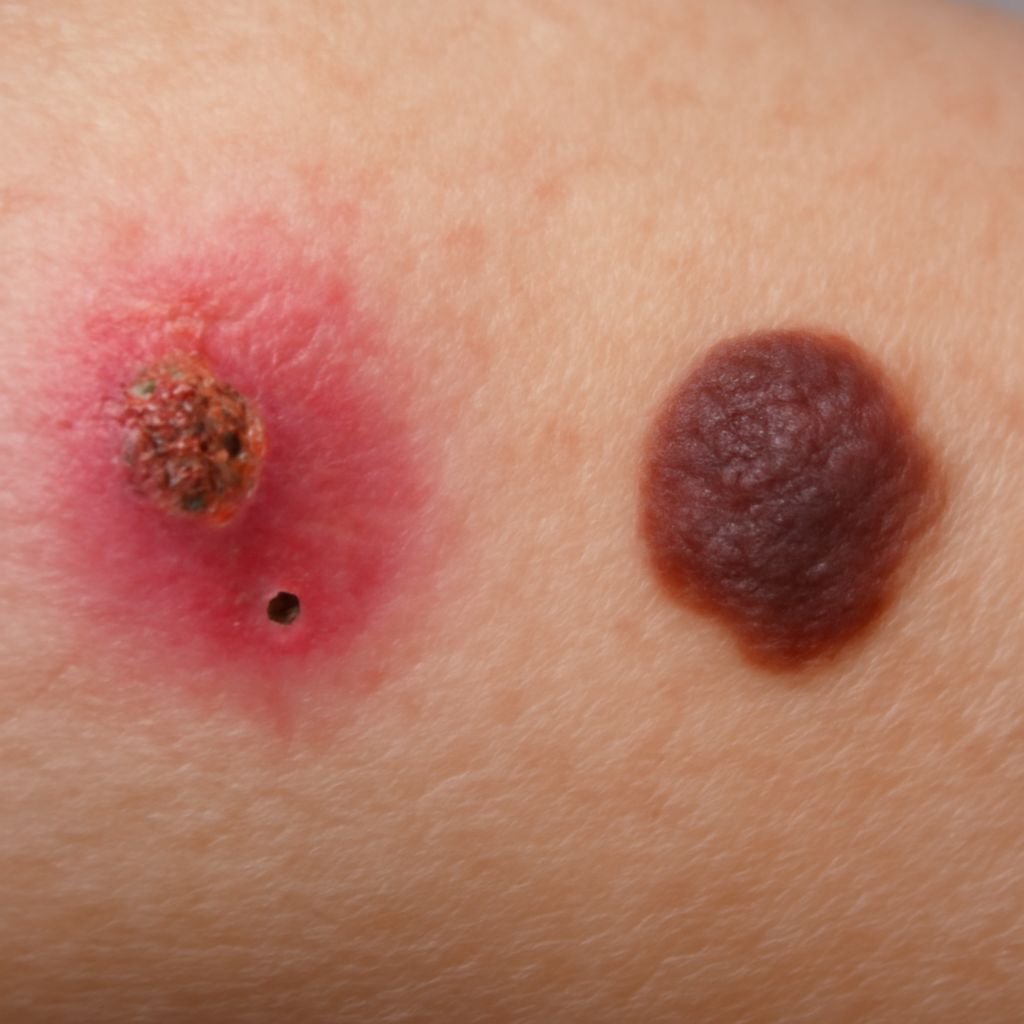
Skin conditions are a common concern, but distinguishing between a harmless rash and a sign of something more serious can be stressful. While most rashes are benign and self-limiting, a cancer skin rash may require prompt medical attention. The ability to identify potential skin cancer symptoms early—especially those that resemble a rash or abnormal mole—can be crucial for effective treatment. If you’ve ever wondered, “Is this just a rash, or could it be a cancer skin rash?” or struggled to tell the difference between a benign spot and a moles cancer warning sign, this guide is for you.
This article will help you understand the key differences between various rashes, moles, and the warning signs of skin cancer. You’ll learn what to look for, why certain changes happen, and when it’s time to seek professional advice. Let’s demystify the topic so you can take better care of your skin—and your health.
What is a cancer skin rash?
A cancer skin rash refers to a change in the skin’s appearance caused by abnormal cell growth that may signal skin cancer. Unlike temporary irritations or allergic reactions, these rashes are the result of malignant processes in skin cells such as basal cells, squamous cells, or melanocytes. While the word “rash” often brings to mind a red, inflamed area, not all cancer-related skin changes fit this classic image. Sometimes, these lesions present as persistent patches, plaques, or bumps that don’t heal, itch, or bleed easily.
Generally, there are three primary types of skin cancer that could present as rashes or abnormal skin lesions: melanoma, basal cell carcinoma, and squamous cell carcinoma. Each has its own characteristics, but all may create skin changes mistaken for benign rashes or moles. Occasionally, other cancers—like lymphomas or internal malignancies—can also cause skin eruptions or patches as a secondary effect, known as paraneoplastic rashes.
Unlike typical eczema or contact dermatitis, a cancer skin rash is usually persistent and may slowly expand or change over weeks to months. These lesions might be mistaken for simple skin problems, which is why awareness is so important for early detection.
How does a cancer skin rash differ from other rashes?
One of the most confusing aspects for patients is distinguishing a cancerous skin rash from more common conditions like allergic reactions, fungal infections, or psoriasis. While many rashes share overlapping symptoms—redness, itching, or scaling—a cancer-induced rash typically has some distinguishing features.
For example, unlike most rashes that come and go, a cancer skin rash tends to persist, resist standard treatments, and slowly worsen over time. Benign rashes will often resolve with over-the-counter creams or avoidance of triggers, but a malignant rash usually remains or even progresses despite these efforts. Additionally, cancer rashes might display unusual coloration (such as brown, black, or multicolored patches), changes in texture, or visible ulceration.
Cancer-related lesions may also accompany other symptoms, such as changes in existing moles, unexplained bleeding, or the appearance of new lumps. In contrast, common rashes generally lack these warning signs and are more likely to be localized, symmetrical, or associated with a clear cause (such as a new detergent or plant exposure).
Understanding these differences is essential for both patients and healthcare professionals so that potentially serious conditions are not overlooked.
What are the common signs and symptoms of a cancer skin rash?
Recognizing the warning signs of a cancer-associated skin rash can be lifesaving. Symptoms can vary significantly depending on the type of skin malignancy, but certain indications are more suggestive of cancer than benign skin issues.
The most notable signs include:
- Persistent patch or plaque: A flat or slightly raised area that doesn’t heal, sometimes with scaling or roughness.
- Unusual discoloration: Spots or patches that are dark brown, black, blue, red, or variegated in color.
- Changes in existing moles: Rapid growth, asymmetry, blurred borders, color changes, or bleeding in previously stable moles.
- Itching or tenderness: While not exclusive to cancer, persistent discomfort without an obvious cause warrants attention.
- Ulceration or bleeding: A sore that crusts, oozes, or does not heal over weeks to months.
Some skin cancers, particularly in their early stages, may be easy to overlook as they can resemble minor irritations. However, if you notice a new spot or rash that changes, grows, or just feels “off,” it’s worth getting checked—even if it’s not painful.
What causes a cancer skin rash to develop?
The development of a cancer skin rash is tied to abnormal growth of cells within different layers of the skin. For most people, the primary risk factor is cumulative exposure to ultraviolet (UV) radiation—whether from sunlight or tanning beds—which can damage DNA and trigger mutations in skin cells. Over time, this may lead to the formation of precancerous or malignant lesions.
Additional risk factors include genetics (family or personal history of skin cancer), fair skin, a high number of atypical moles, suppressed immune function, and exposure to certain chemicals or radiation. In rare circumstances, some medications or underlying cancers elsewhere in the body can also provoke skin changes or rashes, such as with paraneoplastic syndromes.
While cancerous skin rashes are most commonly associated with older adults, no age group is entirely immune. Recognizing your own risk profile and practicing sun protection are key steps in prevention. It’s also important to remember that not all persistent rashes are cancerous, but ongoing changes should prompt evaluation by a dermatologist.
How do cancer skin rashes relate to moles and skin cancer types?
Many people worry about moles, especially if they notice new growths or changes in existing ones. Moles themselves are benign clusters of pigmented cells, but in some cases, they can develop into melanoma, the most serious type of skin cancer. Hence, the link between moles, rashes, and cancer is especially significant.
Melanoma often begins as a change in the appearance of a preexisting mole or as a new, oddly shaped spot. However, squamous cell and basal cell carcinomas typically present as rough patches, scaly plaques, or pearly bumps rather than dark moles. Therefore, not every concerning skin lesion will look like a mole—or a classic rash.
Understanding the spectrum of skin cancer types helps demystify why some malignant skin rashes look and behave so differently. Early detection of changes in moles or the appearance of unfamiliar rashes can allow for prompt intervention, drastically improving outcomes. Regular skin checks, either at home or with a healthcare provider, are the best defense against delayed diagnosis.
When should you see a doctor for a suspicious rash or mole?
Deciding when to consult a healthcare professional can be tricky, but some general guidelines can help. Any rash or lesion that persists for more than a few weeks, changes in appearance, or bleeds unexpectedly should be evaluated. Pay close attention to the ABCDE criteria for melanoma: Asymmetry, Border irregularity, Color variation, Diameter (greater than 6mm), and Evolution (any change over time).
Additionally, if you notice a sore that doesn’t heal, a patch that seems to be expanding, or a new growth in adulthood, don’t hesitate to make an appointment. It’s always better to err on the side of caution when it comes to skin changes—early detection is far more effective and less invasive than treating advanced disease.
Keep in mind that special caution is warranted if you are immunosuppressed, have a history of skin cancer, or possess many atypical moles. For those with heightened risk, regular full-body skin exams should be part of your health routine. And if you attempt self-examination, avoid using sharp objects for sampling—leave biopsies to the professionals to prevent infection or unnecessary trauma.
How is a cancer skin rash diagnosed and treated?
Diagnosis of a potential cancer skin rash starts with a thorough skin examination by a dermatologist. The doctor may use a dermatoscope (a specialized magnifying tool) to inspect lesions more closely. If a cancerous process is suspected, a skin biopsy will be performed—this involves removing a small sample of tissue for laboratory analysis. This procedure is generally quick, minimally invasive, and performed under local anesthesia.
Treatment strategies depend on the type, stage, and location of the cancerous rash. For early, localized lesions, surgical removal is the most common and effective method. This may involve excision with a small margin of healthy tissue. Other options include Mohs micrographic surgery, topical medications for superficial cancers, cryotherapy (freezing), and, in some cases, radiation or systemic therapies.
Prompt treatment can often cure skin cancers completely, especially when caught in their early stages. Follow-up visits are important to monitor for recurrence or new lesions. If you experience skin sensitivity or irritation from topical treatments, let your provider know so your regimen can be adjusted. Avoid attempting to remove or treat suspicious rashes at home—consult a medical professional for all concerning skin changes.
Pro tips recap: Regularly examine your skin for changes, avoid excessive sun exposure, and use broad-spectrum sunscreen. If in doubt about a persistent rash or changing mole, see a dermatologist promptly. Early detection and expert care are your best allies in preventing serious outcomes from cancerous skin rashes.




Leave a Reply