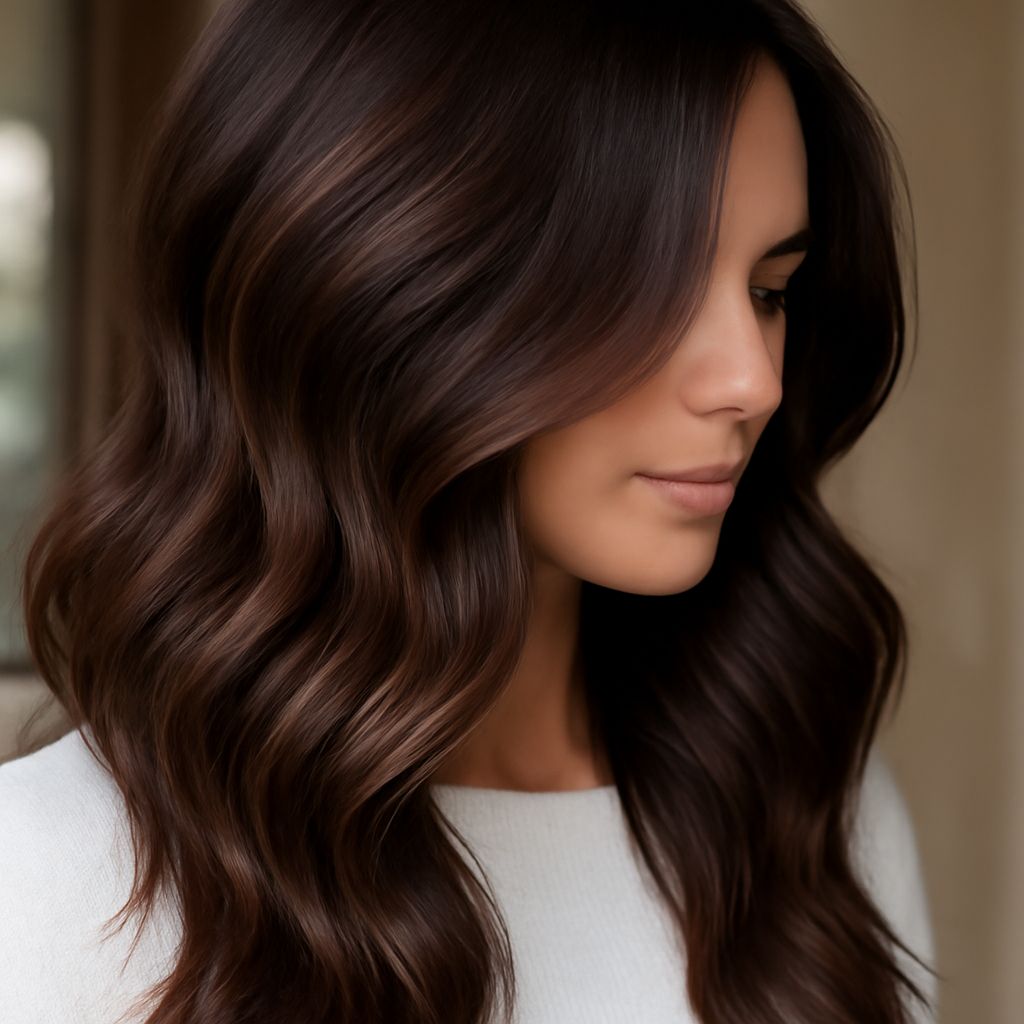
Rich, sun-kissed color that looks effortlessly natural has made dark brown balayage one of the most requested salon techniques of the decade. Unlike foil highlights that create uniform, stripe-like results, balayage for dark brown hair sweeps lightener freehand through sections, creating dimension that mimics how sunlight naturally hits strands. The result reads beautifully across skin tones, but it’s particularly striking as balayage highlights on dark hair — where contrast creates depth without looking harsh. For those with lighter complexions exploring the best hair color for green eyes and fair skin, the warm-to-cool gradient of a well-executed balayage dark brown can be transformative.
What Is Dark Brown Balayage and Why Is It So Popular?
Balayage (from the French word for “sweeping”) describes a freehand painting technique where color or lightener is applied directly to the surface of sections without foils. On dark brunette hair, this creates a soft, graduated highlight effect that starts darker at the roots and transitions to lighter ends. The grow-out is also significantly more graceful than traditional highlights — roots blend naturally, eliminating the harsh line that signals a needed salon appointment. This low-maintenance appeal is a major driver of its continued popularity across age groups and hair textures.
Choosing the Right Shades for Balayage on Dark Brown Hair
The most flattering balayage colors for dark brown hair stay within two to three shades of the base. Caramel, toffee, honey, and warm chestnut tones work beautifully on warm-undertone brunettes, while ash, mushroom, and cool taupe shades suit cooler complexions. Platinum or very pale blonde ends on very dark bases require significant pre-lightening and carry higher damage risk — a discussion to have with your colorist about the health of your hair before committing.
Balayage for Dark Brown Hair vs. Foil Highlights
Balayage and foil highlights achieve fundamentally different results. Foils create more uniform, saturated lightening and can achieve brighter blonde results from dark bases. Balayage creates softer, more natural-looking dimension that focuses on the mid-lengths and ends. Many colorists combine both techniques — using foils at the hairline for brightness and balayage through the body of the hair for depth — to achieve the best of both methods on dark brunette hair.
Balayage Highlights on Dark Hair: Texture and Length Considerations
Balayage works on virtually all hair lengths and textures, but the visual effect varies. On straight dark hair, the highlight placement is more visible and graphic. On wavy or curly dark brown hair, the color shifts create a more diffused, romantic dimension. Short hair benefits from concentrated placement around the face. Longer hair allows for a more gradual transition from root to tip. Discuss your hair’s natural texture and movement with your colorist to optimize placement for your specific hair type.
Best Hair Color for Green Eyes and Fair Skin with Dark Brown Base
Green eyes tend to be enhanced by warm, golden, and auburn tones rather than cool ashy shades. For fair-skinned individuals with green eyes and dark brown hair, a balayage featuring warm caramel or honey tones threading through the base creates a synergy between eye and hair color that feels naturally sun-kissed. Avoid overly ashy or platinum highlights if green eye enhancement is the goal — these cool tones can wash out fair complexions and reduce the warm contrast that makes green eyes pop.
Maintaining Your Dark Brown Balayage
Post-balayage hair care focuses on preserving color vibrancy and managing lightening-related dryness. Use sulfate-free, color-safe shampoo to extend the life of highlighted tones. Deep conditioning treatments once or twice weekly restore moisture to lightened sections. Purple or blue toning shampoos used every two to three weeks prevent warm tones from going brassy. Bond-building treatments (like those containing maleic acid or bis-aminopropyl diglycol dimaleate) help maintain the integrity of chemically processed hair.
How Often Do You Need Touch-Ups?
One of balayage’s greatest advantages is its reduced maintenance schedule. Most dark brunettes with a balayage dark brown style can go 3 to 5 months between salon visits, depending on how much contrast was created and how quickly their hair grows. A toning gloss appointment between full balayage sessions can refresh color vibrancy without significant cost or damage.
Safety recap: Chemical lightening always carries some risk of damage, especially on previously processed hair. Always disclose your full chemical history to your colorist and request a strand test before a full balayage application on compromised hair.



Leave a Reply